🦵 Not sure what's causing it? Take the 5-question knee quiz.
Find My Pattern →Knee Pain When Returning to Running After Rest
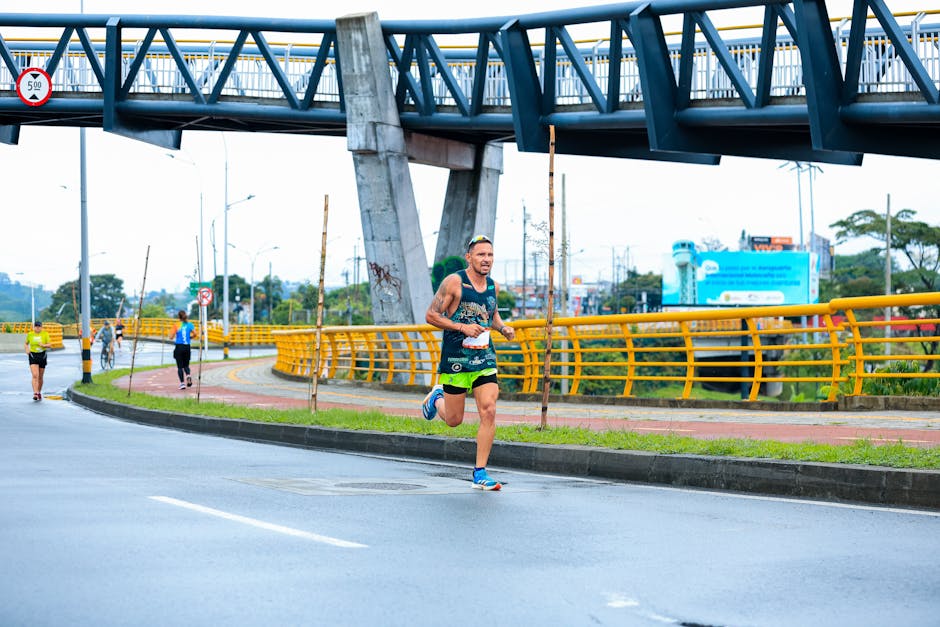
That moment when you lace up your shoes again after weeks or months away—there's relief mixed with nervousness. You make it through the first mile feeling almost normal, maybe even proud. Then somewhere around mile two, or sometimes not until you're sitting on the couch later that evening, a dull ache settles into your knee. It's not the sharp pain that stops you cold. It's something quieter, more insidious. You wonder if you've just undone all your rest, or if this is just what getting back feels like. The uncertainty is almost worse than the pain itself.
Why your knee reacts this way when you restart
🦵 Not sure what's causing your knee pain?
Answer 5 quick questions and get a personalised result.
Find My Pattern → 60 seconds · No sign-upWhen you stop running for any length of time—whether it's two weeks or two months—your knee structures don't stay frozen in time. The muscles around your thigh and hip weaken noticeably, even if you've been doing other activities. Running demands a specific kind of strength and coordination that cycling or swimming doesn't quite replicate. Your ligaments and tendons also become less conditioned to the repetitive impact and the precise timing of forces that running creates.
The cartilage in your knee joint can become irritated when you suddenly ask it to handle impact again after a break. This irritation often shows up as a dull, heavy sensation rather than sharp pain—sometimes hours after you've finished running, which makes it hard to connect cause and effect. Your body is essentially relearning how to distribute forces through the knee, and that adjustment period can feel uncomfortable. It's worth knowing that knee pain after running follows a very similar pattern and responds to the same kind of approach.
There's also a psychological component that affects the physical reality. After time off, many runners feel anxious about lost fitness and push harder than their tissues can handle. You might run faster than intended or extend your distance because the first few minutes felt fine. That disconnect between how you feel mid-run and how you feel later creates a dangerous pattern where you keep overdoing it.
Lastly, if your break came because of an injury rather than just life circumstances, scar tissue or weakness in specific areas may not have fully resolved. Returning to running before those weak spots have rebuilt can create compensation patterns—where other parts of your knee work overtime to protect the injured area, leading to new pain in unexpected places.
What you can try as you ease back in
Start with a run-walk approach rather than committing to continuous running. Run for two or three minutes, then walk for one minute, and repeat. This sounds almost insulting if you were running 5 miles regularly, but it genuinely changes how your knee responds. The walking breaks give your tissues micro-recovery moments without stopping your session entirely. Many runners find that this approach eliminates the delayed ache that appears hours later.
Pay attention to the specific moment pain shows up during your route. If it only hurts on downhill sections, that's different information than pain that builds gradually throughout a run. Downhill pain often points to your quadriceps and how they're controlling your descent. Gradual buildup might mean you're asking too much volume too soon. Knowing the difference helps you make smarter decisions about what to adjust.
Keep your runs shorter than you think you need to. A good rule is to run significantly less than you were doing before the break—maybe 50-60% of your previous distance. This feels conservative, but it's the difference between adaptation soreness (which is normal) and actual tissue damage (which sets you back). The adaptation soreness tends to feel like a dull, heavy sensation that doesn't worsen during the run and improves within 24 hours. Pain that sharpens as you run or worsens the next day is your signal to dial back.
Run on softer surfaces when possible. Asphalt or dirt paths absorb more impact than concrete. If your regular route is mostly sidewalks, consider shifting to a local park or track for the first few weeks. The reduced impact gives your knee structures less to complain about while you're rebuilding capacity. If you also experience knee pain from running on concrete, the two issues often share the same underlying cause.
Strengthen the muscles around your knee on non-running days. Focus on single-leg work: single-leg squats (even partial range), step-ups, and lateral band walks. These exercises activate stabilizer muscles that running alone doesn't fully engage. You'll notice that strength work reduces the feeling of instability or "catching" that sometimes happens mid-stride.
When to talk to a professional
If your pain is sharp rather than dull, or if it's localized to one specific spot that you can point to, that's worth getting checked sooner rather than later. Similarly, if pain during a run is getting worse as you continue (not just present, but actively increasing), stop and walk back. That's your knee telling you something is wrong with that particular run.
Pain that appears immediately after running and stays elevated for more than a few hours is also a sign to ease up. Some mild soreness 12-24 hours after a run can be normal adaptation, but pain that's still significant the next morning or that wakes you up at night suggests you've overdone it.
If you've been back to running for three weeks and the pain hasn't improved despite reducing your distance and intensity, a physical therapist or sports medicine doctor can identify what's actually happening. They can assess your running form, test your strength, and determine whether you have weakness, tightness, or an actual structural issue that needs attention.
Safety note: If you have severe pain, significant swelling, a recent injury, fever, numbness, or difficulty bearing weight, speak with a qualified healthcare professional promptly.
Frequently Asked Questions
Q: What happens if I ignore knee pain when returning to running after rest?
A: In some cases, minor knee discomfort does resolve on its own. But consistently ignoring pain — especially if it's altering how you move — can allow the underlying cause to worsen. Most people find that early, sensible attention leads to faster recovery than waiting it out indefinitely.
Q: How long does knee pain when returning to running after rest usually last?
A: This varies a lot depending on the cause. Minor muscle strain or overuse tends to settle within a few days to two weeks with appropriate rest and gentle movement. If it hasn't improved after three weeks — or symptoms are worsening — that's a clear signal to get a professional opinion.
Q: Is it normal to hear clicking sounds alongside knee pain when returning to running after rest?
A: Joint sounds are extremely common and usually harmless — they often come from gas bubbles in the joint fluid or tendons flicking over bony prominences. If the clicking is painless and your knee functions normally, it's generally nothing to worry about. If it's accompanied by pain or swelling, mention it to a healthcare professional.
What To Do Tomorrow Morning
Most people who take early, sensible action recover well. Start with what you can manage today and monitor closely. If things are not improving after a few weeks, that is the right time to bring in professional support.
Helpful Next Step
As an Amazon Associate, we may earn from qualifying purchases. This does not affect the price you pay.
Helpful Support Option
Runners dealing with this kind of knee discomfort often find that a well-fitted compression sleeve helps stabilise the joint and manage irritation during lower-intensity training sessions.
See knee sleeves for runningHelpful Next Step
If gentle support helps during recovery, you can check a simple support option that many people use in daily life. People dealing with this frequently also notice knee pain front of kneecap when running, particularly after extended periods of inactivity.
This content is for educational purposes only and does not constitute medical advice. Always consult a qualified healthcare professional for diagnosis and treatment.