🦵 Not sure what's causing it? Take the 5-question knee quiz.
Find My Pattern →Knee Pain on Stairs After Leg Day Workout
Two days after a heavy leg session, you're fine all morning. Then you approach the stairs at work or home, and the moment your foot lands on the first step down, a sharp pull grips the front of your knee. Going up feels manageable—almost normal. But descending? Each step feels like your quad is fighting against you, and by the time you reach the bottom, there's a dull ache that lingers for hours. This isn't the soreness you expected in your thighs. It's specific, it's in your knee, and it's making you question whether you pushed too hard.
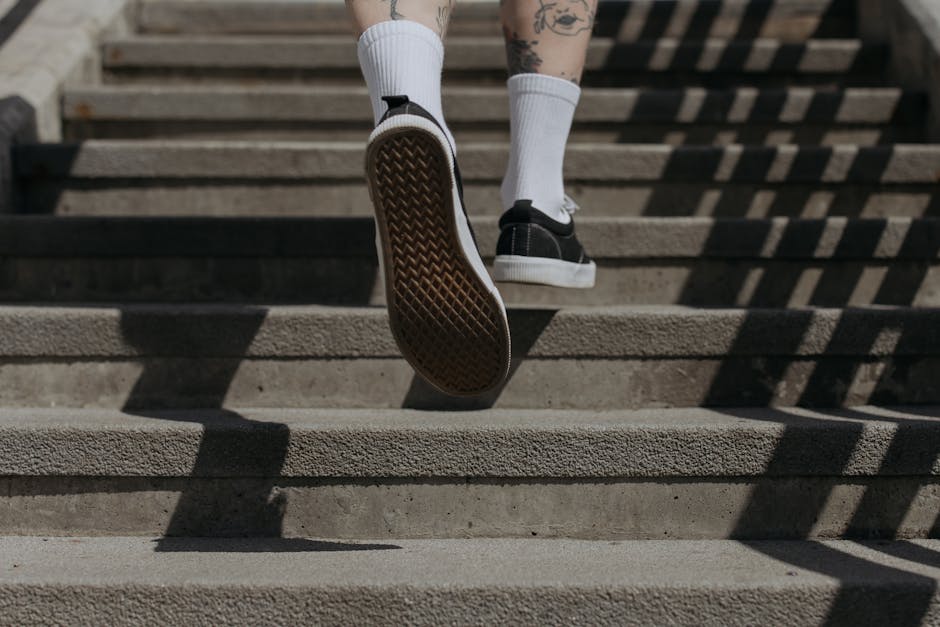
Why your knee hurts on stairs after leg day
🦵 Not sure what's causing your knee pain?
Answer 5 quick questions and get a personalised result.
Find My Pattern → 60 seconds · No sign-upStairs demand something different from your leg day workout. When you descend, your quadriceps—the muscle on the front of your thigh—has to work eccentrically, meaning it's lengthening while contracting to control your weight. If your recent leg session included heavy squats, lunges, or leg presses, your quads are already fatigued and potentially inflamed. Adding stair descent on top of that creates a double demand. For useful context, both knees hurt going up and down stairs tends to have the same mechanical roots and overlapping solutions.
There are several reasons this specific pain pattern shows up:
Quad dominance during your workout. If your leg day leaned heavily on quads—multiple squat variations, leg extensions, or high-rep pressing—without adequate hamstring or glute work, your quads absorbed most of the load. Stairs then target that same exhausted muscle group, and the eccentric (lowering) phase is where the microscopic damage accumulates. The pain you feel descending is often sharper than ascending because your quad is resisting gravity rather than generating force.
A sudden jump in workout volume or intensity. Knee pain after leg day often signals a programming mistake rather than a true injury. If you increased your squat weight by 20 pounds, added an extra set, or switched to a slower tempo (like a 3-second descent), your knee structures absorb force they weren't prepared for. Your muscles adapt faster than your tendons and ligaments do, which is why the pain can feel delayed and concentrated in the knee joint rather than the muscle belly.
Patellar tracking issues under fatigue. When your quads are tired, they fatigue unevenly. Your vastus medialis (inner quad) may give out before your vastus lateralis (outer quad), pulling your kneecap slightly out of its groove. Stairs amplify this misalignment because you're moving through a deep range of motion while fatigued. This can create that catching or grinding sensation at the bottom of each step, or a sharp pain on the inside or outside of the kneecap.
Insufficient recovery between sessions. If you did leg day and then did stairs-heavy activity the next day—or if you're doing leg work twice a week without adequate rest—your knee structures haven't finished repairing from the first session. The inflammation is still present when you demand more from them.
What you can try to manage this
Modify how you use stairs for the next few days. This doesn't mean avoiding them completely, but changing how you move through them. Descending slowly, one step at a time, reduces the eccentric load on your quad. Some people find it helpful to lead with their heel, keeping their weight slightly back rather than leaning forward. Going up stairs is usually less painful, so if you have a choice, take the elevator down and use the stairs up. It sounds small, but this modification can reduce pain significantly while you recover.
Apply ice after stair activity, not before. If your knee feels warm or puffy after using stairs, ice for 15 minutes can help reduce inflammation. Do this after activity, not as prevention. Heat before activity can feel good for stiffness, but it may increase swelling if inflammation is already present.
Take anti-inflammatory medication if pain is sharp. Over-the-counter ibuprofen or naproxen can help if the pain is sharp or limiting your movement, but timing matters. Take it after activity rather than before, and use it for a few days rather than just once. This can help manage inflammation while your muscles recover. If you have a history of stomach issues or take other medications, check with your doctor first.
Adjust your next leg workout deliberately. Don't skip leg day entirely, but change the stimulus. Reduce the volume (fewer sets), reduce the intensity (lighter weight), or change the exercise selection to something less demanding on your quads. A day or two of lighter work—maybe single-leg balance work, glute bridges, or light cycling—can maintain your fitness without overloading your recovering knee.
Pay attention to stiffness patterns. The morning after a tough leg day, your knee will feel stiffest. It may improve slightly by evening as you move around. This is normal. But if the pain is worst in the morning and doesn't improve at all by evening, or if it gets worse throughout the day, that's a sign you need more recovery time before your next workout.
When to talk to a professional
Most knee pain after leg day improves within 3-5 days as your muscles recover and inflammation settles. But some pain patterns warrant professional evaluation sooner.
See a doctor or physical therapist if your pain is sharp and stabbing (rather than dull and achy), if it's accompanied by significant swelling that doesn't reduce with ice, or if the pain is preventing you from bearing weight normally. Also seek help if you hear a pop or feel instability when using stairs, or if the pain is only on one side of your knee and doesn't improve after 5-7 days of modified activity. If you also experience knee aches after climbing several flights of stairs, the two issues often share the same underlying cause.
Safety note: If you have severe pain, significant swelling, a recent injury, fever, numbness, or difficulty bearing weight, speak with a qualified healthcare professional promptly.
Frequently Asked Questions
Q: Is it normal to hear clicking sounds alongside knee pain on stairs after leg day workout?
A: Joint sounds are extremely common and usually harmless — they often come from gas bubbles in the joint fluid or tendons flicking over bony prominences. If the clicking is painless and your knee functions normally, it's generally nothing to worry about. If it's accompanied by pain or swelling, mention it to a healthcare professional.
Q: What happens if I ignore knee pain on stairs after leg day workout?
A: In some cases, minor knee discomfort does resolve on its own. But consistently ignoring pain — especially if it's altering how you move — can allow the underlying cause to worsen. Most people find that early, sensible attention leads to faster recovery than waiting it out indefinitely.
Q: Why does my knee feel worse after sitting for a long time?
A: This pattern — stiffness or pain after prolonged sitting that eases once you move around — is a hallmark of irritation around the kneecap or the soft tissues surrounding it. The joint stiffens in a flexed position, and the first movement disturbs it. Most people find it settles within a minute or two of walking.
Where to Go From Here
Most people who take early, sensible action recover well. Start with what you can manage today and monitor closely. If things are not improving after a few weeks, that is the right time to bring in professional support.
Helpful Next Step
As an Amazon Associate, we may earn from qualifying purchases. This does not affect the price you pay.
Helpful Support Option
If this type of knee discomfort flares up on stairs, light compression or a supportive brace can help reduce strain on the joint while you work on strengthening the surrounding muscles.
See knee support options on AmazonHelpful Next Step
If gentle support helps during recovery, you can check a simple support option that many people use in daily life. This pattern is related to knee buckles when climbing stairs, and the same management principles often apply.
This content is for educational purposes only and does not constitute medical advice. Always consult a qualified healthcare professional for diagnosis and treatment.