🦵 Not sure what's causing it? Take the 5-question knee quiz.
Find My Pattern →Both Knees Hurt Going up and Down Stairs
That moment before you step onto the staircase—when you know what's coming and your body tenses up in anticipation. Maybe you're at work heading to a second-floor meeting, or at home facing the stairs to your bedroom, and you feel a dull ache settle into both knees just thinking about it. The climb up might feel manageable, almost tolerable, but the descent is where the real discomfort hits. Your weight pressing down through each step, gravity pulling you forward, and both knees sending sharp or heavy sensations that make you grip the railing tighter than you'd like. By the time you reach the bottom, you're relieved it's over—until the next time.
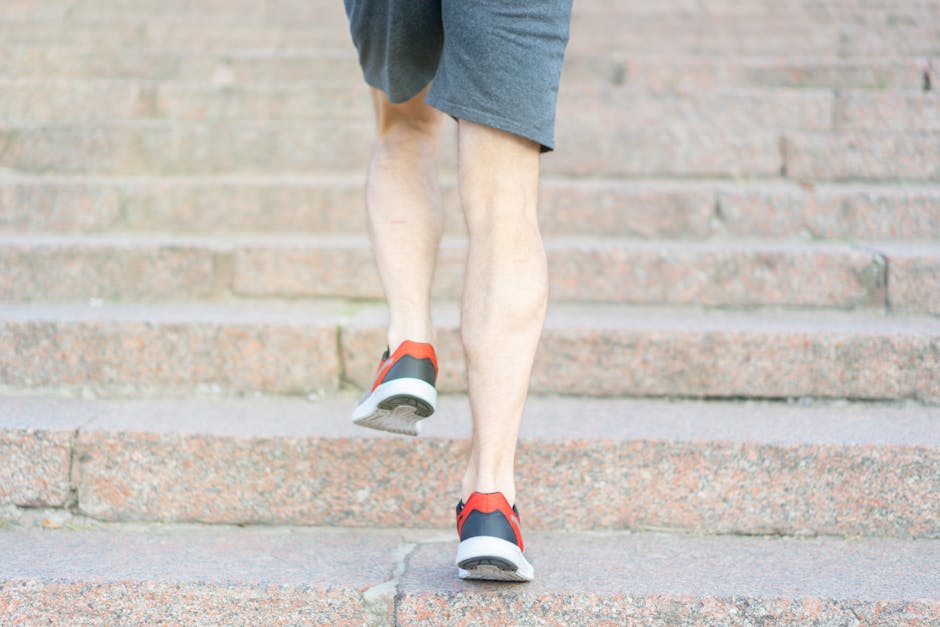
This pattern of bilateral knee pain on stairs is frustrating partly because stairs are unavoidable. They're everywhere. And unlike running or sports, you can't simply decide to skip them for a few weeks.
Why Both Knees Hurt During Stairs
🦵 Not sure what's causing your knee pain?
Answer 5 quick questions and get a personalised result.
Find My Pattern → 60 seconds · No sign-upWhen you go up or down stairs, your knees bend and straighten repeatedly while bearing most of your body weight. This combination creates significant demand on the structures around your kneecap and the muscles that stabilize your leg. There's a close connection between this and knee pain worse going down than up stairs — the same structures are usually involved.
Several things can trigger this kind of bilateral discomfort. Weak or imbalanced quadriceps muscles—the large muscle group on the front of your thigh—may mean your kneecap isn't tracking properly as it moves through its groove. When both sides are weak, both knees often suffer equally. Descending is typically harder because your quads have to work eccentrically (lengthening under tension) to control your descent, and fatigue or weakness shows up most clearly here.
Muscle tightness in your hips, hamstrings, or calves can also shift how your knees move during stairs. If your hip muscles are tight, your knee may compensate by moving inward or outward slightly with each step—a pattern that stresses both sides. Stairs magnify this because you're repeating the movement dozens of times in quick succession.
Overuse or sudden increases in stair use can create inflammation around the kneecap or in the tissues supporting it. You might notice this if you recently changed jobs, moved to a multi-story home, or started using stairs more than usual. The pain often builds gradually through the day, so mornings feel better and afternoons feel worse.
Joint surface changes or early cartilage wear may also be at play, though this is less common in younger people. In some cases, both knees simply have similar wear patterns, which can make pain feel symmetrical even if the underlying cause isn't identical in each knee.
What You Can Try
Slow down on the descent. This single change often helps immediately. When you rush down stairs, momentum and speed force your quads to work harder. Taking your time—one step at a time, pausing briefly if needed—lets your muscles control the movement rather than fight against gravity. It feels less dramatic than you might expect, and the difference in pain can be noticeable.
Use the railing or a wall. Gripping something isn't weakness; it's smart load management. Even light contact with a railing reduces the amount of weight your knees have to manage, which can ease discomfort enough to make stairs tolerable while you address the underlying cause.
Apply ice after stairs, not before. A 15-minute ice session after climbing or descending can help calm inflammation, especially if you notice swelling or warmth around your kneecap. Ice before stairs won't prevent pain; it's the after-activity window that matters.
Do gentle quad engagement throughout your day. Straight-leg raises (lying on your back, tightening your thigh and lifting your leg slightly) or sitting quad sets (tightening your thigh muscle while sitting) can gradually build strength without the stress of stairs. Even 2–3 minutes a few times daily adds up. Many people find that after a week or two of consistent gentle strengthening, stairs feel noticeably less painful.
Pay attention to step height and footwear. Shallow steps (like in newer buildings) often feel easier than steep residential stairs. If you have a choice, use the easier option while you're managing pain. Shoes matter too—something with mild arch support and cushioning can reduce the shock traveling through your knees compared to flat soles or very soft shoes that don't guide your foot properly.
When to See a Professional
If your pain is sharp, sudden, or accompanied by swelling that doesn't go down after a day or two, don't wait. The same applies if you notice one knee is significantly worse than the other, or if the pain is preventing you from using stairs safely (struggling to balance, sharp catching sensations, or feeling like your knee might give way). It's worth knowing that knee pain after walking down stairs follows a very similar pattern and responds to the same kind of approach.
Pain that's been present for more than three weeks despite trying these approaches is also a signal to get an evaluation. A physical therapist or doctor can assess whether your pain is coming from muscle weakness, joint mechanics, or something that needs different treatment.
Safety note: If you have severe pain, significant swelling, a recent injury, fever, numbness, or difficulty bearing weight, speak with a qualified healthcare professional promptly.
Frequently Asked Questions
Q: Can I still walk normally when I have both knees hurt going up and down stairs?
A: Many people manage normal walking despite this kind of discomfort. If walking causes you to limp or noticeably change your gait, though, that's worth addressing — compensating patterns often create new problems in the hips, lower back, or opposite knee over time.
Q: How long does both knees hurt going up and down stairs usually last?
A: This varies a lot depending on the cause. Minor muscle strain or overuse tends to settle within a few days to two weeks with appropriate rest and gentle movement. If it hasn't improved after three weeks — or symptoms are worsening — that's a clear signal to get a professional opinion.
Q: What happens if I ignore both knees hurt going up and down stairs?
A: In some cases, minor knee discomfort does resolve on its own. But consistently ignoring pain — especially if it's altering how you move — can allow the underlying cause to worsen. Most people find that early, sensible attention leads to faster recovery than waiting it out indefinitely.
Where to Go From Here
Most people who take early, sensible action recover well. Start with what you can manage today and monitor closely. If things are not improving after a few weeks, that is the right time to bring in professional support.
Helpful Next Step
As an Amazon Associate, we may earn from qualifying purchases. This does not affect the price you pay.
Helpful Support Option
If this type of knee discomfort flares up on stairs, light compression or a supportive brace can help reduce strain on the joint while you work on strengthening the surrounding muscles.
See knee support options on AmazonHelpful Next Step
If gentle support helps during recovery, you can check a simple support option that many people use in daily life. If you also experience knee pain in both knees at the same time, the two issues often share the same underlying cause.
This content is for educational purposes only and does not constitute medical advice. Always consult a qualified healthcare professional for diagnosis and treatment.