🦵 Not sure what's causing it? Take the 5-question knee quiz.
Find My Pattern →Knee Aches After Climbing Several Flights of Stairs
Stairs feel fine on the way up. It's the descent—or sometimes hours later, after you've sat down—that the ache settles in behind your kneecap or along the outer edge of your knee. Maybe you notice it most when you're walking down, each step sending a dull throb through your leg. Or perhaps the pain doesn't arrive until the next morning, making you wonder if stairs yesterday really caused this, or if something else is wrong. The uncertainty is part of what makes stair-related knee pain frustrating. It looks invisible. You can walk normally on flat ground. But stairs—especially multiple flights—expose something that isn't quite right.
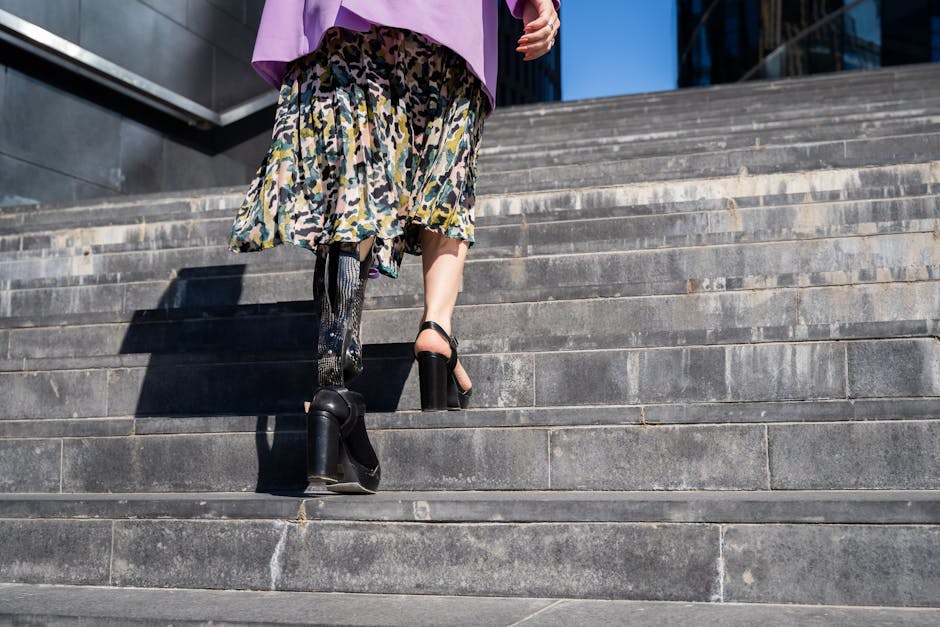
Why stairs trigger knee pain
🦵 Not sure what's causing your knee pain?
Answer 5 quick questions and get a personalised result.
Find My Pattern → 60 seconds · No sign-upWhen you climb or descend stairs, your knee bends and straightens repeatedly while bearing most of your body weight. This isn't the same stress as walking on flat ground. Each step places force through your knee at an angle, and going down is often harder than going up because you're controlling your descent rather than pushing upward.
Several things can make this worse. Your quadriceps—the muscle group on the front of your thigh—may not have the endurance to stabilize your kneecap through multiple flights. When this muscle tires, your kneecap can track slightly off-center as it moves, creating friction and ache. This doesn't mean your quadriceps is weak in everyday life; it can mean they're not conditioned for sustained stair use. This pattern is related to knee buckles when climbing stairs, and the same management principles often apply.
Tightness in your calf, hamstring, or hip muscles can also pull on how your knee moves. If your hip muscles aren't strong enough to control your leg as you step down, your knee compensates, working harder than it should. The outer part of your knee—where the iliotibial band attaches—can become irritated this way, causing a burning sensation that worsens with each downward step.
Sometimes the pain comes from how your foot lands. If you overpronate (your foot rolls inward) or supinate (rolls outward), the force travels up your leg unevenly, stressing your knee at an odd angle. Stairs amplify this because each step forces your foot into a fixed position on the step.
What you can try
Slow your descent. This is not about being cautious; it's about control. Taking stairs one at a time, or even using a railing to reduce the load on your leg, gives your quadriceps time to manage the movement. Pain that worsens going down often improves simply by descending more slowly and deliberately.
Ice after stairs, not before. Applying ice for 15–20 minutes within an hour of climbing stairs can reduce inflammation. Many people wait until pain appears, but applying ice preventively after stair use—especially if you know your knees are irritable—can limit how much ache develops later.
Take breaks between flights. If you're climbing many flights at once, pause halfway. Sit for 2–3 minutes. This isn't laziness; it allows your muscles to recover slightly before the next set. A short break can mean the difference between manageable soreness and significant pain the next day.
Avoid the stairs temporarily if pain is sharp. There's a difference between dull muscle soreness and sharp, catching pain. If you feel a pinch or catch behind your kneecap, especially on descent, using an elevator or ramp for a few days allows inflammation to settle. Continuing to climb stairs through sharp pain often extends recovery.
Stretch your calves and hip flexors. Tight muscles pull on your knee's movement. Gentle calf stretches—holding a wall and extending one leg behind you—and hip flexor stretches (a low lunge position) can reduce the tension pulling through your knee. Do these after stairs when your muscles are warm, holding each stretch for 30 seconds.
When to see a professional
If your knee pain after stairs lasts more than two weeks, or if the pain worsens despite rest and ice, a physical therapist or doctor can assess what's actually happening. Sharp pain that catches or locks, significant swelling that doesn't reduce with ice, or pain that spreads to other parts of your leg warrants professional evaluation sooner. If you also experience knee pain when climbing stairs, the two issues often share the same underlying cause.
Pain that changes—for example, shifting from the front of your knee to the side, or becoming sharp instead of dull—can indicate that compensation patterns are developing. A professional can identify whether your quadriceps, hip, or ankle mechanics need attention.
Safety note: If you have severe pain, significant swelling, a recent injury, fever, numbness, or difficulty bearing weight, speak with a qualified healthcare professional promptly.
Frequently Asked Questions
Q: What happens if I ignore knee aches after climbing several flights of stairs?
A: In some cases, minor knee discomfort does resolve on its own. But consistently ignoring pain — especially if it's altering how you move — can allow the underlying cause to worsen. Most people find that early, sensible attention leads to faster recovery than waiting it out indefinitely.
Q: Why does my knee feel worse after sitting for a long time?
A: This pattern — stiffness or pain after prolonged sitting that eases once you move around — is a hallmark of irritation around the kneecap or the soft tissues surrounding it. The joint stiffens in a flexed position, and the first movement disturbs it. Most people find it settles within a minute or two of walking.
Q: How long does knee aches after climbing several flights of stairs usually last?
A: This varies a lot depending on the cause. Minor muscle strain or overuse tends to settle within a few days to two weeks with appropriate rest and gentle movement. If it hasn't improved after three weeks — or symptoms are worsening — that's a clear signal to get a professional opinion.
One Thing to Try First
Most people who take early, sensible action recover well. Start with what you can manage today and monitor closely. If things are not improving after a few weeks, that is the right time to bring in professional support.
Helpful Next Step
As an Amazon Associate, we may earn from qualifying purchases. This does not affect the price you pay.
Helpful Support Option
If this type of knee discomfort flares up on stairs, light compression or a supportive brace can help reduce strain on the joint while you work on strengthening the surrounding muscles.
See knee support options on AmazonHelpful Next Step
If gentle support helps during recovery, you can check a simple support option that many people use in daily life. This pattern is related to both knees hurt going up and down stairs, and the same management principles often apply.
This content is for educational purposes only and does not constitute medical advice. Always consult a qualified healthcare professional for diagnosis and treatment.