🦵 Not sure what's causing it? Take the 5-question knee quiz.
Find My Pattern →Knee Buckles When Climbing Stairs
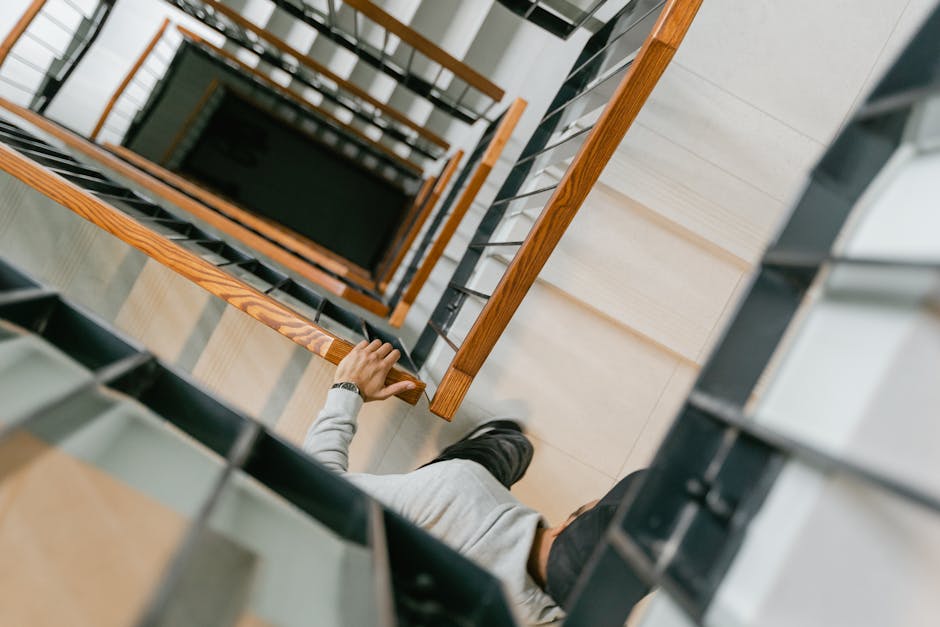
Your knee feels fine when you're walking on flat ground, but the moment you step onto a staircase—especially going down—there's that split second where your leg suddenly weakens. The knee doesn't always hurt badly enough to stop you, but it feels unstable, like it might give out mid-step. Sometimes it's a sharp catch followed by a moment of weakness. Other times it's more of a gradual softening sensation that builds as you climb higher, making you grip the railing tighter with each step. Either way, after it happens once, you find yourself thinking about it before you climb stairs again, which often makes the whole thing feel worse.
What's actually happening when the knee buckles
🦵 Not sure what's causing your knee pain?
Answer 5 quick questions and get a personalised result.
Find My Pattern → 60 seconds · No sign-upBuckling during stair climbing usually points to one of several things working against you, and often it's a combination. This pattern is related to knee pain when climbing stairs, and the same management principles often apply.
Quadriceps muscle timing issues are among the most common culprits. Your quadriceps (the large muscle on the front of your thigh) is responsible for controlling how your knee bends and straightens, especially during the weight transfer moment between steps. If this muscle is fatigued, weak, or not firing at exactly the right moment, your knee can feel like it's collapsing under your body weight. This is different from general weakness—it's about the timing of muscle activation failing right when you need it most.
Proprioceptive misfiring is another piece. Your body has sensory receptors that tell your brain where your knee is in space and how stable it is. When these signals get disrupted—from an old injury, inflammation, or simple deconditioning—your knee can buckle even if the muscles are technically strong enough. You might feel perfectly stable on flat ground because that task doesn't demand the same precision.
Patellar tracking problems can also create that unstable sensation. Your kneecap should glide smoothly in its groove as your knee bends. If it's tracking slightly off-center, the forces aren't distributed evenly, and your knee can feel like it's slipping sideways mid-step. This often feels worse on descent because gravity is pulling your body weight down while your knee is trying to control that descent.
Inflammation or fluid buildup inside the joint can muffle the signals your proprioceptors are sending. Your knee might physically be stable, but it doesn't feel stable because the joint is irritated or swollen. This often worsens after sitting for a while—you stand up, take a few steps, and the knee feels unreliable until it warms up slightly.
Practical steps you can try right now
Change how you descend stairs. Going down is typically harder than going up because your quadriceps has to work eccentrically (lengthening under tension) to control your body weight. Try leading with your stronger leg going down, or hold the railing and take one step at a time instead of your normal rhythm. This isn't permanent—it's just reducing the demand on the unstable knee while you figure out what's happening.
Notice the environmental triggers. Wet stairs, certain shoe types, or climbing multiple flights in succession often make buckling worse. Some people find their knee is more stable in shoes with firmer soles. Others notice buckling happens more in the afternoon after a full day of activity. These aren't random—they're clues about whether this is a fatigue issue, a proprioceptive issue, or something else.
Activate your quadriceps before climbing. Before you go up or down stairs, do 10-15 gentle quad sets: sit down, straighten one leg out in front of you, and tighten the thigh muscle for 3-5 seconds. Release and repeat. This "wakes up" the muscle and can improve its timing during the actual stair climb. It sounds simple, but the difference in stability can be noticeable.
Ice after stairs if there's any swelling. If your knee feels puffy or warm after climbing, 15-20 minutes of ice can reduce inflammation. Less inflammation often means clearer signals from your proprioceptors and a more stable-feeling knee. This is especially true if buckling is worse after you've been active.
Avoid the fear-avoidance trap. After your knee buckles once, it's natural to become cautious. But avoiding stairs entirely can actually weaken the supporting muscles further, creating a cycle where the knee becomes less stable over time. Instead, climb stairs in a controlled way—hold the railing, go slower, use the techniques above—rather than avoiding them completely.
When to reach out to a professional
If buckling happens repeatedly over more than a few weeks, if it's getting worse despite trying these strategies, or if it's accompanied by significant pain or swelling, a physical therapist or doctor can assess what's actually going on. They can test your quad strength and timing, check your patellar tracking, and determine whether inflammation or proprioceptive loss is the main issue. This matters because the treatment is different depending on the cause.
Safety note: If you have severe pain, significant swelling, a recent injury, fever, numbness, or difficulty bearing weight, speak with a qualified healthcare professional promptly.
Frequently Asked Questions
Q: Is it safe to exercise with knee buckles when climbing stairs?
A: Gentle, low-impact movement is often beneficial — walking, swimming, and cycling tend to be well-tolerated. Avoid anything that sharply increases the discomfort. A physiotherapist can help identify which exercises are right for your specific situation and severity.
Q: Should I apply heat or ice to a painful knee?
A: Cold — ice wrapped in a cloth — works better for acute flare-ups, particularly in the first 24 to 48 hours when the area feels warm or inflamed. Gentle heat tends to be more helpful for muscle stiffness and chronic, recurring aches. Never apply either directly to bare skin.
Q: Can I still walk normally when I have knee buckles when climbing stairs?
A: Many people manage normal walking despite this kind of discomfort. If walking causes you to limp or noticeably change your gait, though, that's worth addressing — compensating patterns often create new problems in the hips, lower back, or opposite knee over time.
What To Do Tomorrow Morning
Most people who take early, sensible action recover well. Start with what you can manage today and monitor closely. If things are not improving after a few weeks, that is the right time to bring in professional support. This pattern is related to both knees hurt going up and down stairs, and the same management principles often apply.
Helpful Next Step
As an Amazon Associate, we may earn from qualifying purchases. This does not affect the price you pay.
Helpful Support Option
If this type of knee discomfort flares up on stairs, light compression or a supportive brace can help reduce strain on the joint while you work on strengthening the surrounding muscles.
See knee support options on AmazonHelpful Next Step
If gentle support helps during recovery, you can check a simple support option that many people use in daily life. If you also experience knee pain after walking down stairs, the two issues often share the same underlying cause.
This content is for educational purposes only and does not constitute medical advice. Always consult a qualified healthcare professional for diagnosis and treatment.