🦵 Not sure what's causing it? Take the 5-question knee quiz.
Find My Pattern →Knee Pain in Overweight Teenager
Your knee starts fine in the morning. You get through first period, second period, sitting at a desk feels manageable. Then comes the moment—you stand up after class, straighten your leg fully, and there's a sharp catch. Not excruciating, but enough to make you pause. You walk it off. By lunch you're fine again. But by evening, after you've been moving around all day, there's a dull throb that settles in, and you notice your knee looks slightly puffy. The swelling goes down by morning, so you don't mention it. This pattern repeats, and over weeks it becomes harder to ignore—especially when stairs hurt, or when you have to stand in the lunch line, or when PE class is coming up and you already know you'll be the slowest one running.
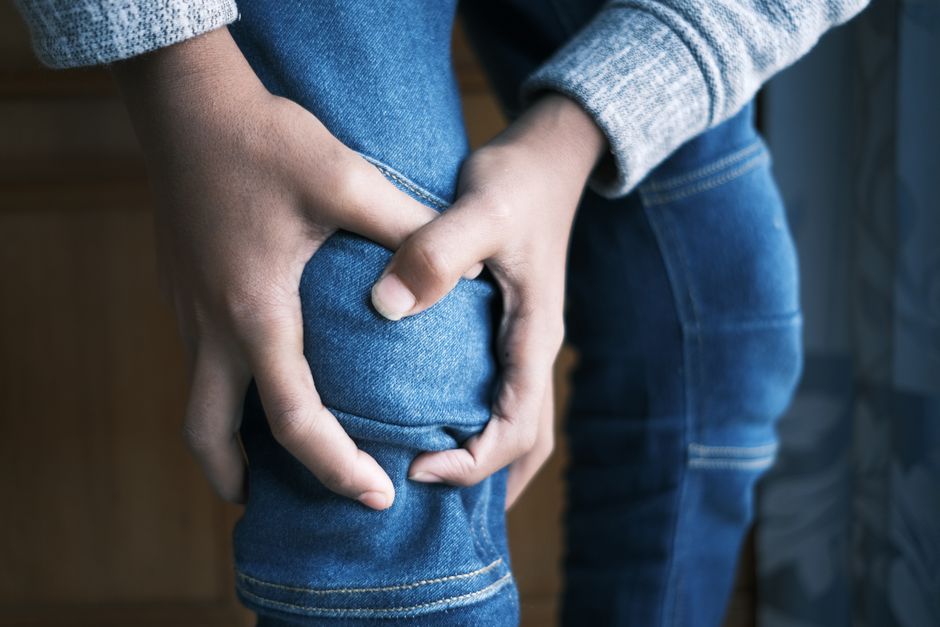
Knee pain in teenagers who carry extra weight isn't just about the weight itself. It's a specific kind of physical and emotional experience that many articles oversimplify. Understanding what's actually happening—and why the pain feels the way it does—can help you figure out what might genuinely help.
Why your knees are under extra strain
🦵 Not sure what's causing your knee pain?
Answer 5 quick questions and get a personalised result.
Find My Pattern → 60 seconds · No sign-upYour knees are hinge joints designed to bend and straighten smoothly. When your body weight increases, the force moving through that hinge increases too. That's not a judgment; it's physics. Each time you walk, jump, or climb stairs, your knees absorb a force roughly equal to 1.5 times your body weight with each step. The heavier you are, the more force they're managing.
But weight alone doesn't explain all the pain. Growing bodies are already complicated. If you're a teenager, your bones are still lengthening, your growth plates are still active, and your muscles may not be keeping pace with how quickly your frame is changing. Add extra body weight on top of that, and your muscles—especially in your thighs and hips—may struggle to stabilize your knee properly. When stabilizer muscles are weak or tight, your kneecap can track slightly off-center as it moves, creating that catch or ache.
Shoes matter too. Many teenagers wear shoes chosen for looks rather than support, or they've outgrown shoes without anyone noticing. Flat shoes, worn-out soles, or shoes that don't support your arch can change how your foot lands and how force travels up through your knee.
Sitting for long periods—which teenagers do constantly, in classes, at desks, in cars—can tighten the muscles on the front of your thigh and weaken the ones behind it. That imbalance pulls on your knee and can make pain worse when you finally stand and move.
What you can actually try
Start with how you move, not just how much you move. Low-impact activity like swimming or cycling feels easier on your knees than running or jumping because water and a bike seat share the load. But you don't have to join a team or commit to a formal program. Even 15 minutes of walking on a flat surface, a few times a week, can help. The goal isn't to "lose weight fast"—it's to give your knees movement without the sharp impact. You'll probably notice the dull evening throb lessens before you notice any change on the scale.
Ice after activity, not just when it hurts. Many teenagers wait until pain is obvious before icing. Instead, apply ice for 10–15 minutes after you've been active—after a day at school, after walking around, after PE class. This can prevent the swelling that happens later and makes the next day harder. Cold reduces inflammation before it builds up.
Wear shoes that actually support your foot. This isn't about expensive sneakers. It's about shoes with a firm heel cup, arch support, and cushioning. Worn-out shoes or flat shoes force your foot to work harder, which changes how your knee moves. If you're not sure what support looks like, a shoe store employee can watch you walk and suggest options.
Stretch your thighs and hips every day. Tight muscles on the front of your thigh (quadriceps) and the outside of your hip pull on your knee. Gentle stretches—holding each one for 20–30 seconds, not bouncing—can ease that pull. Do this after you're warm, like after a warm shower or a short walk. Tight muscles don't stretch well when cold.
Pay attention to stairs and getting out of bed. These moments often hurt more than regular walking. When climbing stairs, lead with your stronger leg going up, and lead with your weaker leg going down—it reduces the force through the painful knee. Getting out of bed, push yourself up with your hands rather than putting all your weight on your knees.
When to talk to a professional
Pain that's been there for weeks, pain that's getting worse instead of staying the same, or pain that shows up even when you're resting—these are signs to see a doctor. Swelling that doesn't go down overnight, warmth around the knee, or a feeling that your knee might give out are also worth mentioning to a healthcare provider.
The hardest part of knee pain as a teenager isn't always the physical part. It's the shame of being slower, the frustration of being told "just lose weight" as if that's simple or as if it fixes everything immediately, the cycle of pain making you avoid movement, which makes weight harder to manage, which makes you feel more hopeless. That cycle is real. A healthcare provider—whether that's your regular doctor, a physical therapist, or a sports medicine specialist—can help break it by treating the pain itself while you work on the bigger picture.
Safety note: If you have severe pain, significant swelling, a recent injury, fever, numbness, or difficulty bearing weight, speak with a qualified healthcare professional promptly.
Frequently Asked Questions
Q: Is it safe to exercise with knee pain in overweight teenager?
A: Gentle, low-impact movement is often beneficial — walking, swimming, and cycling tend to be well-tolerated. Avoid anything that sharply increases the discomfort. A physiotherapist can help identify which exercises are right for your specific situation and severity.
Q: When should I stop exercising because of knee pain in overweight teenager?
A: Stop if the pain is sharp, climbing steadily during exercise, or causing you to change how you move. Mild, stable discomfort that stays at a 2 to 3 out of 10 is often acceptable to work through gently. Anything above that — or pain that simply feels wrong — is your cue to stop and reassess.
Q: Is it normal to hear clicking sounds alongside knee pain in overweight teenager?
A: Joint sounds are extremely common and usually harmless — they often come from gas bubbles in the joint fluid or tendons flicking over bony prominences. If the clicking is painless and your knee functions normally, it's generally nothing to worry about. If it's accompanied by pain or swelling, mention it to a healthcare professional.
What To Do Tomorrow Morning
Most people who take early, sensible action recover well. Start with what you can manage today and monitor closely. If things are not improving after a few weeks, that is the right time to bring in professional support.
Helpful Next Step
As an Amazon Associate, we may earn from qualifying purchases. This does not affect the price you pay.
Helpful Support Option
If this type of knee discomfort shows up during daily movement, light support may help reduce strain on the joint while you work on the underlying cause.
See knee support options on AmazonHelpful Next Step
If gentle support helps during recovery, you can check a simple support option that many people use in daily life.
This content is for educational purposes only and does not constitute medical advice. Always consult a qualified healthcare professional for diagnosis and treatment.