🦵 Not sure what's causing it? Take the 5-question knee quiz.
Find My Pattern →Knee Gives Out on Stairs With No Warning
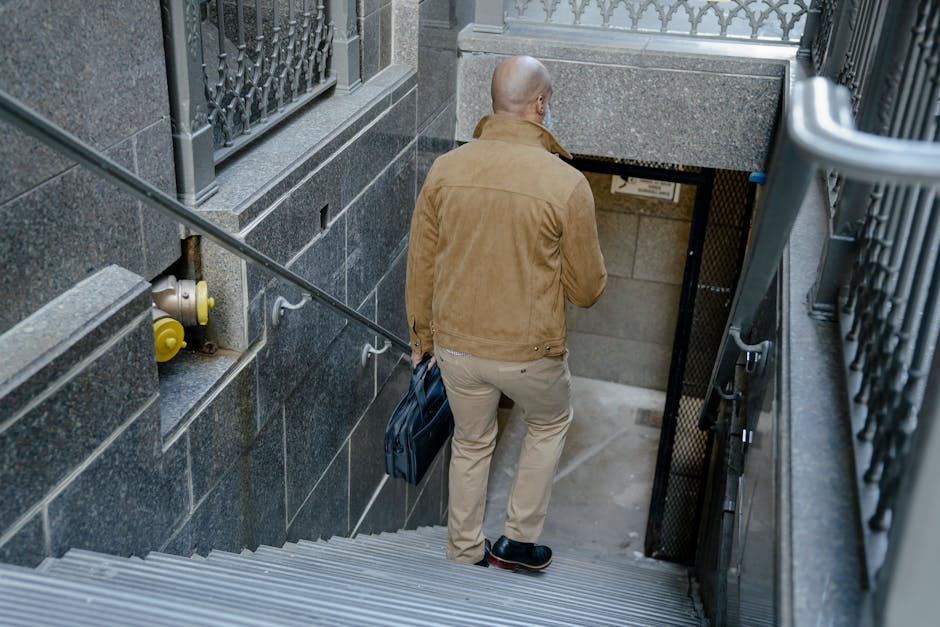
You're walking down the stairs at work or heading to the basement at home, and somewhere between one step and the next, your knee simply stops working. Not gradually. Not with a warning ache that builds. It's sudden—like the joint vanishes mid-stride and your leg buckles underneath you. You catch yourself on the railing, heart racing, and stand there for a moment wondering what just happened. Then it feels fine again. That unpredictability is what makes this so unsettling. You can't trust your own leg.
The sensation before it happens (if you notice it at all)
🦵 Not sure what's causing your knee pain?
Answer 5 quick questions and get a personalised result.
Find My Pattern → 60 seconds · No sign-upSome people describe a subtle buzzing or electrical tingling in the front of the thigh 10 or 15 minutes before an episode. Others feel a sudden heaviness, as if the muscle has gone slack. A few report warmth spreading across the knee joint itself. But many feel nothing at all—the collapse comes completely without warning, which is what makes stairs so frightening. You've learned to grip the railing tightly, to test your weight carefully on each step, to negotiate with your body about whether today is a "good leg day" or a "bad leg day." That constant vigilance is exhausting. It's worth knowing that both knees hurt going up and down stairs follows a very similar pattern and responds to the same kind of approach.
The moment it happens is distinctive: your weight shifts downward onto the step, and instead of the knee locking in place to support you, it feels like the whole joint gives way. Sometimes your foot slides slightly. Sometimes you catch yourself immediately. Sometimes you genuinely stumble. The relief that floods through you when you grab the railing mixes strangely with shame—relief that it wasn't worse, shame that your body betrayed you, especially if someone else saw it happen.
Why your knee might be collapsing
Muscle fatigue and timing. The quadriceps—the large muscle on the front of your thigh—is responsible for stabilizing your knee as you move down stairs. This muscle works hardest during the downward phase, when your body weight is loading into the joint. If your quad is fatigued (from the day's activity, from sitting too long earlier, from overuse the day before), it may simply not fire strongly enough at the exact moment you need it. The problem often isn't weakness in the traditional sense; it's a timing issue. Your muscle is there, but it's slow to engage or doesn't engage fully, leaving the knee unstable for a fraction of a second. That fraction is enough.
Proprioceptive confusion. Your body has a sensory system that tells your brain where your limbs are in space and how much force they're generating—this is called proprioception. An old injury, repetitive strain, or even prolonged inactivity can disrupt these signals. Your knee may literally not be sending accurate information to your brain about its position or stability. You feel fine until weight lands on it, and then your nervous system realizes too late that the joint needs support. This can happen even when imaging shows nothing obviously wrong, which is why some people feel gaslit by normal X-rays or MRI results.
Swelling you might not notice. Inflammation inside the knee joint can reduce stability without causing obvious pain or visible puffiness. The joint fluid that normally helps cushion and stabilize the knee becomes irritated, and the joint becomes mechanically looser. Stairs are particularly unforgiving because they demand precise stability while your body is moving through space. Flat ground allows more compensation. Stairs do not.
Ligament or cartilage stress. Damage to the ACL (anterior cruciate ligament) or MCL (medial collateral ligament), even partial tears, can cause episodes of instability that come and go. Similarly, cartilage damage under the kneecap or on the inner knee surface may create a catching sensation or sudden laxity. These injuries don't always hurt consistently; they often hurt intermittently, and the instability can be worse on some days than others depending on swelling, activity level, or how you've been loading the joint.
What you can try while you're figuring this out
Test your leg before committing. Before you step down, shift a small amount of weight onto the affected leg while holding the railing. Feel whether it's stable. If it feels shaky or uncertain, take the stairs more slowly or use both hands on the rail. This isn't weakness; it's wisdom. You're gathering information about your body's state today.
Strengthen the quad intentionally, but gently. Straight-leg raises (lying on your back, tightening your thigh muscle and lifting your leg a few inches) can help build quad endurance without stressing the knee joint. Hold each rep for a few seconds and focus on feeling the muscle work. Do this 3–4 times per week. The goal isn't dramatic strength gain; it's reliable, consistent muscle engagement.
Pay attention to patterns. Keep a simple note of when episodes happen. After certain activities? When you're tired? After sitting for long periods? After a day of heavy stairs? You may notice that your knee is more unstable at certain times, which can help you plan your day or avoid triggers while you're seeking help.
Ice after activity, not just after pain. If you've been on stairs a lot or done activities that load your knee, ice for 15 minutes afterward. This can reduce inflammation that might otherwise accumulate and make the next day worse. You're preventing the problem from building up.
Wear shoes with real support. Soft, flat shoes or worn-out soles force your foot and ankle to work harder to stabilize, which puts extra demand on your knee. A shoe with a firm heel and moderate arch support can reduce the micro-movements that destabilize the joint during stepping.
When to talk to a professional
If your knee is giving out regularly on stairs, you need an evaluation. This isn't something to manage indefinitely on your own. A physical therapist can assess how your muscles fire, whether you have proprioceptive deficits, and whether there's swelling or mechanical instability. They can also rule out structural damage that imaging might have missed or that developed recently. There's a close connection between this and knee aches after climbing several flights of stairs — the same structures are usually involved.
A doctor should evaluate you if the episodes are frequent, if you're falling or nearly falling, or if you notice swelling, warmth, or a sensation of the knee shifting inside the joint. They may order imaging or refer you to a

Frequently Asked Questions
Q: When should I stop exercising because of knee gives out on stairs with no warning?
A: Stop if the pain is sharp, climbing steadily during exercise, or causing you to change how you move. Mild, stable discomfort that stays at a 2 to 3 out of 10 is often acceptable to work through gently. Anything above that — or pain that simply feels wrong — is your cue to stop and reassess.
Q: Should I use a knee brace or compression sleeve for knee gives out on stairs with no warning?
A: A basic compression sleeve can offer comfort and mild support during activity, and many people find it helpful in the short term. Don't rely on it long-term without also addressing the root cause — whether that's strength, flexibility, or movement patterns.
Q: Is it normal to hear clicking sounds alongside knee gives out on stairs with no warning?
A: Joint sounds are extremely common and usually harmless — they often come from gas bubbles in the joint fluid or tendons flicking over bony prominences. If the clicking is painless and your knee functions normally, it's generally nothing to worry about. If it's accompanied by pain or swelling, mention it to a healthcare professional.
Where to Go From Here
Most people who take early, sensible action recover well. Start with what you can manage today and monitor closely. If things are not improving after a few weeks, that is the right time to bring in professional support.
Helpful Next Step
As an Amazon Associate, we may earn from qualifying purchases. This does not affect the price you pay.
Helpful Support Option
If this type of knee discomfort flares up on stairs, light compression or a supportive brace can help reduce strain on the joint while you work on strengthening the surrounding muscles.
See knee support options on AmazonHelpful Next Step
If gentle support helps during recovery, you can check a simple support option that many people use in daily life. People dealing with this frequently also notice knee buckles when climbing stairs, particularly after extended periods of inactivity.
This content is for educational purposes only and does not constitute medical advice. Always consult a qualified healthcare professional for diagnosis and treatment.