🦵 Not sure what's causing it? Take the 5-question knee quiz.
Find My Pattern →Knee Pain From Hip Weakness
You're climbing stairs and feel a subtle shift inside your knee—not sharp, but like something's sliding slightly out of place. Or maybe you've been sitting cross-legged for twenty minutes and when you stand, your knee aches for the next hour. The strange part is that the pain often vanishes once you start moving, only to return later when you're still. You've probably been told your hips are weak, and maybe you've tried the exercises, but something feels off about that explanation. The exercises feel easy. The pain keeps coming back. And you're starting to wonder if weakness is really the whole story.
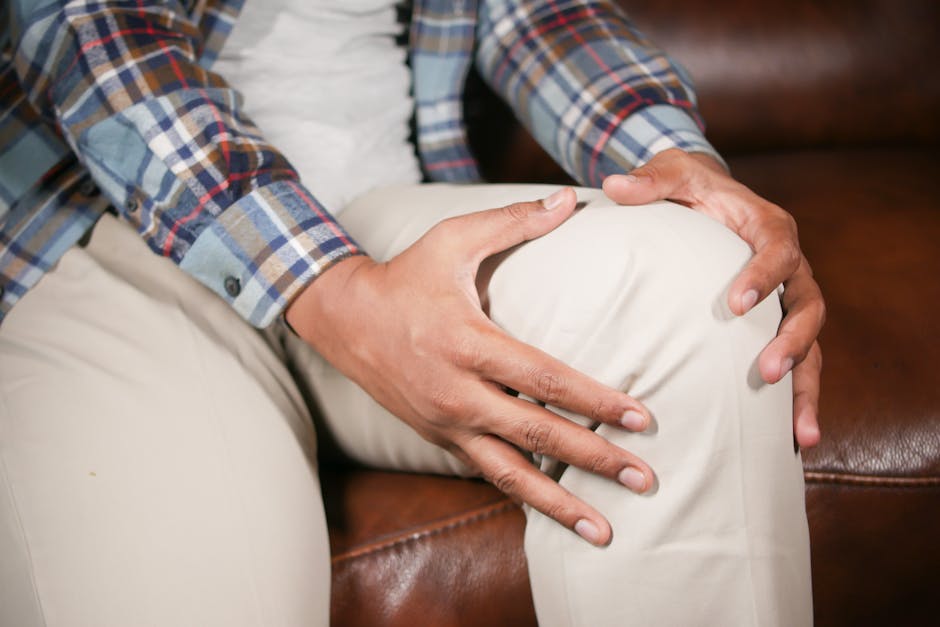
How hip weakness creates knee stress
🦵 Not sure what's causing your knee pain?
Answer 5 quick questions and get a personalised result.
Find My Pattern → 60 seconds · No sign-upWhen your hip muscles aren't doing their job, your knee compensates. But it's not quite as simple as "weak equals pain." What actually happens is more about timing and patterns.
Your hip muscles—especially the ones on the outside of your hip that stabilize you side-to-side—are supposed to keep your pelvis level and centered when you move. When they're underactive, your pelvis tilts or shifts. That tilt travels down your leg and changes how your knee tracks. Your kneecap may sit slightly inward instead of straight, or your shin may rotate inward just a degree or two. Over hours or days, that small misalignment creates friction and stress inside the knee joint.
Another way hip weakness shows up: your body learns to substitute. Your quads become overworked because they're doing some of the stabilizing work that your hip should be handling. This creates a muscular imbalance—tight, overactive quads and weak, underactive hips. That imbalance pulls your knee in directions it wasn't designed to move. The pain you feel might be your knee's way of saying the load is distributed wrong, not necessarily that something is torn or severely damaged.
Hip weakness can also delay your push-off during walking. Instead of propelling forward from your hip, you rely more on your knee and ankle. That changes the rhythm of your stride and puts extra demand on your knee joint over hundreds of steps throughout the day.
What to try: moving differently, not just harder
The mistake most people make is treating hip weakness like a strength problem that requires harder exercises. Often, it's actually a coordination problem. Your hip muscles may have the strength, but they're not firing at the right time or in the right sequence.
Start by noticing when your knee hurts and what you're doing. Is it after sitting? After climbing stairs? After a long walk? That timing tells you something. If pain appears specifically during the descent of stairs but not the climb, your hip is likely struggling to control the lowering phase. If it's after sitting, your hip flexors may be tight, and your hip stabilizers are fatigued from compensating all day.
Try a simple awareness exercise: stand on one leg for 30 seconds and watch your pelvis in a mirror. Does it drop on the opposite side? Does your knee cave inward? That's your hip muscles not engaging. Now try the same thing but squeeze your outer hip muscle (the one on the standing-leg side) before you lift the other leg. Notice the difference? That's the feeling you want to recreate during walking and stairs. Do this daily, just once or twice, for a week. It's not about reps—it's about waking up the muscle.
When you do stairs, slow down on the way down. Place your foot carefully and feel your hip working to lower your body weight. This teaches your hip muscles to do the job instead of your knee bearing all the load. Go slower than feels natural. This is retraining, not cardio.
Sitting position matters more than most articles mention. If you're sitting cross-legged or with your legs tucked under you for long stretches, your hip muscles are in a shortened, inactive position. When you stand, they're sluggish. Try sitting with your feet flat on the floor, knees at 90 degrees. It sounds boring, but it keeps your hip muscles in a neutral, ready position.
Walking on flat ground is fine, but avoid hills and stairs for a few days if pain is sharp. Gentle walking on level surfaces actually helps—it gives your hip muscles repetition without overload. The goal isn't to avoid movement; it's to avoid the specific movements that overload your knee while your hip is weak.
When to see a professional
If you've been aware of your movement for two weeks and the pain isn't changing, or if it's getting worse, a physical therapist can assess whether your hip is actually weak or whether something else is creating the pain pattern. Sometimes what feels like hip weakness is actually hip tightness, a labral issue, or a knee problem that needs different treatment entirely.
Pain that's sharp and sudden, especially after an injury, needs evaluation sooner. Pain that's dull and delayed (appearing hours after activity) can often be managed on your own for a couple of weeks while you change how you move. But if the dull ache becomes throbbing, or if you notice swelling, don't wait.
Safety note: If you have severe pain, significant swelling, a recent injury, fever, numbness, or difficulty bearing weight, speak with a qualified healthcare professional promptly.
Frequently Asked Questions
Q: Should I apply heat or ice to a painful knee?
A: Cold — ice wrapped in a cloth — works better for acute flare-ups, particularly in the first 24 to 48 hours when the area feels warm or inflamed. Gentle heat tends to be more helpful for muscle stiffness and chronic, recurring aches. Never apply either directly to bare skin.
Q: Can stretching help with knee pain from hip weakness?
A: Gentle stretching of the quadriceps, hamstrings, calves, and hip flexors can reduce the muscular tension that contributes to knee discomfort. A sustained, comfortable hold of 20 to 30 seconds is far more effective and safer than aggressive or bouncing stretches.
Q: How long does knee pain from hip weakness usually last?
A: This varies a lot depending on the cause. Minor muscle strain or overuse tends to settle within a few days to two weeks with appropriate rest and gentle movement. If it hasn't improved after three weeks — or symptoms are worsening — that's a clear signal to get a professional opinion.
Where to Go From Here
Most people who take early, sensible action recover well. Start with what you can manage today and monitor closely. If things are not improving after a few weeks, that is the right time to bring in professional support.
Helpful Next Step
As an Amazon Associate, we may earn from qualifying purchases. This does not affect the price you pay.
Helpful Support Option
If this type of knee discomfort shows up during daily movement, light support may help reduce strain on the joint while you work on the underlying cause.
See knee support options on AmazonHelpful Next Step
If gentle support helps during recovery, you can check a simple support option that many people use in daily life.
This content is for educational purposes only and does not constitute medical advice. Always consult a qualified healthcare professional for diagnosis and treatment.