🦵 Not sure what's causing it? Take the 5-question knee quiz.
Find My Pattern →Knee Pain After Twisting Injury
You felt it happen instantly—that moment your foot planted wrong and your knee twisted beneath you. Maybe you were playing sport, stepping off a curb, or simply walking and your leg caught at an angle it shouldn't. Now, hours or days later, you're noticing that certain movements trigger a sharp catch, or you're waking up with swelling that wasn't there before bed. The pain isn't constant, but it arrives predictably: when you try to bend fully, when you forget and step down normally, or after you've been sitting still for a while and stand up to move again. That sudden loss of confidence in your own knee—wondering if it will hold when you put weight on it—can feel more unsettling than the pain itself.
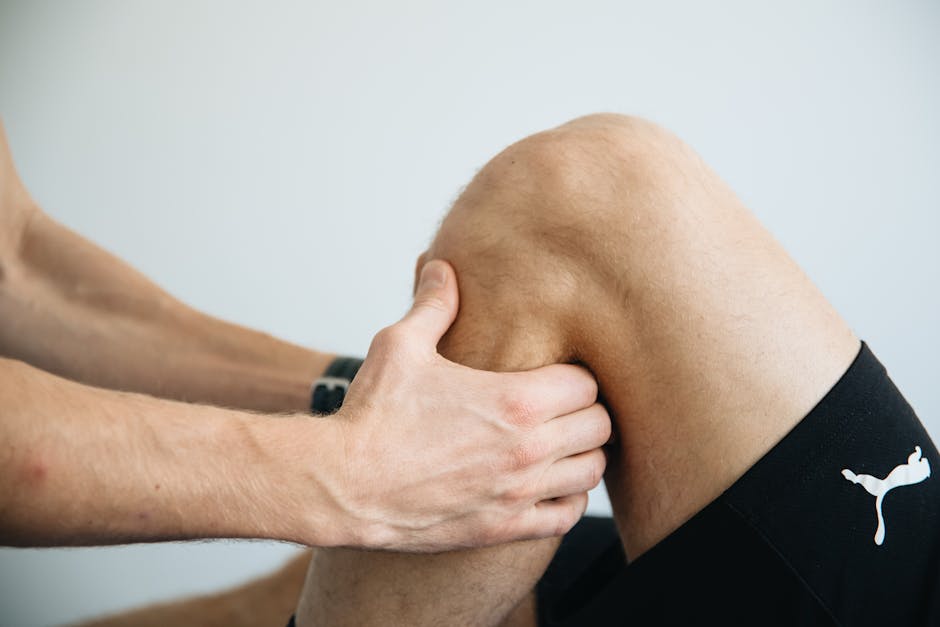
Why a twisting injury affects your knee this way
🦵 Not sure what's causing your knee pain?
Answer 5 quick questions and get a personalised result.
Find My Pattern → 60 seconds · No sign-upWhen your knee twists, the structures inside absorb force they weren't prepared for. The ligaments that hold your knee stable—especially the ACL and MCL on the inner side—can stretch or partially tear. Cartilage surfaces can also be irritated or, in some cases, damaged. The joint responds by swelling, which is your body's way of protecting the area, but that swelling also restricts movement and creates that stiff, heavy sensation.
The timing of your pain often tells you something about what's happening inside. Sharp pain that catches when you move in a specific direction usually means a ligament or cartilage surface is being pinched or stressed. A dull ache that builds throughout the day, especially if you've been on your feet, suggests inflammation is accumulating. Some people notice the swelling is worst first thing in the morning—your knee has been still all night, fluid has pooled, and the joint feels thick and resistant to bending.
What complicates recovery is that not all damage shows up immediately. You might feel fine for the first few hours, then wake up the next morning unable to bend your knee fully. This delayed response is normal and doesn't mean you've made things worse—it's just how inflammation develops.
What you can do while you recover
Move carefully, not not at all. Complete immobility often makes stiffness worse. Gentle, pain-free movement—like small knee bends while sitting, or slow walking without forcing it—can actually help reduce swelling faster than staying completely still. The key is listening to your knee: if a movement triggers sharp pain, stop. If it's mild discomfort, gentle motion is usually fine.
Ice in the first few days, but understand what it does. Ice reduces swelling and can numb sharp pain, making movement easier. Apply it for 15–20 minutes when swelling is visible or pain is sharp. After the first week, ice becomes less important unless swelling returns. Some people find that alternating between ice and gentle heat (after the acute phase) helps them move more comfortably.
Sleep position matters more than you'd think. Many people with knee pain sleep with a pillow under the knee, thinking it helps. In reality, this can tighten the joint overnight and make morning stiffness worse. Try sleeping with a thin pillow under your ankle instead, so your knee rests in a slightly bent but not compressed position. You'll often notice less swelling and less pain when you first stand up.
Manage swelling actively. Elevation helps, but only if you're consistent. Lying down with your knee above heart level for 20 minutes several times a day can reduce the heavy, tight feeling. Compression from an elastic bandage or sleeve also helps, though it shouldn't be so tight that it cuts off circulation or feels numb below the knee.
Pain relief medication can help you move, not just feel better. Over-the-counter anti-inflammatory medication (like ibuprofen) can reduce both pain and swelling, which sometimes makes gentle movement easier. This matters because movement helps recovery—you're not just masking pain, you're enabling the motion that helps your knee heal.
The emotional part of recovery
What catches many people off guard is the psychological shift. If you're active, suddenly not being able to walk normally or play sport creates a real sense of loss. You watch others do things you can't, and even on days when your knee feels better, you're afraid to test it. That fear of re-injury often becomes a bigger barrier to movement than the actual pain. This is normal, and it's worth acknowledging: recovery isn't just physical.
When to see a professional
If your knee is severely painful, you can't put any weight on it, or swelling is extreme and not reducing, see a healthcare provider soon. You should also seek help if your knee feels unstable—like it might give out—or if you have significant numbness, tingling, or a feeling of the knee locking in one position. For useful context, swollen knee with no injury tends to have the same mechanical roots and overlapping solutions.
Ongoing pain beyond a few weeks, or pain that gets worse instead of better, warrants an evaluation. A professional can determine whether you have a ligament tear or cartilage damage that needs specific management.
Safety note: If you have severe pain, significant swelling, a recent injury, fever, numbness, or difficulty bearing weight, speak with a qualified healthcare professional promptly.
Frequently Asked Questions
Q: When should I stop exercising because of knee pain after twisting injury?
A: Stop if the pain is sharp, climbing steadily during exercise, or causing you to change how you move. Mild, stable discomfort that stays at a 2 to 3 out of 10 is often acceptable to work through gently. Anything above that — or pain that simply feels wrong — is your cue to stop and reassess.
Q: Can stretching help with knee pain after twisting injury?
A: Gentle stretching of the quadriceps, hamstrings, calves, and hip flexors can reduce the muscular tension that contributes to knee discomfort. A sustained, comfortable hold of 20 to 30 seconds is far more effective and safer than aggressive or bouncing stretches.
Q: Is it safe to exercise with knee pain after twisting injury?
A: Gentle, low-impact movement is often beneficial — walking, swimming, and cycling tend to be well-tolerated. Avoid anything that sharply increases the discomfort. A physiotherapist can help identify which exercises are right for your specific situation and severity.
What To Do Tomorrow Morning
Most people who take early, sensible action recover well. Start with what you can manage today and monitor closely. If things are not improving after a few weeks, that is the right time to bring in professional support.
Helpful Next Step
As an Amazon Associate, we may earn from qualifying purchases. This does not affect the price you pay.
Helpful Support Option
If this type of knee discomfort shows up during daily movement, light support may help reduce strain on the joint while you work on the underlying cause.
See knee support options on AmazonHelpful Next Step
If gentle support helps during recovery, you can check a simple support option that many people use in daily life.
This content is for educational purposes only and does not constitute medical advice. Always consult a qualified healthcare professional for diagnosis and treatment.