🦵 Not sure what's causing it? Take the 5-question knee quiz.
Find My Pattern →Knee Pain After Playing Football
That sharp pain hits the moment you plant your foot to cut across the field. It might disappear entirely when you jog in a straight line, then return with a vengeance the second you try to change direction. By evening, sitting on the couch, a dull ache settles in—the kind that feels worse when you're still than when you were actually playing. This delayed soreness, combined with the unpredictable stabbing sensation during specific movements, is what makes football-related knee pain so frustrating. It's not constant. It's selective. And that makes it hard to know how serious it really is.
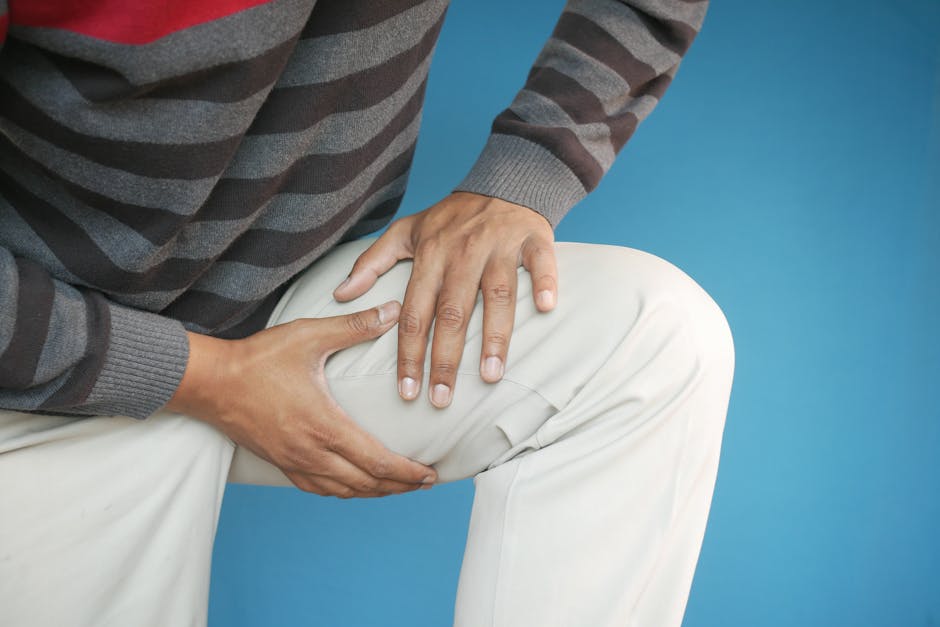
Why football puts particular stress on the knee
🦵 Not sure what's causing your knee pain?
Answer 5 quick questions and get a personalised result.
Find My Pattern → 60 seconds · No sign-upFootball demands something most daily activities don't: rapid deceleration combined with lateral force. When you plant your foot to change direction, your knee absorbs forces that can be several times your body weight. The structures inside and around the knee—ligaments, cartilage, tendons—are designed to handle this, but they have limits.
The most common culprits after football include ligament strain (the ACL and MCL are vulnerable during twisting movements), meniscus irritation from the repetitive cutting motions, and patellar tendinitis from the explosive pushing off required for sprinting and jumping. Overuse can also play a role, especially if you've ramped up training intensity recently or played multiple games within a short window without adequate recovery.
What makes football different from other sports is the unpredictability. A tennis player knows they'll be moving side-to-side on a court. A football player might sprint straight, then suddenly need to plant and rotate. That sudden demand—the moment your body wasn't quite ready for the change—is often where injury happens.
What you can do in the first few days
Start with ice, but pay attention to timing. Apply ice for 15–20 minutes after playing, when the knee is still warm and swollen. Many players skip this step because they don't feel the worst pain until hours later, when they're sitting down. That delayed ache is inflammation building, and early icing can reduce it before it peaks.
Compression with an elastic bandage or sleeve can help manage swelling and provide mild support during movement. The key is not wrapping it so tightly that circulation suffers—you should be able to slip a finger under the bandage comfortably.
Elevation matters less than people think if you're not significantly swollen, but if your knee is puffy, keeping it above hip level for the first 24–48 hours can help fluid drain.
Modify your activity thoughtfully. This doesn't mean complete immobility. Gentle walking often feels better than sitting still, and many players find that light movement actually reduces the dull ache. What you want to avoid is the specific movement that caused the sharp pain. If cutting hurts but straight-line jogging doesn't, that's useful information—it tells you something about which structures are irritated.
Over-the-counter anti-inflammatory medication can reduce pain and swelling, but it masks the signal your knee is sending. Use it strategically if you need to manage pain while you're figuring out what's actually wrong, not as a way to push through and play harder.
The psychological weight of stepping back
Football is often central to identity—especially mid-season. The pressure to play through pain in a team environment is real and rarely discussed openly. Your teammates are counting on you. You're counting on yourself. Sitting out feels like letting people down.
This psychological pressure is exactly why many players either minimize their pain or push into it too quickly. The result is often a minor injury that becomes a chronic problem. A few days of modified play or sitting out one or two games can prevent weeks on the sideline later.
When to seek professional evaluation
If the pain is severe enough that you can't put weight on the leg, or if your knee feels unstable—like it might give out—don't wait. Significant swelling that doesn't improve within 48 hours, or pain that worsens rather than improves over several days, also warrants professional assessment.
Pain that improves for a few days and then returns when you try to return to play is a sign you need guidance on how to progress safely. A qualified healthcare professional can assess whether you have a ligament injury, meniscus damage, or something less serious, and they can create a realistic timeline for returning to football.
Safety note: If you have severe pain, significant swelling, a recent injury, fever, numbness, or difficulty bearing weight, speak with a qualified healthcare professional promptly.
Frequently Asked Questions
Q: Why does my knee feel worse after sitting for a long time?
A: This pattern — stiffness or pain after prolonged sitting that eases once you move around — is a hallmark of irritation around the kneecap or the soft tissues surrounding it. The joint stiffens in a flexed position, and the first movement disturbs it. Most people find it settles within a minute or two of walking.
Q: Can stretching help with knee pain after playing football?
A: Gentle stretching of the quadriceps, hamstrings, calves, and hip flexors can reduce the muscular tension that contributes to knee discomfort. A sustained, comfortable hold of 20 to 30 seconds is far more effective and safer than aggressive or bouncing stretches.
Q: Is it safe to exercise with knee pain after playing football?
A: Gentle, low-impact movement is often beneficial — walking, swimming, and cycling tend to be well-tolerated. Avoid anything that sharply increases the discomfort. A physiotherapist can help identify which exercises are right for your specific situation and severity.
A Simple Next Step
Most people who take early, sensible action recover well. Start with what you can manage today and monitor closely. If things are not improving after a few weeks, that is the right time to bring in professional support.
Helpful Next Step
As an Amazon Associate, we may earn from qualifying purchases. This does not affect the price you pay.
Helpful Support Option
If this type of knee discomfort shows up during daily movement, light support may help reduce strain on the joint while you work on the underlying cause.
See knee support options on AmazonHelpful Next Step
If gentle support helps during recovery, you can check a simple support option that many people use in daily life.
This content is for educational purposes only and does not constitute medical advice. Always consult a qualified healthcare professional for diagnosis and treatment.