🦵 Not sure what's causing it? Take the 5-question knee quiz.
Find My Pattern →Knee Pain After HIIT Workout
You finish your workout feeling strong—your heart's still pounding, you're breathing hard, and in that moment everything feels fine. But then 4 to 6 hours later, or the next morning, you notice a dull ache around your kneecap. Or maybe it's sharper: a catch that only happens when you shift your weight going down the stairs. The frustration hits harder than the pain itself, because you weren't doing anything extreme. Just burpees, jump squats, mountain climbers. Things you've done before. So why does your knee feel like this now?
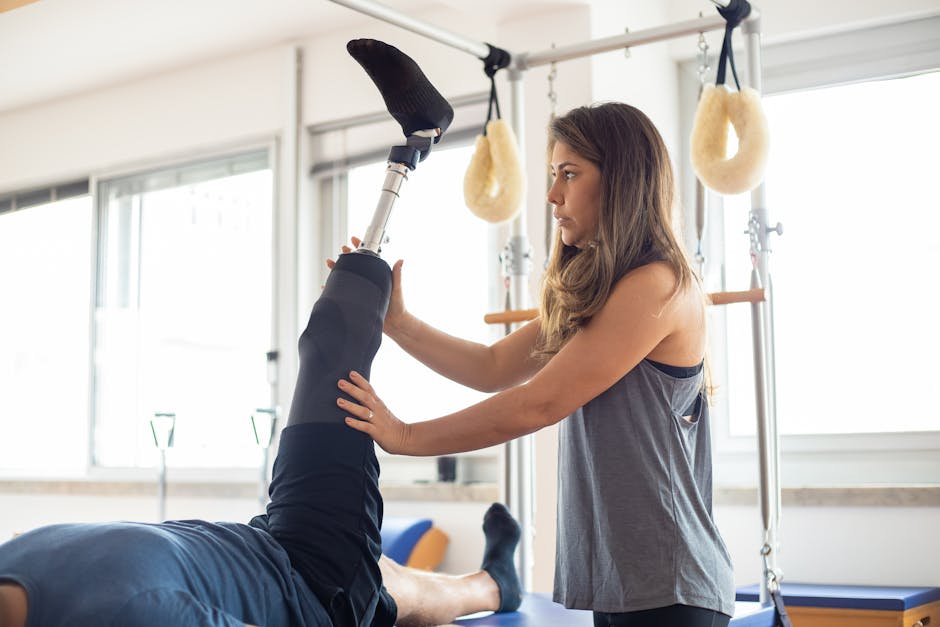
Why HIIT workouts can stress your knees differently
🦵 Not sure what's causing your knee pain?
Answer 5 quick questions and get a personalised result.
Find My Pattern → 60 seconds · No sign-upHigh-intensity interval training loads your knee joints in ways that steady-pace exercise doesn't. When you're moving fast and changing direction repeatedly, your knees absorb force at angles they may not be prepared for. But it's rarely one simple cause.
Rapid force absorption without adequate deceleration is often the first culprit. During explosive movements like jump squats or lateral bounds, your quadriceps and hamstrings have to work as shock absorbers. If those muscles fatigue quickly—or if your glutes aren't engaging properly to stabilize your hips—your knee takes on more stress than it's designed to handle. You might feel this as a burning sensation during the workout that feels muscular and normal, then swelling appears hours later.
Individual biomechanics play a larger role than most people realize. Two people can do the exact same HIIT class and have completely different outcomes. If your knees cave inward slightly when you land (called valgus collapse), or if you naturally have less hip stability, the same burpee that feels fine for your friend might create repetitive micro-stress in your knee. This isn't a weakness—it's just how your body is built. Recognizing this early prevents you from pushing through something that genuinely doesn't work for your structure.
Sudden volume or intensity jumps matter more than people admit. If you returned to HIIT after time off, or jumped from 2 sessions per week to 4, your tissues haven't had time to adapt. Your nervous system might feel ready (you're mentally confident), but your tendons and cartilage need gradual loading. Pain that appears the day after a new routine often signals this mismatch.
Fatigue in smaller stabilizer muscles can shift load to your knee joint. Your vastus medialis obliquus (the inner quad muscle) and your glute medius (outer hip) tire before your larger muscles do. Once they fatigue, your knee tracking changes slightly with every rep. This accumulated misalignment over 20-30 minutes of intervals can create delayed pain that feels like it came from nowhere.
What to try while you recover
Identify the exact movement that triggers it. Sit down and mentally replay your workout. Was the pain worse during jump squats? Lateral lunges? Burpees? Or did it only start when you did stairs afterward? This detail matters. If jump squats hurt but step-ups don't, you've learned something about the angle or speed that bothers your knee. Write it down. You'll need this information.
Apply ice selectively and watch the timing. If swelling appeared 4-6 hours after your workout, ice works best in that window. Twenty minutes on, at least an hour off. But ice isn't magic—it reduces inflammation, not the underlying stress. If you ice and the pain returns the moment you're active again, the issue isn't resolved yet.
Test movement, don't rest completely. Sitting still for days often makes knee pain worse, not better. A dull ache that improves with gentle walking but worsens after sitting for 30+ minutes tells you the tissue needs light movement, not immobilization. Try easy walking, swimming, or stationary cycling at low resistance. If any movement sharpens the pain, stop and wait another day.
Strengthen your glutes with non-impact work. Your glutes stabilize your hips and reduce stress on your knees. Side-lying leg lifts, clamshells, and glute bridges—done slowly, with control, no jumping—can rebuild this stability while your knee recovers. Do these 3-4 times per week. You'll feel the difference in how your knee tracks during movement.
Adjust your warm-up for your specific knees. A generic 5-minute jog won't prepare your knees for explosive work if your hips are tight. Spend 2-3 minutes on hip mobility: leg swings, 90-90 stretches, glute activation. Then do 3-5 reps of each HIIT movement at 50% intensity before you go hard. This teaches your stabilizer muscles what's coming.
When to seek professional guidance
Mild soreness 24-48 hours after a hard workout is common. But if pain is sharp during the workout itself (not just a burn, but a catch or pinching sensation), or if swelling is significant, or if pain gets worse over several days despite rest and ice, that's your signal to see someone.
Also watch for pain that changes your movement pattern. If you're limping, or if you're unconsciously favoring one leg, a physical therapist or sports medicine doctor can identify what's actually stressed and build a plan that lets you return to HIIT safely.
Safety note: If you have severe pain, significant swelling, a recent injury, fever, numbness, or difficulty bearing weight, speak with a qualified healthcare professional promptly.
Frequently Asked Questions
Q: How long does knee pain after hiit workout usually last?
A: This varies a lot depending on the cause. Minor muscle strain or overuse tends to settle within a few days to two weeks with appropriate rest and gentle movement. If it hasn't improved after three weeks — or symptoms are worsening — that's a clear signal to get a professional opinion.
Q: Why does my knee feel worse after sitting for a long time?
A: This pattern — stiffness or pain after prolonged sitting that eases once you move around — is a hallmark of irritation around the kneecap or the soft tissues surrounding it. The joint stiffens in a flexed position, and the first movement disturbs it. Most people find it settles within a minute or two of walking.
Q: When should I stop exercising because of knee pain after hiit workout?
A: Stop if the pain is sharp, climbing steadily during exercise, or causing you to change how you move. Mild, stable discomfort that stays at a 2 to 3 out of 10 is often acceptable to work through gently. Anything above that — or pain that simply feels wrong — is your cue to stop and reassess.
One Thing to Try First
Most people who take early, sensible action recover well. Start with what you can manage today and monitor closely. If things are not improving after a few weeks, that is the right time to bring in professional support.
Helpful Next Step
As an Amazon Associate, we may earn from qualifying purchases. This does not affect the price you pay.
Helpful Support Option
Resistance bands are commonly used in knee rehabilitation to build quad and glute strength without placing heavy load on the joint. A useful addition to a home exercise routine.
See resistance band optionsHelpful Next Step
If gentle support helps during recovery, you can check a simple support option that many people use in daily life.
This content is for educational purposes only and does not constitute medical advice. Always consult a qualified healthcare professional for diagnosis and treatment.