🦵 Not sure what's causing it? Take the 5-question knee quiz.
Find My Pattern →Knee Pain on Elliptical Machine
The elliptical feels like the safer choice. You're not pounding the pavement like a runner, and the machine guides your feet in a smooth, controlled path. But somewhere around the 15-minute mark—after you've settled into your rhythm and committed mentally to finishing—a sharp twinge appears on the inside of your knee. Or maybe it's a dull ache that builds so gradually you don't notice it until you're already 20 minutes in and stopping feels like admitting defeat. By the next morning, your knee is stiff enough that climbing stairs feels risky, and you're left wondering if yesterday's workout caused it or if something else is wrong.
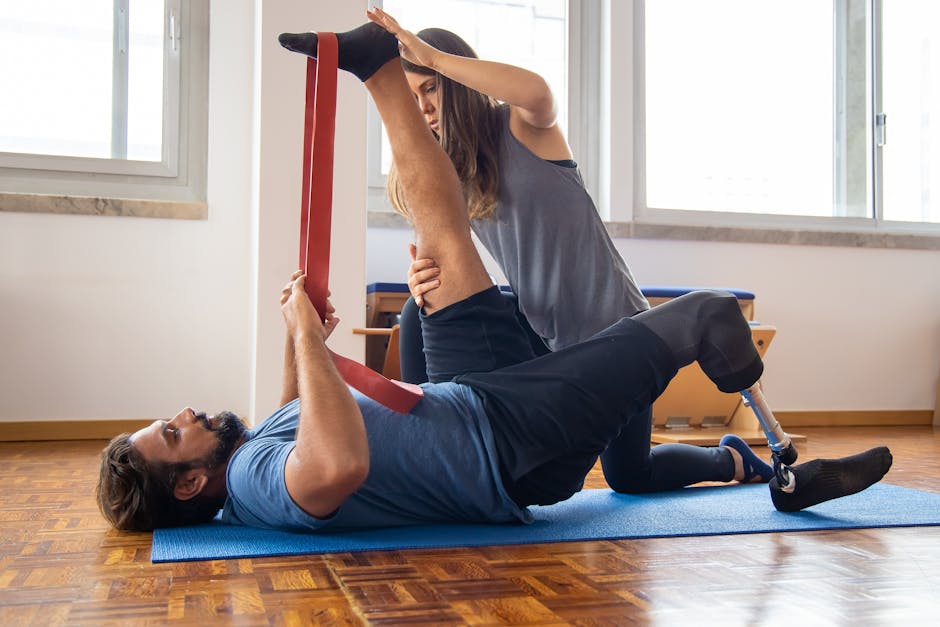
This pattern—pain that sneaks up mid-session or shows up the day after—is one of the most confusing parts of elliptical knee pain. The machine feels low-impact, so the injury doesn't make sense. But the elliptical creates specific movement patterns and forces that can irritate your knee in ways that aren't immediately obvious.
Why the elliptical bothers your knee
🦵 Not sure what's causing your knee pain?
Answer 5 quick questions and get a personalised result.
Find My Pattern → 60 seconds · No sign-upThe elliptical's smooth, oval pedal path can actually work against you. Unlike running, where impact is obvious and you adjust naturally, the elliptical's guided motion can mask poor alignment. Your knee may track slightly inward or outward with each stroke, and because the machine keeps your feet moving, you don't feel the small compensations happening until irritation builds.
Different machines have different stride lengths and pedal paths. A machine with a shorter stride or a pedal path that's too narrow for your leg length can force your knee into a position that stresses the tissues around your kneecap or the inner knee structures. You might feel fine on one elliptical and uncomfortable on another, which is why gym-to-gym experiences vary so much.
Weak hip and glute muscles often play a quiet but significant role. When these muscles aren't strong enough, your knee has to work harder to stabilize your leg during each pedal stroke. The repetitive motion—especially at higher resistance—can irritate the tissues around your kneecap or create a dull, building ache along the inner knee. This is why the pain often feels worse the day after: the fatigue from compensation catches up with you overnight.
Ramping up intensity or duration too quickly can also trigger pain that appears delayed. You might feel fine during the workout and even for a few hours after, then wake up the next morning with noticeable stiffness. This delayed response makes it hard to connect cause and effect, and it's easy to blame the workout when the real issue was doing too much too soon.
What you can try
Start by adjusting the machine itself. Check that the seat height allows your knee to have a slight bend at the bottom of the pedal stroke—not locked straight, and not bent so much that your thigh is nearly parallel to the ground. Your foot should feel centered on the pedal, not rolling inward or outward. If your gym has multiple ellipticals, try a different machine to see if the stride length or pedal path feels more comfortable.
Reduce resistance and speed before your next session. Pain that appears 15 minutes in often improves when you lower the workload. Aim for a resistance level where you can maintain steady effort without gripping the handles tightly or leaning forward. Tension in your upper body often translates to tension in your legs, which can aggravate knee pain.
Warm up for 5 minutes at very low resistance before increasing effort. This gives your knee time to prepare for the repetitive motion. A cold start into moderate or high intensity can provoke pain that a proper warm-up prevents.
Apply ice for 15 minutes after your workout, even if you don't feel significant pain during exercise. This can help reduce irritation that might otherwise show up as stiffness the next day. The ice doesn't need to be painful—just cold enough to numb the area slightly.
Take at least one full rest day between elliptical sessions while you're managing pain. The temptation to "just do light cardio" is strong when you're worried about losing fitness, but rest days are when your knee actually recovers. One or two sessions per week with rest days between them often feels better than pushing through daily.
When to speak with a professional
If pain is sharp and immediate—appearing within the first few minutes and worsening as you continue—stop using the elliptical and see someone soon. Sharp, localized pain can signal structural irritation that needs assessment.
Pain that doesn't improve after two weeks of modified workouts, or pain that's worse the morning after despite taking a rest day, warrants professional evaluation. A physical therapist or sports medicine doctor can assess your knee alignment, strength, and movement patterns to identify what's actually driving the pain.
Clicking, grinding, or a sensation of instability—even without significant pain—should be checked. These sensations sometimes indicate cartilage irritation or tracking issues that can worsen without intervention.
Swelling, warmth, or redness around your knee suggests inflammation that needs professional attention.
Safety note: If you have severe pain, significant swelling, a recent injury, fever, numbness, or difficulty bearing weight, speak with a qualified healthcare professional promptly.
Frequently Asked Questions
Q: How long does knee pain on elliptical machine usually last?
A: This varies a lot depending on the cause. Minor muscle strain or overuse tends to settle within a few days to two weeks with appropriate rest and gentle movement. If it hasn't improved after three weeks — or symptoms are worsening — that's a clear signal to get a professional opinion.
Q: When should I stop exercising because of knee pain on elliptical machine?
A: Stop if the pain is sharp, climbing steadily during exercise, or causing you to change how you move. Mild, stable discomfort that stays at a 2 to 3 out of 10 is often acceptable to work through gently. Anything above that — or pain that simply feels wrong — is your cue to stop and reassess.
Q: Is it normal to hear clicking sounds alongside knee pain on elliptical machine?
A: Joint sounds are extremely common and usually harmless — they often come from gas bubbles in the joint fluid or tendons flicking over bony prominences. If the clicking is painless and your knee functions normally, it's generally nothing to worry about. If it's accompanied by pain or swelling, mention it to a healthcare professional.
A Simple Next Step
Most people who take early, sensible action recover well. Start with what you can manage today and monitor closely. If things are not improving after a few weeks, that is the right time to bring in professional support.
Helpful Next Step
As an Amazon Associate, we may earn from qualifying purchases. This does not affect the price you pay.
Helpful Support Option
Resistance bands are commonly used in knee rehabilitation to build quad and glute strength without placing heavy load on the joint. A useful addition to a home exercise routine.
See resistance band optionsHelpful Next Step
If gentle support helps during recovery, you can check a simple support option that many people use in daily life.
This content is for educational purposes only and does not constitute medical advice. Always consult a qualified healthcare professional for diagnosis and treatment.