🦵 Not sure what's causing it? Take the 5-question knee quiz.
Find My Pattern →Knee Feels Unstable After Climbing Stairs
The stairs down from your office feel fine on the way up. Your legs work. The pain isn't there yet. But halfway down—or sometimes not until you're sitting at your desk twenty minutes later—your knee suddenly feels loose. Not painful exactly. Loose. Like something inside isn't holding where it should. You grip the railing tighter. Maybe you take the next step slower, testing it first. And now you're thinking about those stairs every time you approach them, even though logically you know you climbed them fine yesterday.
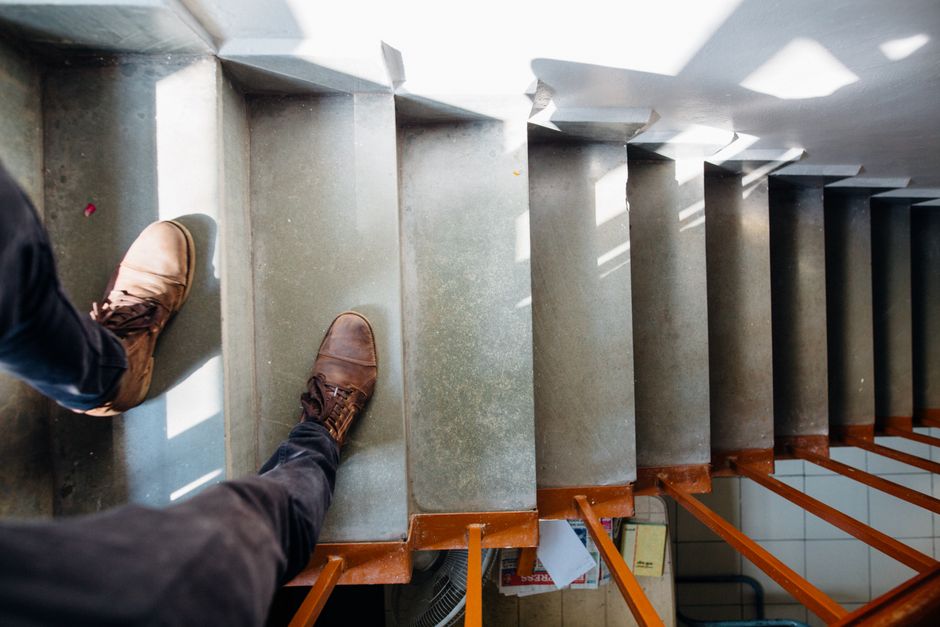
This instability—that sensation of your knee not being reliably "there" under you—is different from sharp pain. It's scarier in some ways because you can't predict when it will happen or fully trust your own leg to support you. Understanding what's likely causing this loose feeling, and what you can actually do about it, helps you move through stairs with more confidence again.
Why Your Knee Feels Loose on the Stairs
🦵 Not sure what's causing your knee pain?
Answer 5 quick questions and get a personalised result.
Find My Pattern → 60 seconds · No sign-upDescending stairs puts your knee in a vulnerable position. Your leg is bent, your weight is shifting downward, and your muscles have to work hard to control that descent. If something in the system isn't stable—whether that's muscle strength, how your kneecap tracks, or the small ligaments that help hold everything in place—you'll feel it most on the way down. If you also experience knee feels swollen after climbing stairs, the two issues often share the same underlying cause.
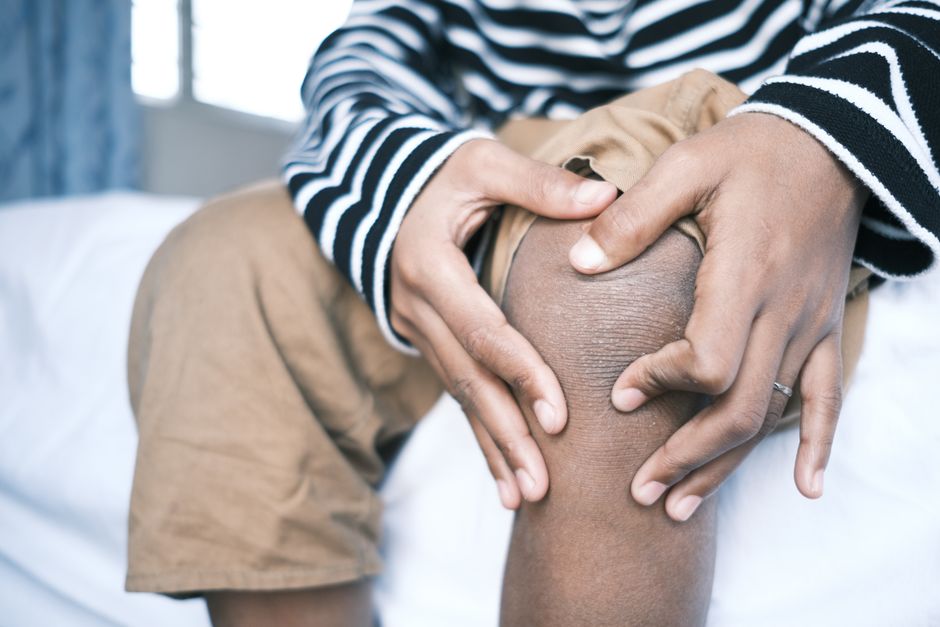
Several things can create that unstable sensation. A weakness in your quadriceps (the muscle on the front of your thigh) is one of the most common culprits. When this muscle isn't strong enough, it can't properly stabilize your kneecap as you bend and straighten. The kneecap may track slightly off-center, and that shift—even a small one—creates a feeling of looseness. You might notice the sensation of your kneecap moving sideways under the skin, or a catch that makes you pause mid-step.
Your hip muscles can also play a role. The muscles on the outside of your hip help control how your knee moves when you're bearing weight. If these are weak or tight, your knee may feel like it's collapsing inward slightly, especially during the controlled descent of stairs. This often feels like a wobbliness that emerges a few hours after you've done the stairs, when you're sitting still and suddenly notice your leg doesn't feel quite right.
In some cases, the small ligaments that support your knee—particularly those that help prevent side-to-side movement—may be irritated or slightly overstretched. This can happen gradually from repetitive stress or from a misstep you barely remember. The instability might feel like your knee is "giving way" or buckling slightly, though it usually catches itself before you actually fall.
Occasionally, the way your kneecap sits in its groove can shift subtly, making it harder for it to track smoothly as you move. This can create hesitation or a catch during descent, followed by that loose feeling once you've finished the stairs.
What You Can Try
Start by paying attention to the exact moment the instability appears. Is it mid-descent or when you're transferring weight to the next step? Does it happen on certain stairs but not others—perhaps steeper ones, or ones with a different surface? Does it feel different depending on your shoe type? These details matter because they help you understand what's actually happening and what might help.
Slow down deliberately on the way down. This isn't just about being cautious—it's about giving your muscles time to do their job. When you rush, your stabilizing muscles have less time to react and control the movement. Taking stairs one at a time, or even leading with your stronger leg, can reduce the demand on the unstable knee while you work on strengthening it. There's a close connection between this and knee aches after climbing several flights of stairs — the same structures are usually involved.
Strengthen your quadriceps with simple, low-risk exercises. Straight-leg raises (lying on your back, lifting one leg at a time while keeping it straight) or sitting knee extensions (straightening your leg while seated) can help rebuild the muscle control you need. Start with 10-15 repetitions, a few times a week. These don't require your knee to bend under load, so they're safer while you're dealing with instability. As you get stronger, the loose feeling often improves noticeably.
Work on hip strength too. Clamshells (lying on your side, opening your top knee while keeping your feet together) or side-lying leg lifts strengthen the muscles that control your knee's alignment. These are gentle and can be done anywhere. Stronger hips often mean a more stable knee on stairs within a few weeks.
Use the railing without embarrassment. Gripping the railing reduces the load on your knee and gives your brain confidence that you have backup if something feels off. This matters more than you might think—fear-avoidance (avoiding stairs because you're afraid of instability) can actually make the problem worse by keeping your muscles weak and your confidence low. Using the railing lets you keep moving while you strengthen.
When to Seek Professional Help
If the instability is severe—if your knee actually buckles and you nearly fall, or if it happens repeatedly even when you're moving slowly and carefully—that's worth having checked. The same applies if you notice significant swelling, if the instability comes with sharp pain rather than just looseness, or if it started after a specific injury or fall.
If the loose feeling hasn't improved after 3-4 weeks of gentle strengthening and careful movement, or if it's getting worse, a physical therapist or doctor can assess exactly what's happening. They can identify whether it's a muscle strength issue, a tracking problem with your kneecap, or something else that needs specific treatment. Sometimes what feels like instability is actually a small ligament strain that benefits from targeted therapy rather than just time.
Safety note: If you have severe pain, significant swelling, a recent injury, fever, numbness, or difficulty bearing weight, speak with a qualified healthcare professional promptly.
Frequently Asked Questions
Q: How long does knee feels unstable after climbing stairs usually last?
A: This varies a lot depending on the cause. Minor muscle strain or overuse tends to settle within a few days to two weeks with appropriate rest and gentle movement. If it hasn't improved after three weeks — or symptoms are worsening — that's a clear signal to get a professional opinion.
Q: Is it safe to exercise with knee feels unstable after climbing stairs?
A: Gentle, low-impact movement is often beneficial — walking, swimming, and cycling tend to be well-tolerated. Avoid anything that sharply increases the discomfort. A physiotherapist can help identify which exercises are right for your specific situation and severity.
Q: Should I use a knee brace or compression sleeve for knee feels unstable after climbing stairs?
A: A basic compression sleeve can offer comfort and mild support during activity, and many people find it helpful in the short term. Don't rely on it long-term without also addressing the root cause — whether that's strength, flexibility, or movement patterns.
What To Do Tomorrow Morning
Most people who take early, sensible action recover well. Start with what you can manage today and monitor closely. If things are not improving after a few weeks, that is the right time to bring in professional support.
Helpful Next Step
As an Amazon Associate, we may earn from qualifying purchases. This does not affect the price you pay.
Helpful Support Option
If this type of knee discomfort flares up on stairs, light compression or a supportive brace can help reduce strain on the joint while you work on strengthening the surrounding muscles.
See knee support options on AmazonHelpful Next Step
If gentle support helps during recovery, you can check a simple support option that many people use in daily life. If you also experience knee buckles when climbing stairs, the two issues often share the same underlying cause.
This content is for educational purposes only and does not constitute medical advice. Always consult a qualified healthcare professional for diagnosis and treatment.