🦵 Not sure what's causing it? Take the 5-question knee quiz.
Find My Pattern →Knee Clicking With Pain After Climbing Stairs
You climb the stairs fine. Your knee feels stable, maybe a little tight, but nothing alarming. Then you reach the top, take a few steps across the landing, and there it is—a distinct click or pop. Sometimes it's painless. Sometimes it brings a sharp twinge that makes you pause mid-step. By the time you sit down twenty minutes later, the click fades but leaves behind a dull, heavy ache that sits in your knee like it's decided to stay for a while.
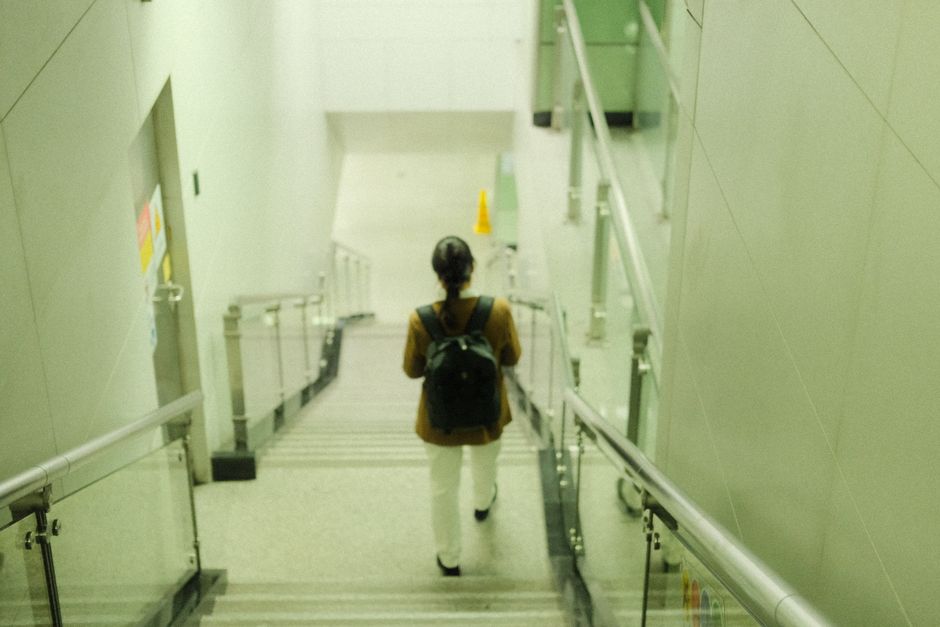
The clicking itself isn't always the worst part. It's the uncertainty. You start thinking about the walk back down. Your body tenses a little. You grip the railing tighter than you need to, or you take the descent slower, one step at a time, listening for that sound again. If someone's watching—a friend, a partner, a colleague—you might feel self-conscious about moving carefully. You want to seem fine. So you rush it a bit, and the pain sharpens.
This pattern is real, and it's more common than you might think.
Why your knee clicks and aches during and after stairs
🦵 Not sure what's causing your knee pain?
Answer 5 quick questions and get a personalised result.
Find My Pattern → 60 seconds · No sign-upClicking combined with pain usually points to one of several things happening inside your knee joint, though the exact cause depends on how your movement patterns load the joint. People dealing with this frequently also notice knee aches after climbing several flights of stairs, particularly after extended periods of inactivity.
Cartilage irritation under the kneecap is often the culprit. Your kneecap sits in a groove at the end of your thighbone. When you climb stairs, your quadriceps muscle pulls the kneecap upward and inward. If the muscle isn't balanced—if your inner quad is stronger than your outer quad, or if your hip muscles aren't stable—the kneecap can track slightly off its groove. This uneven pressure irritates the cartilage underneath, creating that clicking sensation. The pain often feels sharper going down stairs than up, because gravity adds force to an already irritated surface.
Meniscus involvement can also cause clicking with pain. Your meniscus is a piece of cartilage that acts like a shock absorber between your thighbone and shinbone. If it's pinched or slightly torn, it can catch during certain angles of movement—often at a specific step angle, not randomly throughout the day. You might notice the click happens reliably at step three or step seven, not every step. The pain can feel like a sharp twinge that comes and goes.
Loose or rough cartilage fragments sometimes create a grinding sensation rather than a sharp click. This feels different: less like a pop, more like something moving inside the joint. The grinding often worsens when you move quickly and improves when you move slowly and deliberately.
Inflammation in the joint lining can develop after repeated stair use, especially if you've recently increased activity. Your knee swells slightly, the joint becomes irritated, and clicking develops alongside a dull, persistent ache that feels worse in the morning or after sitting, then improves with gentle movement.
What you can try at home
Start with how you're moving. Take stairs one at a time rather than two at a time. This sounds obvious, but it matters. When you skip steps, you load your knee with more force and at a sharper angle. One step at a time lets your muscles control the movement more precisely. You'll likely notice the clicking diminishes or disappears when you move this way.
Pay attention to your footwear during and after the activity. If you're climbing stairs in shoes with minimal support or worn-out cushioning, your knee absorbs more shock. Wear shoes with firm arch support and cushioning in the heel when you know you'll be using stairs. Many people notice clicking improves noticeably just by switching to better shoes for that specific activity. After stairs, wearing supportive shoes during recovery (not soft slippers) can reduce the ache that develops later.
Ice the area after activity, not during. Apply ice for 15 minutes after you've been active. Many people ice too soon or for too long, which can stiffen the joint. Wait until you've rested for a bit, then ice. This can reduce the inflammation that feeds the clicking and ache cycle.
Strengthen your hip and thigh muscles with simple movements. Weak hip muscles force your knee to work harder during stair climbing. Try standing on one leg for 20–30 seconds, or do side-lying leg lifts (lying on your side, lifting your top leg). These don't require equipment and can be done while watching television. Do them several times a week. Stronger hip muscles stabilize your kneecap and often reduce clicking within two to three weeks.
Avoid rushing down stairs. This is where the pain usually sharpens. Your quadriceps has to work harder to control your descent. Slow, deliberate movement—even if it feels cautious—reduces stress on the irritated cartilage.
When to reach out to a professional
If the clicking persists for more than two weeks despite these changes, or if the pain worsens, a physical therapist or doctor can identify the specific cause and guide you more precisely. They can assess how your kneecap tracks and whether your muscles are balanced. There's a close connection between this and knee buckles when climbing stairs — the same structures are usually involved.
You should seek professional help sooner if the pain is sharp and constant, if your knee feels unstable or gives way, if you notice significant swelling, or if the clicking comes with a sensation of something catching inside the joint.
Safety note: If you have severe pain, significant swelling, a recent injury, fever, numbness, or difficulty bearing weight, speak with a qualified healthcare professional promptly.
Frequently Asked Questions
Q: What happens if I ignore knee clicking with pain after climbing stairs?
A: In some cases, minor knee discomfort does resolve on its own. But consistently ignoring pain — especially if it's altering how you move — can allow the underlying cause to worsen. Most people find that early, sensible attention leads to faster recovery than waiting it out indefinitely.
Q: Can I still walk normally when I have knee clicking with pain after climbing stairs?
A: Many people manage normal walking despite this kind of discomfort. If walking causes you to limp or noticeably change your gait, though, that's worth addressing — compensating patterns often create new problems in the hips, lower back, or opposite knee over time.
Q: Should I use a knee brace or compression sleeve for knee clicking with pain after climbing stairs?
A: A basic compression sleeve can offer comfort and mild support during activity, and many people find it helpful in the short term. Don't rely on it long-term without also addressing the root cause — whether that's strength, flexibility, or movement patterns.
A Simple Next Step
Most people who take early, sensible action recover well. Start with what you can manage today and monitor closely. If things are not improving after a few weeks, that is the right time to bring in professional support.
Helpful Next Step
As an Amazon Associate, we may earn from qualifying purchases. This does not affect the price you pay.
Helpful Support Option
If this type of knee discomfort flares up on stairs, light compression or a supportive brace can help reduce strain on the joint while you work on strengthening the surrounding muscles.
See knee support options on AmazonHelpful Next Step
If gentle support helps during recovery, you can check a simple support option that many people use in daily life. This pattern is related to knee feels swollen after climbing stairs, and the same management principles often apply.
This content is for educational purposes only and does not constitute medical advice. Always consult a qualified healthcare professional for diagnosis and treatment.