🦵 Not sure what's causing it? Take the 5-question knee quiz.
Find My Pattern →Knee Pain When Straightening After Climbing Stairs
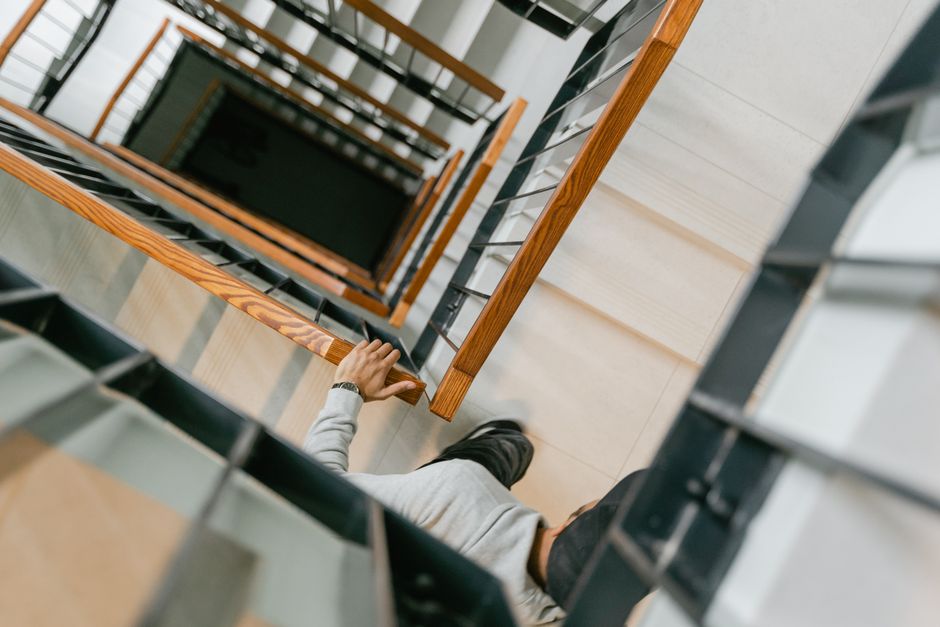
You make it up the last step fine. Your leg feels normal during the climb itself. But then you try to straighten your knee fully—to stand up tall or step off onto level ground—and something catches. It might be a sharp pinch that releases halfway through, or a dull heaviness that makes you want to keep your knee slightly bent. The frustration comes fast: you just climbed a flight of stairs without thinking twice, but now straightening feels like the hard part. And if you've been sitting for a while before tackling those stairs, the pain often feels worse, like your knee needs permission to move again.
What's likely happening in your knee
🦵 Not sure what's causing your knee pain?
Answer 5 quick questions and get a personalised result.
Find My Pattern → 60 seconds · No sign-upClimbing stairs demands a lot from your knee in a compressed space. Your quad muscle shortens as you push upward, your kneecap tracks under load, and your cartilage absorbs repeated force. Straightening afterward—especially if your knee has been resting—can feel stiff or painful for a few reasons.
Your quadriceps muscle may not be firing evenly. The inner quad (vastus medialis) can lag behind the outer quad (vastus lateralis), which pulls your kneecap slightly off its ideal track. This imbalance often worsens after rest. You climb stairs fine because the movement itself recruits the muscles. But when you try to straighten against gravity without momentum, the imbalance becomes noticeable. The kneecap doesn't glide smoothly, and you feel a catch or grinding sensation. For useful context, knee aches after climbing several flights of stairs tends to have the same mechanical roots and overlapping solutions.
Fluid buildup in the joint can also play a role. Stair climbing generates friction and mild inflammation. Afterward, fluid accumulates inside the knee capsule. When you try to extend fully, you're asking the joint to move through that swelling. The sensation often feels like pressure or heaviness rather than sharp pain—a dull, reluctant quality that makes you want to keep the knee slightly bent.
Soft tissue tightness around the knee can restrict how smoothly your leg straightens. Your calf, hamstring, or the tissues behind your knee may be tight from daily habits (sitting at a desk, driving) rather than from the stair climb itself. Stairs then expose this tightness. You notice it most when you're trying to achieve full extension, because that's when every millimeter of range matters.
In some cases, a small amount of inflammation in the tendon below your kneecap (patellar tendon) can make straightening uncomfortable. This tendon bears significant load during stair climbing, especially on the descent portion of the movement. Even mild irritation can create a sharp or tender sensation right at the moment you're extending fully.
What you can try
Slow down the straightening movement. Rather than snapping your leg straight, extend it gradually. Pause halfway, feel where the resistance is, then continue. This gives your muscles time to engage evenly and prevents that sudden catch feeling. Many people unconsciously try to straighten quickly, which can trigger the locking sensation. Deliberate, controlled extension often feels smoother.
Ice the front of your knee for 15 minutes after stair activity. Apply ice to the area around your kneecap, not just the top of the knee. This can reduce the fluid buildup that makes straightening feel stiff. Do this even if pain is mild—prevention matters here. The goal isn't to numb the area but to calm the inflammation response.
Sit with your leg extended for 10–15 minutes before and after climbing stairs. This sounds simple, but it changes how your knee behaves. When you rest your leg straight, you're gently lengthening the tissues around the back of your knee and allowing fluid to distribute more evenly. Many people find that a few minutes of this preparation makes stairs feel easier. After stairs, it helps prevent that "locked" feeling when you stand again.
Pay attention to step height and descent speed. If your home has steep stairs or your workplace has tall steps, your knee works harder. Similarly, rushing down stairs creates more impact than controlled descent. If you notice pain worsens on certain staircases, it's not your imagination—variation in step geometry absolutely affects how your knee feels. Slower descent and smaller step heights can reduce the irritation that leads to straightening pain.
Wear supportive footwear on stairs. Shoes with good arch support and cushioning change how force travels through your knee. Climbing stairs in flat shoes, socks, or unsupportive slippers puts more stress on your kneecap's tracking. This doesn't mean special orthopedic shoes—just shoes that feel stable and don't let your foot roll inward or outward. The difference can be noticeable within a few trips.
When to reach out to a healthcare provider
If straightening pain lasts beyond two weeks despite these adjustments, or if it worsens, a physical therapist or doctor can assess your quad strength and kneecap alignment. Sharp pain that doesn't improve with ice or rest, swelling that doesn't go down overnight, or a sensation of instability (like your knee might buckle) also warrant professional attention. It's worth knowing that knee buckles when climbing stairs follows a very similar pattern and responds to the same kind of approach.
If the pain appeared suddenly after an injury, or if you hear clicking or popping alongside the straightening difficulty, get it checked sooner rather than later.
Safety note: If you have severe pain, significant swelling, a recent injury, fever, numbness, or difficulty bearing weight, speak with a qualified healthcare professional promptly.
Frequently Asked Questions
Q: Is it safe to exercise with knee pain when straightening after climbing stairs?
A: Gentle, low-impact movement is often beneficial — walking, swimming, and cycling tend to be well-tolerated. Avoid anything that sharply increases the discomfort. A physiotherapist can help identify which exercises are right for your specific situation and severity.
Q: When should I stop exercising because of knee pain when straightening after climbing stairs?
A: Stop if the pain is sharp, climbing steadily during exercise, or causing you to change how you move. Mild, stable discomfort that stays at a 2 to 3 out of 10 is often acceptable to work through gently. Anything above that — or pain that simply feels wrong — is your cue to stop and reassess.
Q: How long does knee pain when straightening after climbing stairs usually last?
A: This varies a lot depending on the cause. Minor muscle strain or overuse tends to settle within a few days to two weeks with appropriate rest and gentle movement. If it hasn't improved after three weeks — or symptoms are worsening — that's a clear signal to get a professional opinion.
One Thing to Try First
Most people who take early, sensible action recover well. Start with what you can manage today and monitor closely. If things are not improving after a few weeks, that is the right time to bring in professional support.
Helpful Next Step
As an Amazon Associate, we may earn from qualifying purchases. This does not affect the price you pay.
Helpful Support Option
If this type of knee discomfort flares up on stairs, light compression or a supportive brace can help reduce strain on the joint while you work on strengthening the surrounding muscles.
See knee support options on AmazonHelpful Next Step
If gentle support helps during recovery, you can check a simple support option that many people use in daily life. For useful context, knee burning feeling after climbing stairs tends to have the same mechanical roots and overlapping solutions.
This content is for educational purposes only and does not constitute medical advice. Always consult a qualified healthcare professional for diagnosis and treatment.