🦵 Not sure what's causing it? Take the 5-question knee quiz.
Find My Pattern →Knee Pain That Radiates Down the Leg
That moment when you bend forward to pick something up and a sharp, electric sensation shoots down the back of your thigh—that's when radiating knee pain stops feeling like a minor ache and becomes something that makes you freeze mid-movement. The pain doesn't stay put in your knee. It travels. Sometimes it's a dull throb that worsens after sitting for half an hour, sometimes it's a tingling that comes without warning, and sometimes it's a numbness in your foot that makes you question whether you'll lose your balance on the stairs. This kind of pain is disruptive in ways that don't always show on the outside, which can make it frustrating to explain to others why you can't just push through it.
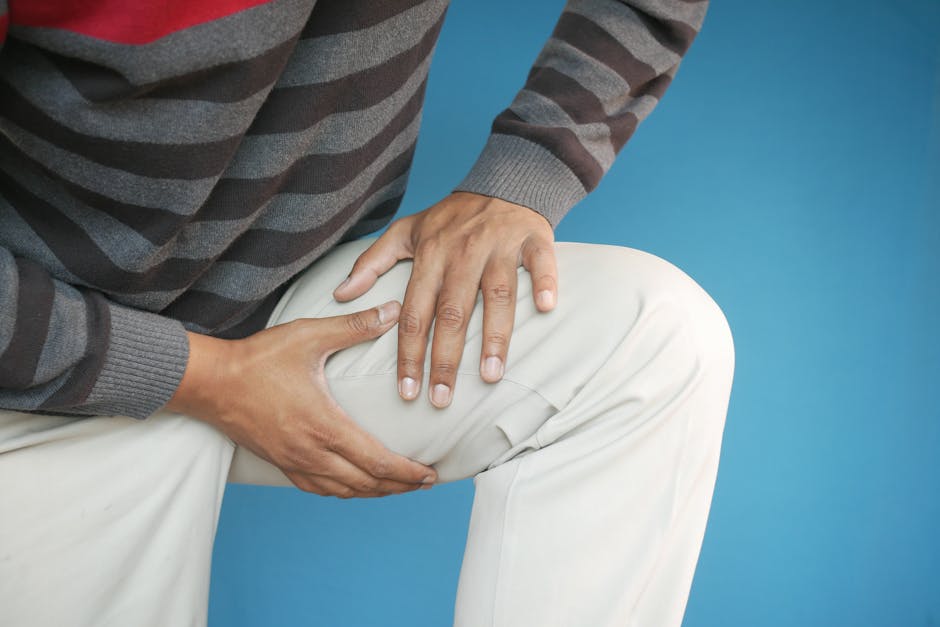
What's likely causing the radiating sensation
🦵 Not sure what's causing your knee pain?
Answer 5 quick questions and get a personalised result.
Find My Pattern → 60 seconds · No sign-upWhen pain travels from your knee down your leg, it usually means a nerve is involved. Your knee sits at the intersection of several major nerve pathways, and when something irritates or compresses one of these nerves, the pain doesn't stay local—it follows the nerve's path downward.
One common culprit is irritation of the sciatic nerve or its branches. This can happen when the structures around your knee—muscles, tendons, or the joint itself—tighten or swell enough to press on the nerve. You might notice this pain intensifies in specific positions, like when you're sitting with your leg bent for extended periods, or it may flare suddenly during certain movements. If you also experience knee pain after walking down stairs, the two issues often share the same underlying cause.
Another possibility is that something higher up in your spine or hip is referring pain down through your knee. Your nervous system doesn't always pinpoint the exact location of a problem accurately, so irritation in your lower back or hip can feel like it's coming from your knee and traveling downward. This is why your knee might hurt even though the actual issue is elsewhere.
Inflammation inside the knee joint can also trigger nerve sensitivity. Swelling puts pressure on surrounding nerve endings, and that pressure can create a radiating sensation rather than localized pain. This often feels like a dull ache that builds gradually through the day.
In some cases, the structures that stabilize your knee—ligaments, cartilage, or the joint capsule—are irritated or damaged in a way that affects nearby nerves. This kind of pain can feel sharp and unpredictable, appearing suddenly during normal movement.
Practical approaches to try at home
Understand your pain timing. Keep a simple mental note of when the radiating pain appears. Does it start immediately after certain activities, or does it develop hours later? Does it wake you at night? Does it feel worse on certain days or after stressful periods? This pattern matters because it tells you what might be triggering it—and what you might be able to adjust.
Apply ice strategically, but don't expect instant relief. Ice works best in the first 48 hours after an irritation flares, and it's most effective when you use it right after the activity that triggered the pain. Apply ice for 15–20 minutes, then wait at least an hour before reapplying. The goal isn't to numb the pain away; it's to reduce inflammation that might be pressing on the nerve. If your pain is chronic and not from a recent injury, ice may help less than you'd hope, and that's normal.
Test gentle movement before rest. This is where many people get stuck. The instinct is to stop moving when pain radiates, but complete stillness can sometimes make things worse. Try gentle, slow movements in the direction that doesn't trigger sharp pain. Often a slow walk or gentle stretching can actually ease the sensation more than sitting still. The trick is moving within your pain tolerance, not through sharp pain.
Address sleep disruption directly. Radiating pain that wakes you or prevents deep sleep creates a cycle where your body can't recover, and pain actually feels worse when you're exhausted. If sleeping on your back or side triggers the pain, try placing a pillow under your knee (if lying on your back) or between your knees (if lying on your side). Experiment with different positions; sometimes the small adjustment makes the difference between a night of broken sleep and actual rest.
Notice what makes it worse without judgment. Sitting for more than 30–40 minutes, certain weather patterns, stress, or hormonal changes can all mysteriously intensify radiating pain. You're not imagining this. Instead of fighting it, work around it. If sitting aggravates it, stand and walk for a few minutes every half hour. If weather affects it, that's real too—cold and barometric pressure changes can increase nerve sensitivity.
When to reach out to a professional
Radiating pain that comes and goes on its own might resolve with time and care, but certain situations need professional evaluation sooner rather than later. If the pain is sharp and worsening despite your efforts, if numbness in your foot is increasing or spreading, or if you're having difficulty controlling your leg or bearing weight, don't wait. There's a close connection between this and knee pain at night when lying down — the same structures are usually involved.
Pain that disrupts your sleep for more than a few nights, pain that's preventing you from doing basic daily activities, or pain that's accompanied by weakness in your leg also warrants a conversation with a healthcare provider. They can assess whether a nerve is actually being compressed, where the compression might be coming from, and what treatment approach might help.
Safety note: If you have severe pain, significant swelling, a recent injury, fever, numbness, or difficulty bearing weight, speak with a qualified healthcare professional promptly.
Frequently Asked Questions
Q: Can I still walk normally when I have knee pain that radiates down the leg?
A: Many people manage normal walking despite this kind of discomfort. If walking causes you to limp or noticeably change your gait, though, that's worth addressing — compensating patterns often create new problems in the hips, lower back, or opposite knee over time.
Q: Why does my knee feel worse after sitting for a long time?
A: This pattern — stiffness or pain after prolonged sitting that eases once you move around — is a hallmark of irritation around the kneecap or the soft tissues surrounding it. The joint stiffens in a flexed position, and the first movement disturbs it. Most people find it settles within a minute or two of walking.
Q: Should I use a knee brace or compression sleeve for knee pain that radiates down the leg?
A: A basic compression sleeve can offer comfort and mild support during activity, and many people find it helpful in the short term. Don't rely on it long-term without also addressing the root cause — whether that's strength, flexibility, or movement patterns.
Where to Go From Here
Most people who take early, sensible action recover well. Start with what you can manage today and monitor closely. If things are not improving after a few weeks, that is the right time to bring in professional support.
Helpful Next Step
As an Amazon Associate, we may earn from qualifying purchases. This does not affect the price you pay.
Helpful Support Option
If this type of knee discomfort shows up during daily movement, light support may help reduce strain on the joint while you work on the underlying cause.
See knee support options on AmazonHelpful Next Step
If gentle support helps during recovery, you can check a simple support option that many people use in daily life. It's worth knowing that knee pain when kneeling down follows a very similar pattern and responds to the same kind of approach.
This content is for educational purposes only and does not constitute medical advice. Always consult a qualified healthcare professional for diagnosis and treatment.