🦵 Not sure what's causing it? Take the 5-question knee quiz.
Find My Pattern →Knee Pain at Night When Lying Down
The widespread assumption about knee pain at night when lying down is that complete rest is the only answer. Here's why that's usually backwards.

Quick Answer: Knee pain at night when lying down is most often caused by a mechanical imbalance — muscle weakness, movement pattern issues, or cumulative load — rather than structural damage. For most people, it improves with targeted strengthening, modified activity, and time. If symptoms persist beyond two to three weeks or are getting worse, professional assessment is the right next step.
Understanding What's Happening in Your Knee
Your knee handles enormous forces every single day — but it doesn't do that alone. The quadriceps above absorb and distribute load. The calf, ankle, and foot below affect how that load arrives. The way you move, sit, and carry your weight all shape the forces the knee manages moment to moment.
When knee pain at night when lying down develops, it usually signals one of two things: the demands placed on the knee have increased beyond what it's currently prepared for, or the support structures aren't functioning as effectively as they should. In practice, both factors usually play a role at the same time. People dealing with this frequently also notice knee pain after walking down stairs, particularly after extended periods of inactivity.
The patellofemoral joint — the interface between your kneecap and thigh bone — is often at the centre of this kind of discomfort. Quadriceps tension, patellar tracking issues, and altered joint compression all interact in this small but mechanically critical area.
What makes this genuinely encouraging is that functional issues — muscle weakness, movement patterns, load management — respond to the right kind of intervention. Unlike significant structural problems, the causes behind most knee discomfort are addressable. There's no single universal fix, though. The right approach depends on what's actually driving your symptoms.
Understanding which factor is dominant in your case is where meaningful improvement begins. This often happens when the supporting muscles around the joint aren't keeping pace with the demands placed on it. For some people this pattern is especially pronounced when lying on one side at night — where the position itself adds a distinct mechanical factor.
Common Triggers
Understanding what tends to provoke knee pain at night when lying down helps you manage symptoms day-to-day and understand the mechanism:
- Repetitive movement patterns — Walking, running, cycling, or stair-climbing in ways that consistently load the knee in a particular direction can build up cumulative irritation over days and weeks.
- Sudden increases in activity — A new exercise programme, more walking than usual, a physically demanding period at work. The tissue simply hasn't adapted yet, and the knee signals this as pain.
- Prolonged positions — Sitting for hours with the knee bent, kneeling for extended periods, or standing without moving. Sustained positions load specific tissues continuously without the recovery that movement provides.
- Weakness upstream — Hip abductor and glute weakness is one of the most consistently overlooked factors in knee pain. When the hip doesn't control how the thigh bone tracks during movement, the knee pays the price.
- Poor footwear or altered gait — Unsupportive shoes, worn-out soles, or movement habits developed over years can all create forces at the knee that accumulate into symptoms. Tibial rotation caused by poor foot mechanics is a particularly underappreciated contributor.
Pro Tip: Strengthen your VMO with terminal knee extensions: loop a resistance band behind your knee and straighten your leg against it. This builds the inner quad that controls patellar tracking without loading the joint under deep flexion.
As an Amazon Associate, we may earn from qualifying purchases. This does not affect the price you pay.
Helpful Support Option
If this type of knee discomfort shows up during daily movement, light support may help reduce strain on the joint while you work on the underlying cause.
See knee support options on AmazonWant a more personalised recommendation? Take the 5-question quiz →
Home Management Tips
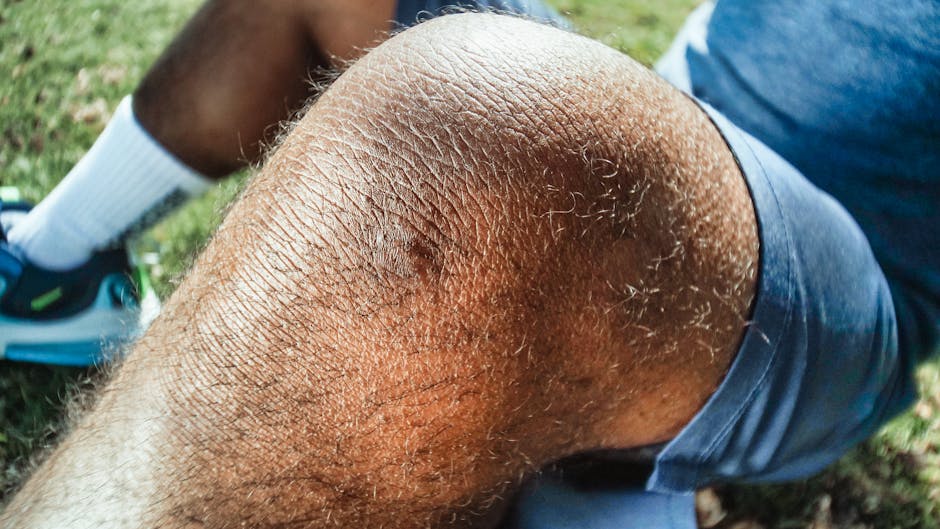
These are practical starting points — not a treatment plan, but things most people with knee pain at night when lying down find genuinely helpful:
- Relative rest, not total rest — Reduce the activities that provoke the pain, but don't stop moving entirely. Gentle walking, swimming, or cycling are often well-tolerated and help maintain muscle function while the knee settles.
- Ice for flare-ups — After any activity that aggravates the knee, apply ice wrapped in a cloth for 10 to 15 minutes. Don't apply it directly to skin.
- Compression — A basic sleeve can reduce discomfort during activity. It's not a long-term solution on its own, but it can make day-to-day management more comfortable.
- Elevation — If the knee's noticeably swollen, elevating it above hip height helps reduce fluid accumulation and ease the ache.
- Track your patterns — When's the pain better? When's it worse? Time of day, specific movements, footwear, activity levels the day before. These patterns are useful both for self-management and for any professional you might consult.
Not sure what's causing your knee pain? Take our 5-question quiz to find your pattern — Start the quiz →
Exercise Considerations
Exercise is one of the most effective tools for managing and resolving knee pain — but the wrong exercise at the wrong stage can make things worse. Here's how to approach it sensibly:
Generally well-tolerated: Straight-leg raises, glute bridges, clamshells, and gentle cycling at low resistance. These strengthen supporting muscles without placing the knee under high joint compression. VMO activation exercises — terminal knee extensions and short-arc quads — are particularly valuable for improving patellar tracking.
Approach with caution: Squats and lunges can be beneficial but only if they're pain-free through the full range. If you feel discomfort, reduce depth until you find a pain-free range and work from there, building gradually over weeks.
Avoid during a flare-up: High-impact activities like running or jumping, any exercise producing pain above a 3 out of 10, and movements that cause the pain to linger for more than 24 hours.
A practical way to look at this is that understanding why the knee is reacting the way it is often speeds recovery. Knowledge genuinely changes how people move.
A useful rule of thumb: mild discomfort during exercise that doesn't worsen during the session and settles within 24 hours is generally acceptable. Anything else is a signal to back off and reassess.
When to Seek Help
Self-management works well for many people with knee pain at night when lying down, but professional input is the right call in these situations:
- You've had symptoms for more than two to three weeks without clear improvement
- The knee is significantly swollen, hot, or red — particularly if these appeared quickly
- You heard or felt a pop at the onset, or had a fall or direct impact
- The knee is giving way or feels unstable during normal walking
- Pain is severe enough to affect sleep on multiple nights
- You're managing with daily painkillers to get through normal activity
- Symptoms are progressing — getting worse rather than gradually better
A physiotherapist can assess your movement, strength, and joint mechanics and build a specific rehabilitation plan. A GP can rule out conditions needing different management — infection, inflammatory arthritis, or significant structural injury.
Safety note: If you have severe pain, significant swelling, a recent injury, fever, numbness, or difficulty bearing weight, speak with a qualified healthcare professional promptly.

Frequently Asked Questions
Q: Is it normal to hear clicking sounds alongside knee pain at night when lying down?
A: Joint sounds are extremely common and usually harmless — they often come from gas bubbles in the joint fluid or tendons flicking over bony prominences. If the clicking is painless and your knee functions normally, it's generally nothing to worry about. If it's accompanied by pain or swelling, mention it to a healthcare professional.
Q: Can I still walk normally when I have knee pain at night when lying down?
A: Many people manage normal walking despite this kind of discomfort. If walking causes you to limp or noticeably change your gait, though, that's worth addressing — compensating patterns often create new problems in the hips, lower back, or opposite knee over time.
Q: Should I apply heat or ice to a painful knee?
A: Cold — ice wrapped in a cloth — works better for acute flare-ups, particularly in the first 24 to 48 hours when the area feels warm or inflamed. Gentle heat tends to be more helpful for muscle stiffness and chronic, recurring aches. Never apply either directly to bare skin.
A Simple Next Step
The good news is that most people who take early, sensible action recover well. Don't wait for the pain to peak before you start paying attention to it. Modify what you're doing, start building the supporting muscles, and monitor closely. If things aren't improving in a few weeks, that's the right time to bring in professional support. This pattern is related to knee pain worse going down than up stairs, and the same management principles often apply.
Helpful Next Step
This content is for educational purposes only and does not constitute medical advice. Always consult a qualified healthcare professional for diagnosis and treatment.