🦵 Not sure what's causing it? Take the 5-question knee quiz.
Find My Pattern →Knee Pain After a Football Tackle
You're walking fine the next morning. Then you try to pivot during practice—or even just getting out of a car—and a sharp pain cuts through the side of your knee. It wasn't that bad right after the hit. You iced it, kept moving, thought you'd be okay. But now, hours or even a day later, the pain is different. Sharper. More specific. And there's a heaviness in the knee that wasn't there before, especially when you wake up and the swelling has crept in overnight.
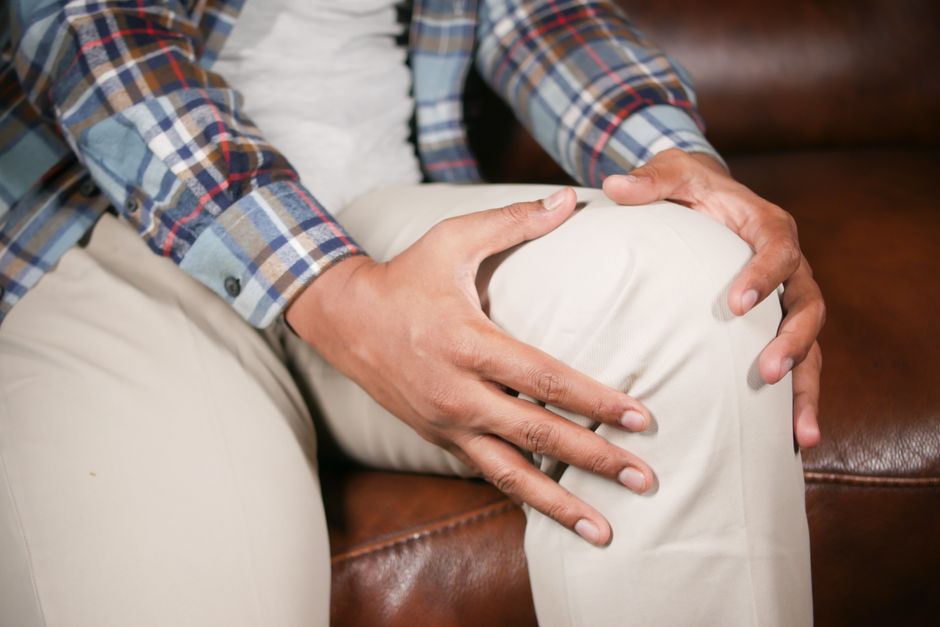
A tackle changes things fast. Your knee absorbs force it wasn't braced for, twists at an angle it shouldn't, or gets compressed from the side. The pain you feel now might not match the force of the impact—that's one of the confusing parts. A hard hit might leave you sore but functional. A awkward plant-and-twist might feel minor in the moment, then wake you up at 3 a.m. with throbbing swelling.
What Likely Happened Inside Your Knee
🦵 Not sure what's causing your knee pain?
Answer 5 quick questions and get a personalised result.
Find My Pattern → 60 seconds · No sign-upWhen your knee gets hit or twisted during a tackle, several things can happen, and you might experience one or more of them at once.
The ligaments around your knee—the bands of tissue that hold everything stable—can stretch or tear. Your ACL (the ligament that prevents your shin from sliding forward) and MCL (the ligament on the inner side) are common targets in football. You might notice this as instability: a feeling that your knee could give way, especially when you try to change direction or go down stairs. This sensation often feels worse than the pain itself, and it can make you hesitant to put full weight on the leg.
The cartilage inside your knee can also get pinched or damaged. This doesn't always hurt immediately. Instead, you might feel a dull, deep ache that builds hours after you've been active, or a catching sensation when you move in certain ways.
Swelling happens because your knee is inflamed—your body's response to the trauma. This swelling often creeps up gradually and is worst first thing in the morning, before you've moved around. By evening, after you've been on your feet, it might feel tighter but sometimes less puffy.
There can also be small tears in the muscles around your knee, or inflammation in the tendons. These often create a sharper, more localized pain that appears only when you move in a specific direction.
What You Can Try Right Now
Ice thoughtfully, not just once. A single ice session isn't enough. You need repeated applications—15 to 20 minutes at a time, several times throughout the day, especially in the first 48 hours. The goal is to reduce swelling, which is what's often causing the pain to worsen overnight. Apply ice before bed if the swelling tends to be worst in the morning.
Pay attention to how you're moving. This matters more than you might think. If pain shoots through your knee when you pivot but feels manageable when you walk straight, avoid the pivot. Your body is telling you something. Protect the movements that hurt; gentle activity in pain-free directions can actually help. But pushing through sharp pain isn't toughness—it's often making things worse.
Compression can help more than you'd expect. A compression sleeve or wrap reduces swelling and gives your knee a sense of stability, which can ease that anxious "will it give out" feeling. Wear it during the day, remove it at night so your skin can breathe. If swelling is significant, a compression sleeve at night can help prevent that morning puffiness.
Elevate your knee when you're sitting or lying down. Swelling pools in your knee when it's in a dependent position. Prop it up on pillows so it's higher than your heart, especially in the evening and overnight. This simple step often makes a real difference in how you feel the next morning.
Move gently within your pain limits. Complete immobility can actually make stiffness worse. Gentle, pain-free movement—like slow, straight-leg walks or easy range-of-motion exercises—can help maintain some function and reduce that locked-up feeling. But there's a clear line between gentle movement and pushing it. If it hurts, stop.
When to Talk to a Professional
You don't have to wait weeks to know if something serious is wrong. If you notice certain signs soon after the tackle, getting evaluated quickly matters. This pattern is related to knee pain after playing football, and the same management principles often apply.
Significant swelling that appears within a few hours, or swelling that doesn't improve after a few days of ice and elevation, suggests something beyond simple bruising. Severe pain that doesn't ease with rest and ice, or pain that's sharp and specific rather than a general soreness, needs assessment. If your knee feels unstable—like it might buckle or give out—that's important information a doctor needs to know. Difficulty bearing weight, numbness, or any sign of a recent injury combined with fever should prompt immediate attention.
You also can't see ligament or cartilage damage yourself. An X-ray or MRI can show what's actually happening inside, and that information changes how you should treat it and when you can safely return to play.
Safety note: If you have severe pain, significant swelling, a recent injury, fever, numbness, or difficulty bearing weight, speak with a qualified healthcare professional promptly.
Frequently Asked Questions
Q: When should I stop exercising because of knee pain after a football tackle?
A: Stop if the pain is sharp, climbing steadily during exercise, or causing you to change how you move. Mild, stable discomfort that stays at a 2 to 3 out of 10 is often acceptable to work through gently. Anything above that — or pain that simply feels wrong — is your cue to stop and reassess.
Q: Is it normal to hear clicking sounds alongside knee pain after a football tackle?
A: Joint sounds are extremely common and usually harmless — they often come from gas bubbles in the joint fluid or tendons flicking over bony prominences. If the clicking is painless and your knee functions normally, it's generally nothing to worry about. If it's accompanied by pain or swelling, mention it to a healthcare professional.
Q: How long does knee pain after a football tackle usually last?
A: This varies a lot depending on the cause. Minor muscle strain or overuse tends to settle within a few days to two weeks with appropriate rest and gentle movement. If it hasn't improved after three weeks — or symptoms are worsening — that's a clear signal to get a professional opinion.
Where to Go From Here
Most people who take early, sensible action recover well. Start with what you can manage today and monitor closely. If things are not improving after a few weeks, that is the right time to bring in professional support.
Helpful Next Step
As an Amazon Associate, we may earn from qualifying purchases. This does not affect the price you pay.
Helpful Support Option
If this type of knee discomfort shows up during daily movement, light support may help reduce strain on the joint while you work on the underlying cause.
See knee support options on AmazonHelpful Next Step
If gentle support helps during recovery, you can check a simple support option that many people use in daily life.
This content is for educational purposes only and does not constitute medical advice. Always consult a qualified healthcare professional for diagnosis and treatment.