🦵 Not sure what's causing it? Take the 5-question knee quiz.
Find My Pattern →Knee Clicking With Pain After Going Downstairs
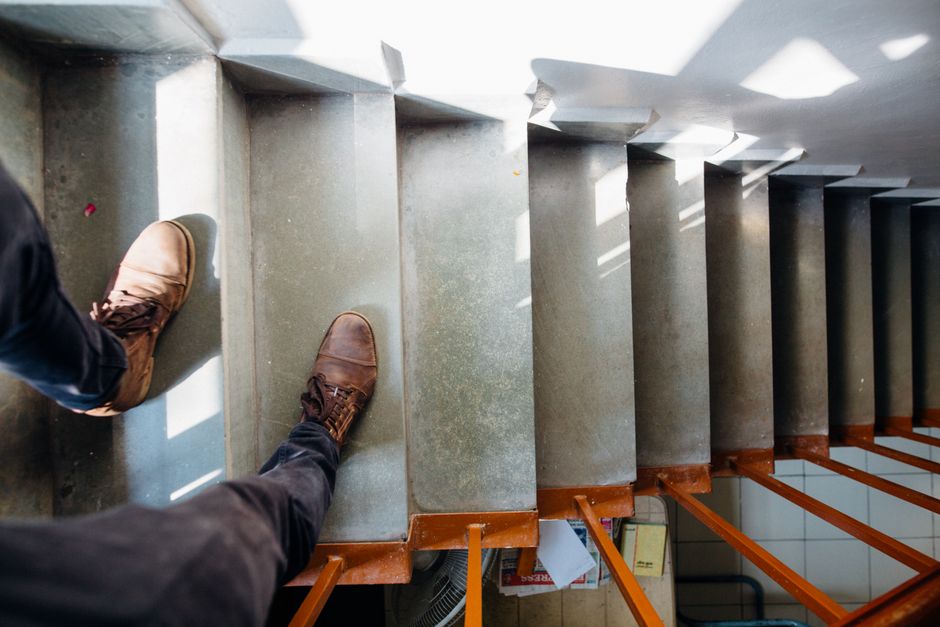
Descending stairs triggers something specific in your knee—a click, sometimes a catch, often followed by a dull ache that might not show up until hours later. The sound itself creates a strange anxiety. Is it just noise, or is something actually wrong? You make it down the flight fine, but then sitting at your desk two hours later, the knee feels heavy and sore in a way that makes you second-guess whether you should have taken the elevator.
What's actually happening in your knee
🦵 Not sure what's causing your knee pain?
Answer 5 quick questions and get a personalised result.
Find My Pattern → 60 seconds · No sign-upWhen you walk down stairs, your quadriceps (the muscle on the front of your thigh) has to work hard to control how quickly your knee bends. It's doing eccentric work—lengthening under load—which is harder on the joint than most daily movements. The clicking often comes from how your kneecap tracks as it moves through that range of motion.
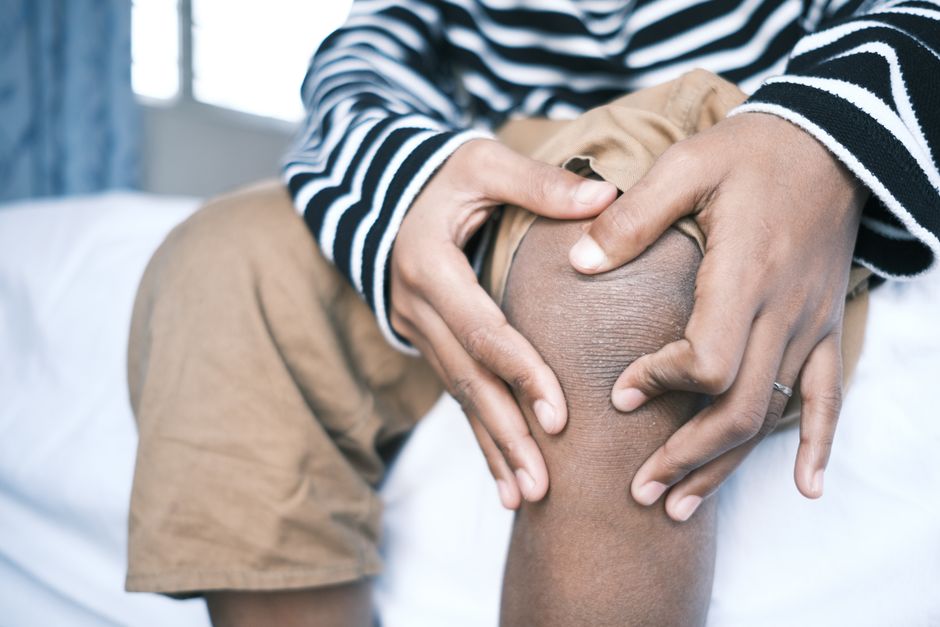
Several things can cause this pattern. Your kneecap may not be gliding smoothly in its groove, especially if your quadriceps muscles aren't balanced in strength. The inner quad might be weaker than the outer, pulling the kneecap slightly off its ideal path. You might also have some minor cartilage roughness or swelling that creates friction—nothing torn, just irritated. In some cases, a small amount of fluid builds up in the joint after activity, and descending stairs creates enough movement to trigger clicking and delayed soreness. Less commonly, early-stage osteoarthritis can produce this exact pattern: fine at rest, clicking and achy during specific movements. People dealing with this frequently also notice knee feels swollen after going downstairs, particularly after extended periods of inactivity.
The delayed pain is telling. Pain that arrives 2–3 hours after activity, rather than during it, often suggests inflammation building up rather than an acute injury. Your knee felt okay on the stairs because movement kept inflammation at bay. Once you sat still, fluid settled and pressure increased.
Practical steps to try
Start by paying attention to the stairs themselves. Steep, narrow stairs demand more knee bend and more quad control than gradual, wide ones. Carpeted stairs let your foot grip differently than polished wood or tile. Notice whether your pain changes based on stair type—this tells you something about what your knee is struggling with.
When you descend, try shifting your weight slightly toward the outer edge of your foot. This small adjustment can change how your kneecap tracks. It won't feel natural at first, but many people notice the clicking quiets or the pain eases. Go slowly enough that you can control the movement rather than letting gravity do the work. Rushing down stairs forces your quad to brake harder.
Ice your knee for 15 minutes after activity if you notice swelling or delayed soreness. Cold won't fix anything, but it can reduce inflammation enough to break the cycle of activity → swelling → pain. Apply it within a few hours of the activity that bothered your knee.
Gentle strengthening of your inner quadriceps (the muscle on the inner thigh near your knee) can help balance how your kneecap moves. Straight-leg raises while lying on your back, or isometric quad squeezes where you tighten the muscle without moving your knee, are low-risk ways to start. Do these on days when your knee feels good, not when it's already sore. If you also experience knee pain when going downstairs, the two issues often share the same underlying cause.
Avoid high-impact activities like running or jumping while this is happening. Swimming or walking on flat ground won't load your knee in the same way stairs do, so these can keep you active without aggravating the clicking.
When to reach out to a professional
If the clicking comes with sudden swelling that appears within minutes of activity, or if your knee feels unstable (like it might give way), don't wait. The same applies if the pain is sharp rather than dull, or if it's getting worse despite rest and ice over two weeks.
Also watch for changes in the pattern itself. If clicking that used to happen only on stairs now happens on flat ground, or if pain that used to appear hours later now happens immediately, something has shifted and deserves professional evaluation.
Safety note: If you have severe pain, significant swelling, a recent injury, fever, numbness, or difficulty bearing weight, speak with a qualified healthcare professional promptly.
Frequently Asked Questions
Q: How long does knee clicking with pain after going downstairs usually last?
A: This varies a lot depending on the cause. Minor muscle strain or overuse tends to settle within a few days to two weeks with appropriate rest and gentle movement. If it hasn't improved after three weeks — or symptoms are worsening — that's a clear signal to get a professional opinion.
Q: Can I still walk normally when I have knee clicking with pain after going downstairs?
A: Many people manage normal walking despite this kind of discomfort. If walking causes you to limp or noticeably change your gait, though, that's worth addressing — compensating patterns often create new problems in the hips, lower back, or opposite knee over time.
Q: Why does my knee feel worse after sitting for a long time?
A: This pattern — stiffness or pain after prolonged sitting that eases once you move around — is a hallmark of irritation around the kneecap or the soft tissues surrounding it. The joint stiffens in a flexed position, and the first movement disturbs it. Most people find it settles within a minute or two of walking.
Where to Go From Here
Most people who take early, sensible action recover well. Start with what you can manage today and monitor closely. If things are not improving after a few weeks, that is the right time to bring in professional support.
Helpful Next Step
As an Amazon Associate, we may earn from qualifying purchases. This does not affect the price you pay.
Helpful Support Option
If this type of knee discomfort flares up on stairs, light compression or a supportive brace can help reduce strain on the joint while you work on strengthening the surrounding muscles.
See knee support options on AmazonHelpful Next Step
If gentle support helps during recovery, you can check a simple support option that many people use in daily life. It's worth knowing that outer knee ache after going downstairs follows a very similar pattern and responds to the same kind of approach.
This content is for educational purposes only and does not constitute medical advice. Always consult a qualified healthcare professional for diagnosis and treatment.