🦵 Not sure what's causing it? Take the 5-question knee quiz.
Find My Pattern →Outer Knee Ache After Going Downstairs
The stairs down feel fine while you're moving. Your leg carries you, step by step, and there's no sharp warning. But somewhere around that final step—or sometimes not until you've reached the bottom and started walking normally again—a dull, pinching ache settles on the outside of your knee. It's not unbearable, but it's there. Then you sit down twenty minutes later, and the ache sharpens. Your knee feels stiff at a 90-degree bend, like something on the outer side is being squeezed. The strange part: it often feels fine once you stand and move around again, which makes you wonder if you're imagining it or if something's actually wrong.
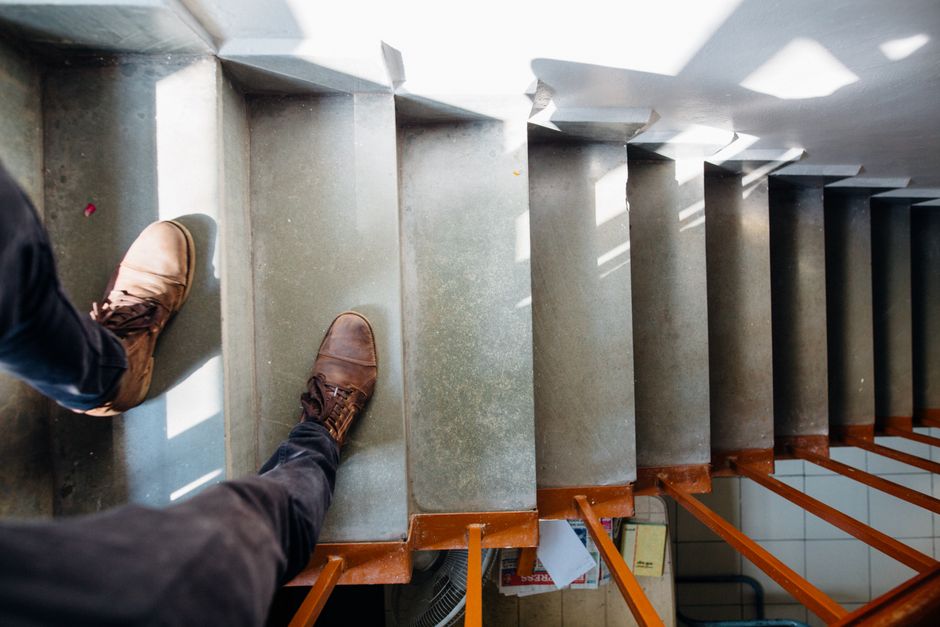
This pattern—pain that arrives after the stairs, peaks when your knee is bent at rest, then eases with movement—is more common than you might think, and it tells you something specific about what's happening in your knee.
Why the outer knee aches on descent
🦵 Not sure what's causing your knee pain?
Answer 5 quick questions and get a personalised result.
Find My Pattern → 60 seconds · No sign-upGoing downstairs puts your knee in a vulnerable position. Your leg is bent, your weight is pressing down through that bend, and gravity is pulling you forward. The outer side of your knee bears a particular load during this movement, especially on that final step when you're transferring weight and straightening your leg simultaneously. For useful context, knee pain when going downstairs tends to have the same mechanical roots and overlapping solutions.
Several things can trigger outer knee ache in this exact scenario. The structures on the outer side of your knee—including the tissue that runs along your outer thigh and the small bursa (fluid sac) that cushions your knee joint—can become irritated or tight. This often happens because your hip muscles, particularly those on the outside of your hip, aren't stabilizing your knee effectively as you descend. When those muscles aren't working efficiently, your knee compensates by shifting slightly inward or outward, creating friction and pressure on the outer structures.
Your gait on stairs also matters more than you'd expect. If you tend to lead with one leg going down, or if you take stairs quickly to "get it over with," you're placing uneven or rapid stress on the outer knee. Some people unconsciously grip the stairs with their outer foot muscles, which tightens the whole outer leg and knee.
The delayed ache—the one that appears 30 minutes later while sitting—suggests mild inflammation or irritation that builds gradually during the movement, then becomes noticeable once you stop moving and your muscles relax. This is why the pain often vanishes the moment you stand and walk; movement pumps fluid through the joint and engages the muscles that were irritated.
What you can try
Slow down on stairs and control the descent. This is the most direct change you can make. Instead of stepping down quickly or letting gravity pull you, press through your front thigh muscle (quadriceps) to lower yourself with control. Imagine you're sitting back slightly as you descend, which engages your thigh and glute muscles rather than letting your knee absorb all the impact. This single change often reduces outer knee ache noticeably within a few days.
Ice the outer knee for 10-15 minutes after stairs if you notice aching. Cold can reduce irritation in the moment. Apply ice wrapped in a thin towel directly to the outer side of your knee, just below the bony part. Don't ice if your skin is numb or if you have circulation problems.
Pay attention to step height. Smaller, shallower steps are gentler on the outer knee than steep stairs. If you have a choice—using a gentler staircase at work, or taking a ramp instead—that can make a real difference. Some people find that very tall steps (like outdoor stairs) trigger outer knee pain more than standard indoor stairs.
Strengthen your hip and glute muscles with simple, pain-free movements. Your outer hip muscles stabilize your knee during stairs. Lying on your side and lifting your top leg 10-15 times, or standing on one leg for 20-30 seconds while holding a wall, can improve stability over a few weeks. Do these on both sides, even if only one knee hurts. Move slowly and stop if you feel sharp pain; mild discomfort is normal, but sharp pinching is not.
Avoid sitting with your knee bent at 90 degrees for long periods. If that's when the ache peaks, try straightening your leg or propping it up on a footrest. Small position changes throughout the day can prevent irritation from building up.
When to see a professional
If outer knee ache persists beyond two weeks despite these changes, or if the pain is sharp and catching rather than dull and achy, a physical therapist or doctor can assess what's happening. They can check your hip strength, knee alignment, and how your muscles are working together. Sometimes the issue is tightness that needs hands-on treatment; sometimes it's a strength imbalance that requires specific exercises. This pattern is related to outer knee ache after walking downhill, and the same management principles often apply.
Also seek professional input if the pain worsens, if you notice swelling, or if the ache starts affecting your ability to use stairs at all.
Safety note: If you have severe pain, significant swelling, a recent injury, fever, numbness, or difficulty bearing weight, speak with a qualified healthcare professional promptly.
Frequently Asked Questions
Q: What happens if I ignore outer knee ache after going downstairs?
A: In some cases, minor knee discomfort does resolve on its own. But consistently ignoring pain — especially if it's altering how you move — can allow the underlying cause to worsen. Most people find that early, sensible attention leads to faster recovery than waiting it out indefinitely.
Q: Is it normal to hear clicking sounds alongside outer knee ache after going downstairs?
A: Joint sounds are extremely common and usually harmless — they often come from gas bubbles in the joint fluid or tendons flicking over bony prominences. If the clicking is painless and your knee functions normally, it's generally nothing to worry about. If it's accompanied by pain or swelling, mention it to a healthcare professional.
Q: Should I use a knee brace or compression sleeve for outer knee ache after going downstairs?
A: A basic compression sleeve can offer comfort and mild support during activity, and many people find it helpful in the short term. Don't rely on it long-term without also addressing the root cause — whether that's strength, flexibility, or movement patterns.
What To Do Tomorrow Morning
Most people who take early, sensible action recover well. Start with what you can manage today and monitor closely. If things are not improving after a few weeks, that is the right time to bring in professional support.
Helpful Next Step
As an Amazon Associate, we may earn from qualifying purchases. This does not affect the price you pay.
Helpful Support Option
If this type of knee discomfort flares up on stairs, light compression or a supportive brace can help reduce strain on the joint while you work on strengthening the surrounding muscles.
See knee support options on AmazonHelpful Next Step
If gentle support helps during recovery, you can check a simple support option that many people use in daily life. There's a close connection between this and outer knee ache after walking uphill — the same structures are usually involved.
This content is for educational purposes only and does not constitute medical advice. Always consult a qualified healthcare professional for diagnosis and treatment.