🦵 Not sure what's causing it? Take the 5-question knee quiz.
Find My Pattern →Knee Feels Swollen After Going Downstairs
Stairs down feel fine while you're doing them—maybe a little tight behind the kneecap, nothing alarming. But two or three hours later, when you're sitting at your desk or on the couch, your knee feels puffy and stiff. The swelling crept in quietly. You didn't notice it building. Now your pant leg feels snug around your knee, and the thought of climbing back down those stairs tomorrow makes you hesitant.
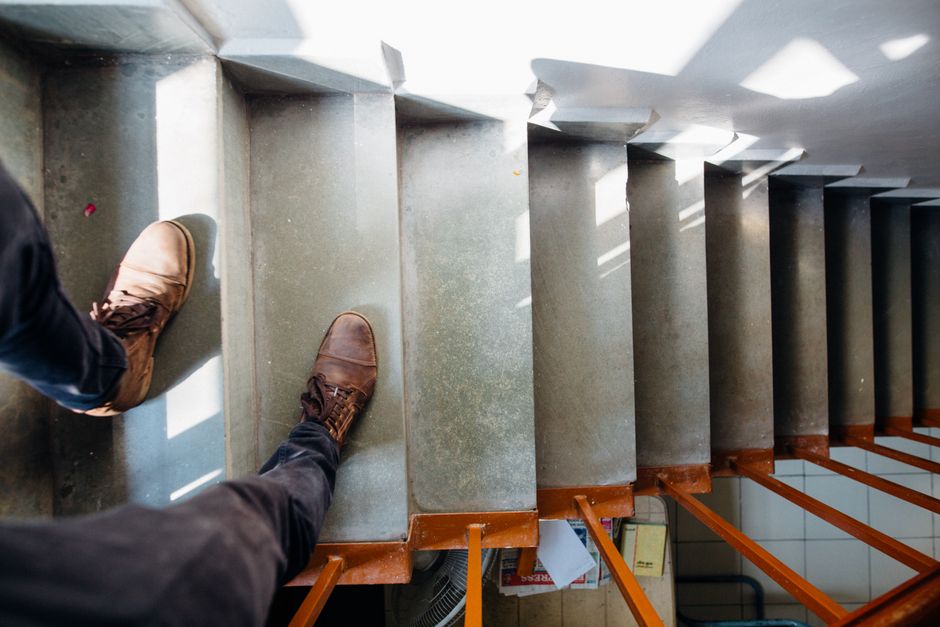
This pattern—where swelling appears hours after you've descended stairs, not during—tells you something specific is happening in your knee. It's not sharp pain that stops you mid-step. It's a delayed inflammatory response that catches you off guard because there's a time gap between the activity and the symptom.
Why stairs down trigger this swelling
🦵 Not sure what's causing your knee pain?
Answer 5 quick questions and get a personalised result.
Find My Pattern → 60 seconds · No sign-upGoing downstairs is mechanically harder on your knee than going up, even though most people assume the opposite. When you descend, your quadriceps muscle has to work eccentrically—it lengthens while contracting to control your descent. This is more demanding than the concentric contraction (shortening while contracting) that happens climbing up. It's worth knowing that knee feels swollen after climbing stairs follows a very similar pattern and responds to the same kind of approach.
The kneecap itself bears significant pressure during descent. Your body weight plus the force of stepping down concentrates stress on the patellofemoral joint—the area where your kneecap meets the thighbone. If the cartilage in that joint is uneven, or if the muscles around your knee aren't balanced, that pressure can irritate the joint lining. Hours later, your body responds by producing fluid in the joint space. That fluid is swelling.
Some days stairs trigger it and others don't. Weather plays a role—cold, damp days can increase stiffness and alter how your muscles fire. Activity level the day before matters too. If you've been on your feet all day, your knee starts the stair descent already fatigued. Your muscles can't stabilize the joint as well, so the kneecap tracks slightly off-center. More irritation. More swelling hours later.
In other cases, the swelling isn't from cartilage irritation but from how your leg muscles coordinate. Weakness in your hip or glute muscles forces your quadriceps to work overtime during descent. That overwork creates inflammation. Or tightness in your calf or hamstring changes the angle at which your kneecap moves, creating friction.
What you can do right now
Slow down on descent. This sounds simple, but most people rush downstairs. Taking two seconds per step instead of one changes everything. You're giving your muscles time to control the movement rather than fight gravity. The swelling might not appear at all, or it might be noticeably less. Notice the difference between a hurried descent and a deliberate one—that's you reducing the load on your joint.
Ice soon after stairs, not hours later. If you know you're going to descend stairs, ice your knee for 10-15 minutes within 30 minutes of finishing. Don't wait until swelling appears. Early icing can prevent the inflammatory cascade from starting. Cold reduces the signals your body sends to create fluid. If swelling has already appeared, icing still helps, but prevention is more effective.
Compress while sitting. When you're at your desk or on the couch hours after stairs, wrap your knee with a compression sleeve or bandage. Gentle, consistent pressure prevents fluid from accumulating in the joint space. The tightness you feel isn't pain—it's support. Many people notice the swelling doesn't progress once compression is on.
Elevate your leg when you're stationary. Gravity pulls fluid down into your lower leg. If your knee is bent and lower than your hip for hours, fluid pools there. Straighten your leg and prop it on a pillow so your knee is level with or slightly higher than your hip. This helps fluid move back out of the joint.
Strengthen the muscles that stabilize descent. Single-leg balance work, small step-ups (not full stairs), and glute bridges teach your muscles to control movement. These don't require full squats or lunges that might irritate your knee further. Even 5 minutes three times a week changes how stable your knee feels on stairs within two weeks.
When to reach out to a professional
Swelling that appears hours after stairs and resolves with rest and ice is manageable on your own. But if swelling appears immediately during descent, or if it doesn't reduce after a full day of elevation and ice, something else may be happening. There's a close connection between this and knee feels swollen after walking downhill — the same structures are usually involved.
Seek professional guidance if your swelling is accompanied by warmth (not just puffiness, but actual heat), if you can't straighten your knee fully, or if the swelling is asymmetrical—one knee noticeably more swollen than the other. These can signal inflammation beyond typical stair strain.
If you're noticing that even slow, careful descent triggers swelling, or if you've lost confidence in your balance on stairs, a physical therapist can assess how your muscles coordinate. They can identify specific weaknesses or imbalances that standard exercises at home won't address.
Safety note: If you have severe pain, significant swelling, a recent injury, fever, numbness, or difficulty bearing weight, speak with a qualified healthcare professional promptly.

Frequently Asked Questions
Q: Is it normal to hear clicking sounds alongside knee feels swollen after going downstairs?
A: Joint sounds are extremely common and usually harmless — they often come from gas bubbles in the joint fluid or tendons flicking over bony prominences. If the clicking is painless and your knee functions normally, it's generally nothing to worry about. If it's accompanied by pain or swelling, mention it to a healthcare professional.
Q: Can I still walk normally when I have knee feels swollen after going downstairs?
A: Many people manage normal walking despite this kind of discomfort. If walking causes you to limp or noticeably change your gait, though, that's worth addressing — compensating patterns often create new problems in the hips, lower back, or opposite knee over time.
Q: How long does knee feels swollen after going downstairs usually last?
A: This varies a lot depending on the cause. Minor muscle strain or overuse tends to settle within a few days to two weeks with appropriate rest and gentle movement. If it hasn't improved after three weeks — or symptoms are worsening — that's a clear signal to get a professional opinion.
One Thing to Try First
Most people who take early, sensible action recover well. Start with what you can manage today and monitor closely. If things are not improving after a few weeks, that is the right time to bring in professional support.
Helpful Next Step
As an Amazon Associate, we may earn from qualifying purchases. This does not affect the price you pay.
Helpful Support Option
If this type of knee discomfort flares up on stairs, light compression or a supportive brace can help reduce strain on the joint while you work on strengthening the surrounding muscles.
See knee support options on AmazonHelpful Next Step
If gentle support helps during recovery, you can check a simple support option that many people use in daily life. People dealing with this frequently also notice knee feels swollen after walking uphill, particularly after extended periods of inactivity.
This content is for educational purposes only and does not constitute medical advice. Always consult a qualified healthcare professional for diagnosis and treatment.