🦵 Not sure what's causing it? Take the 5-question knee quiz.
Find My Pattern →Front of Knee Hurts When Kneeling
That moment when you lower yourself down to kneel—whether it's to garden, pray, play with your kids, or clean something low—and you feel a sharp pinch right at the base of your kneecap. Sometimes it's immediate, a jolt that makes you hesitate. Other times it's a dull ache that creeps in after you've been down there for 30 seconds, and if you stay longer, it intensifies until you have to shift your weight or stand back up. Then there's the morning after: stiffness that takes an hour to loosen, or a burning sensation behind the kneecap that feels completely different from the initial impact pain. The frustration isn't just the discomfort—it's the social awkwardness of explaining why you can't kneel, or the slow avoidance of everyday activities you used to do without thinking.
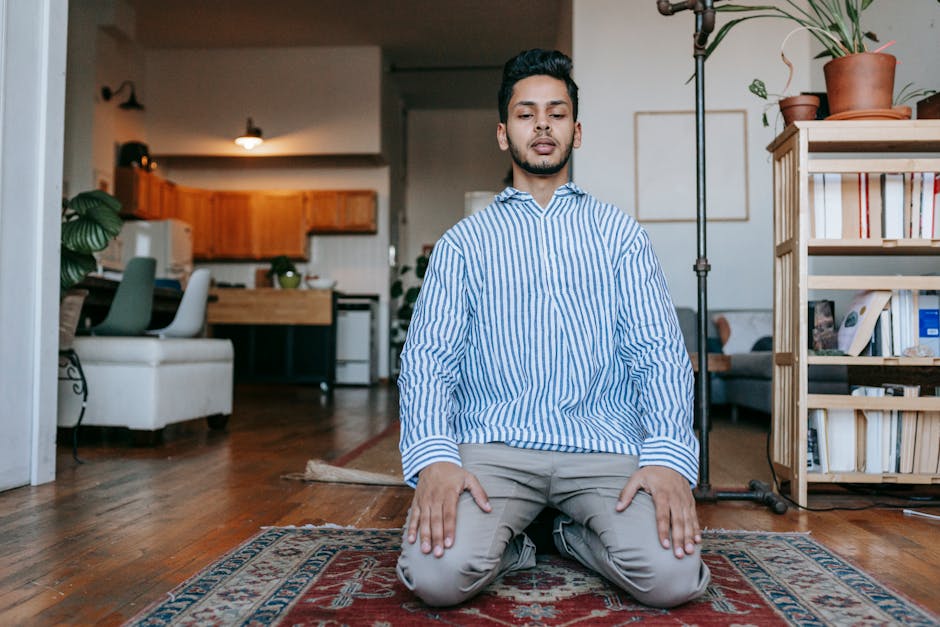
Why the front of your knee reacts to kneeling
🦵 Not sure what's causing your knee pain?
Answer 5 quick questions and get a personalised result.
Find My Pattern → 60 seconds · No sign-upWhen you kneel, your kneecap (patella) bears significant pressure. The way your body distributes that weight depends on several things, and if any of them are slightly off, the front of your knee can become irritated.
One common reason is how your quadriceps muscle—the large muscle on the front of your thigh—pulls on the kneecap. If this muscle is tighter on one side than the other, or weaker overall, the kneecap can track slightly off its ideal path as you lower down. This misalignment can create friction or pressure on the tissues underneath and around the kneecap. You might notice this happens more on one knee than the other, or that it's worse when you're tired (when your muscles fatigue and can't stabilize as well). People dealing with this frequently also notice knee clicks and hurts when bending, particularly after extended periods of inactivity.
Another possibility is that the tissues under and around your kneecap—the cartilage, the fat pad, or the bursa (a fluid-filled sac that cushions the joint)—have become irritated from repeated pressure or from a sudden increase in kneeling activity. This can happen if you've recently started a new job that requires kneeling, or if you've been doing more gardening or home projects than usual. The irritation can be there from the moment you kneel, or it can develop gradually as you stay in that position.
The surface you're kneeling on matters more than you might think. Hard tile or concrete demands more shock absorption from your knee than carpet or padded kneeling pads. If your pain is significantly worse on hard floors, it suggests your knee is struggling with impact absorption. If it's roughly the same regardless of surface, the issue is more likely about how your knee joint itself is moving or positioned.
A third factor is tightness in your calf or ankle. When these are stiff, your shin can't tilt forward as much as it needs to when you kneel, which shifts extra stress onto the front of your knee. You might notice this if you have limited ankle flexibility or if your calf feels perpetually tight. For useful context, knee pain front of kneecap when running tends to have the same mechanical roots and overlapping solutions.
What you can try
Change how you kneel. Instead of dropping straight down onto your kneecap, try kneeling on the thicker part of your shin—a few inches below the kneecap. This shifts pressure away from the sensitive front of the knee. A thick kneeling pad or folded towel under your shins can reduce impact significantly. Notice whether pain decreases with padding; if it does, you've found useful information about what your knee needs.
Avoid kneeling on hard surfaces for now. If you must kneel, use a cushioned mat, pillow, or purpose-made kneeling pad. Hard tile, concrete, and wood floors demand more from your knee. Carpet is gentler, but padding is gentler still. This isn't forever—just while you're working on the underlying issue.
Ease into kneeling duration. If you've been avoiding kneeling, don't suddenly kneel for 10 minutes straight. Start with 20–30 seconds, stand up, rest for a minute, then try again. This teaches your knee to tolerate the position gradually. Pay attention to whether pain appears immediately or creeps in after a delay; that timing tells you something about whether the issue is mechanical (immediate) or inflammatory (delayed).
Apply cold after kneeling. If your knee feels warm, swollen, or achy after kneeling, ice the front of your knee for 10–15 minutes once you're standing. Cold can reduce irritation, especially if the issue involves inflammation. Some people find that pain is worse in humid or warm weather, which suggests inflammation is playing a role.
Gently stretch your calf and quadriceps. Tight muscles upstream of your knee can change how your knee tracks when you kneel. A simple calf stretch (leaning forward against a wall with one leg straight behind you) and a quadriceps stretch (pulling your heel toward your buttock while standing) can help. Do these slowly and hold for 20–30 seconds. Don't bounce or force it.
When to see a professional
If pain is severe enough that you can't kneel at all, or if it's accompanied by significant swelling, instability (your knee feels like it might give way), or if the pain hasn't improved after 2–3 weeks of careful modifications, it's time to talk to a healthcare provider. They can assess how your knee moves, check for structural issues, and rule out anything that needs specific treatment.
Safety note: If you have severe pain, significant swelling, a recent injury, fever, numbness, or difficulty bearing weight, speak with a qualified healthcare professional promptly.
Frequently Asked Questions
Q: Is it normal to hear clicking sounds alongside front of knee hurts when kneeling?
A: Joint sounds are extremely common and usually harmless — they often come from gas bubbles in the joint fluid or tendons flicking over bony prominences. If the clicking is painless and your knee functions normally, it's generally nothing to worry about. If it's accompanied by pain or swelling, mention it to a healthcare professional.
Q: Can I still walk normally when I have front of knee hurts when kneeling?
A: Many people manage normal walking despite this kind of discomfort. If walking causes you to limp or noticeably change your gait, though, that's worth addressing — compensating patterns often create new problems in the hips, lower back, or opposite knee over time.
Q: When should I stop exercising because of front of knee hurts when kneeling?
A: Stop if the pain is sharp, climbing steadily during exercise, or causing you to change how you move. Mild, stable discomfort that stays at a 2 to 3 out of 10 is often acceptable to work through gently. Anything above that — or pain that simply feels wrong — is your cue to stop and reassess.
Where to Go From Here
Most people who take early, sensible action recover well. Start with what you can manage today and monitor closely. If things are not improving after a few weeks, that is the right time to bring in professional support.
Helpful Next Step
As an Amazon Associate, we may earn from qualifying purchases. This does not affect the price you pay.
Helpful Support Option
If kneeling is part of your daily routine, padded knee protection can reduce direct pressure on the joint and the surrounding soft tissue.
See knee pad optionsHelpful Next Step
If gentle support helps during recovery, you can check a simple support option that many people use in daily life. For useful context, knee pain when gardening kneeling tends to have the same mechanical roots and overlapping solutions.
This content is for educational purposes only and does not constitute medical advice. Always consult a qualified healthcare professional for diagnosis and treatment.