🦵 Not sure what's causing it? Take the 5-question knee quiz.
Find My Pattern →Dull Ache Behind Knee After Climbing Stairs
Stairs are fine on the way up. It's the descent that gets you — or sometimes it's not even that. You make it down, feel mostly okay, sit down to rest, and then about twenty minutes later a dull, persistent ache settles behind your knee. It's not sharp. It's not stabbing. It's the kind of pain that makes you shift your leg every few minutes, trying to find a position that feels neutral. By the next morning, that ache has deepened into something heavier, and the first few steps out of bed bring a tightness that takes several minutes to ease.
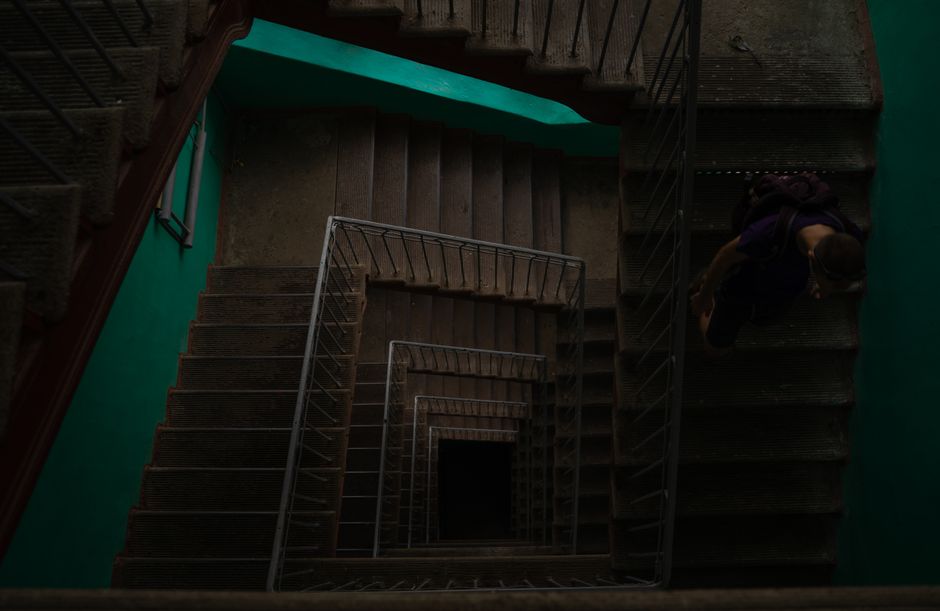
This delayed or lingering pain behind the knee after stair climbing is common enough that you're not alone, but it's also specific enough that generic advice often misses what's actually happening in your case.
What's likely causing the ache
🦵 Not sure what's causing your knee pain?
Answer 5 quick questions and get a personalised result.
Find My Pattern → 60 seconds · No sign-upA dull ache behind the knee after climbing stairs can develop for several reasons, and often it's a combination rather than a single culprit. If you also experience dull ache behind knee after walking downhill, the two issues often share the same underlying cause.
The back of your knee contains several structures — tendons, a fluid-filled sac called the bursa, and the joint capsule itself — that can become irritated or fatigued. When you climb stairs, especially downward, your quadriceps (the muscle on the front of your thigh) works hard to control the descent and prevent your knee from collapsing. If those muscles are tired, weak, or imbalanced compared to your hamstrings, the load shifts backward. The tissues behind your knee compensate, and that compensation can feel like a dull throb that builds over time rather than appearing immediately.
Another possibility is that the tissues behind your knee are being pinched or compressed slightly during or after the stair activity. This can happen if your knee tracking is off — meaning your kneecap isn't moving in a straight line — or if you have tightness in your calf or hamstring that pulls on the back of the knee joint.
Weather and sleep quality matter more than most articles admit. A damp, cold morning can make the joint stiffer and more prone to that dull ache. Poor sleep reduces your body's ability to manage inflammation, so if you've had a restless night and then climb stairs the next day, the pain may be sharper or linger longer than it would after a good night's rest.
Stress and tension also play a role that's easy to overlook. When you're anxious or carrying mental tension, you often hold your muscles tighter without realizing it. Your quadriceps, hamstrings, and calf can all tense up, which changes how your knee moves and increases pressure behind the joint. If you've had a stressful week and then attempt a longer stair climb, the pain may feel worse than it would during a calmer period.
Practical steps to try
Start by paying attention to when the pain peaks. Does it happen immediately, or does it build over the next hour or two? Does it feel worse the morning after? Understanding the timing helps you figure out whether the issue is acute irritation (immediate pain) or accumulated fatigue (delayed ache). This distinction matters because your approach will differ slightly.
Apply ice to the back of your knee for 15 to 20 minutes after stair activity, especially if you notice swelling or increased warmth. Even if you don't see visible swelling, the tissues behind your knee may be inflamed internally. Cold can reduce that inflammation and dull the ache. Do this within the first couple of hours after activity for best results. There's a close connection between this and dull ache behind knee after walking uphill — the same structures are usually involved.
Elevate your leg when you're resting afterward. This isn't just about comfort — it helps reduce fluid buildup in the joint and surrounding tissues. Prop your leg on a pillow or cushion so your knee is slightly higher than your hip. Fifteen to twenty minutes of this after stair activity can make a real difference in how you feel later.
Gentle movement often helps more than complete rest, even though that feels counterintuitive. Walking on flat ground at an easy pace can actually reduce stiffness better than sitting still. The key is avoiding the activity that triggered the pain (stairs, hills, lunges) while keeping the knee mobile. A slow walk around your house or neighborhood can ease that dull ache without aggravating it further.
Pay attention to your footwear. Shoes with poor arch support or worn-out cushioning force your knee to work harder to stabilize your body on stairs. If you've been wearing the same shoes for months, they may be part of the problem. A supportive shoe or even an over-the-counter arch insert can change how your knee tracks during stair climbing.
When to talk to a healthcare professional
If the dull ache persists beyond two weeks, worsens despite rest and ice, or begins to limit your daily activities — like making you avoid stairs or affecting how you walk — reach out to a doctor or physical therapist. They can assess your knee's range of motion, strength, and alignment to identify what's specifically happening in your case.
Also seek professional guidance if you notice swelling that doesn't go down, increased warmth in the joint, or if the pain suddenly becomes sharp or catches. These changes suggest something beyond simple overuse fatigue.
Safety note: If you have severe pain, significant swelling, a recent injury, fever, numbness, or difficulty bearing weight, speak with a qualified healthcare professional promptly.
Frequently Asked Questions
Q: How long does dull ache behind knee after climbing stairs usually last?
A: This varies a lot depending on the cause. Minor muscle strain or overuse tends to settle within a few days to two weeks with appropriate rest and gentle movement. If it hasn't improved after three weeks — or symptoms are worsening — that's a clear signal to get a professional opinion.
Q: Is it normal to hear clicking sounds alongside dull ache behind knee after climbing stairs?
A: Joint sounds are extremely common and usually harmless — they often come from gas bubbles in the joint fluid or tendons flicking over bony prominences. If the clicking is painless and your knee functions normally, it's generally nothing to worry about. If it's accompanied by pain or swelling, mention it to a healthcare professional.
Q: Why does my knee feel worse after sitting for a long time?
A: This pattern — stiffness or pain after prolonged sitting that eases once you move around — is a hallmark of irritation around the kneecap or the soft tissues surrounding it. The joint stiffens in a flexed position, and the first movement disturbs it. Most people find it settles within a minute or two of walking.
What To Do Tomorrow Morning
Most people who take early, sensible action recover well. Start with what you can manage today and monitor closely. If things are not improving after a few weeks, that is the right time to bring in professional support.
Helpful Next Step
As an Amazon Associate, we may earn from qualifying purchases. This does not affect the price you pay.
Helpful Support Option
If this type of knee discomfort flares up on stairs, light compression or a supportive brace can help reduce strain on the joint while you work on strengthening the surrounding muscles.
See knee support options on AmazonHelpful Next Step
If gentle support helps during recovery, you can check a simple support option that many people use in daily life. People dealing with this frequently also notice knee aches after climbing several flights of stairs, particularly after extended periods of inactivity.
This content is for educational purposes only and does not constitute medical advice. Always consult a qualified healthcare professional for diagnosis and treatment.