🦵 Not sure what's causing it? Take the 5-question knee quiz.
Find My Pattern →What Features Should I Look for When Choosing Footwear for Knee Pain?
Picking up a new pair of shoes should feel straightforward, but when your knee hurts, every step becomes a calculation. You stand in the store comparing options, wondering if that cushioning will help or if the arch support will actually make a difference. The shoe that felt fine for twenty minutes in the fitting area might feel completely different by evening, when your knee starts sending sharp signals up your leg. Choosing footwear for knee pain isn't about finding a magic pair—it's about understanding which specific features can reduce stress on your knee joint and which ones might make things worse.
How your shoes connect to what your knee feels
🦵 Not sure what's causing your knee pain?
Answer 5 quick questions and get a personalised result.
Find My Pattern → 60 seconds · No sign-upYour knee doesn't work in isolation. It's part of a chain that starts at your foot and extends up through your hip. When your shoe doesn't provide adequate support or cushioning, your foot may roll inward or outward more than it should. This small shift in foot position changes the angle at which forces travel up through your shin, knee, and thigh. Over time—or sometimes immediately—this altered alignment can increase pressure on the knee joint itself.
Shoes that are too worn, too rigid, or too soft can all contribute to knee stress. A shoe with collapsed cushioning forces your knee to absorb more impact with each step. One that's too stiff can prevent your foot from moving naturally, causing your knee to compensate by working harder. The goal is finding a middle ground where your foot stays stable without being locked in place. There's a close connection between this and what footwear features matter most when i have knee pain — the same structures are usually involved.
Features that actually make a difference
Cushioning in the right spots. Look for shoes with cushioning concentrated in the heel and forefoot—the areas that absorb the most impact. The cushioning should feel responsive rather than mushy. Press your thumb into the heel; it should compress slightly and then bounce back. If it feels like you're stepping into a cloud that doesn't recover, that shoe may not provide enough support for a painful knee. Moderate cushioning helps absorb shock without creating instability.
Arch support that matches your foot. Your arch isn't just for comfort—it helps distribute weight evenly across your foot. If your arch collapses inward (overpronation), your knee angles inward with each step, which can increase pain. If your arch is unusually high (underpronation), your weight concentrates on the outer edge of your foot, which can also stress your knee. Neutral shoes work for some people; others need mild arch support built in or added through an insole. Pay attention to how your foot feels, not what the shoe label says.
A firm heel counter. The heel counter is the rigid cup at the back of the shoe that cradles your heel. A firm (not rock-hard) heel counter prevents your heel from rolling side to side, which keeps your foot stable and reduces compensatory movement in your knee. Run your finger around the inside back of the shoe—it should feel structured and supportive, not soft or collapsible.
Minimal drop between heel and forefoot. Drop refers to the height difference between your heel and your toes. High-drop shoes (10mm or more) can tilt your body forward slightly, changing how forces move through your knee. Lower-drop shoes (4-8mm) often encourage a more neutral alignment. If you've always worn high-drop shoes, switching to very low drop suddenly can actually increase knee stress. Consider a moderate drop as a starting point.
Adequate width and toe box room. A shoe that's too tight across the forefoot forces your foot to work harder to stay stable. Your toes should have a thumb's width of space in front of them. A shoe that's too wide lets your foot slide and roll inside, which also destabilizes your knee. Getting the width right matters more than most people realize.
What to be cautious about
Avoid shoes that feel broken in or overly flexible. A shoe with worn-down cushioning or a collapsed midsole might feel familiar, but it's no longer protecting your knee. Replace shoes when the cushioning stops bouncing back or when you notice the heel wearing unevenly.
Don't assume that more cushioning always means more support. Some highly cushioned shoes are actually quite unstable. Try them on and walk around—your foot should feel secure, not like it's sinking into the shoe.
Be wary of dramatic changes. If you've been wearing one style for years and suddenly switch to something completely different, your knee may react negatively at first. Gradual transitions work better than abrupt ones.
Avoid shoes that feel tight around the midfoot or heel, even if they're the right size. Tightness can restrict natural foot motion and force your knee to compensate.
When shoes alone aren't enough
If you've tried several pairs of supportive shoes and your knee pain hasn't improved after a few weeks, that's a signal to talk with a healthcare professional. They can assess whether your pain is coming from foot alignment, muscle weakness, movement patterns, or something else entirely. Sometimes the right shoe helps significantly; sometimes it's one piece of a larger picture that includes strengthening exercises or changes in activity.
Safety note: If you have severe pain, significant swelling, a recent injury, fever, numbness, or difficulty bearing weight, speak with a qualified healthcare professional promptly.
Finding your next pair
The best shoe for your knee is one you'll actually wear consistently. If a shoe feels uncomfortable in the store, it won't feel better at home. Take time trying on multiple pairs, walk around for several minutes, and notice how your knee responds—not just in the moment, but over the next few days. Keep track of which features seem to help and which ones don't. That information becomes valuable when you're shopping for your next pair, and it also gives you something concrete to discuss if you do see a professional about your knee pain.
Helpful Next Step
As an Amazon Associate, we may earn from qualifying purchases. This does not affect the price you pay.
Helpful Support Option
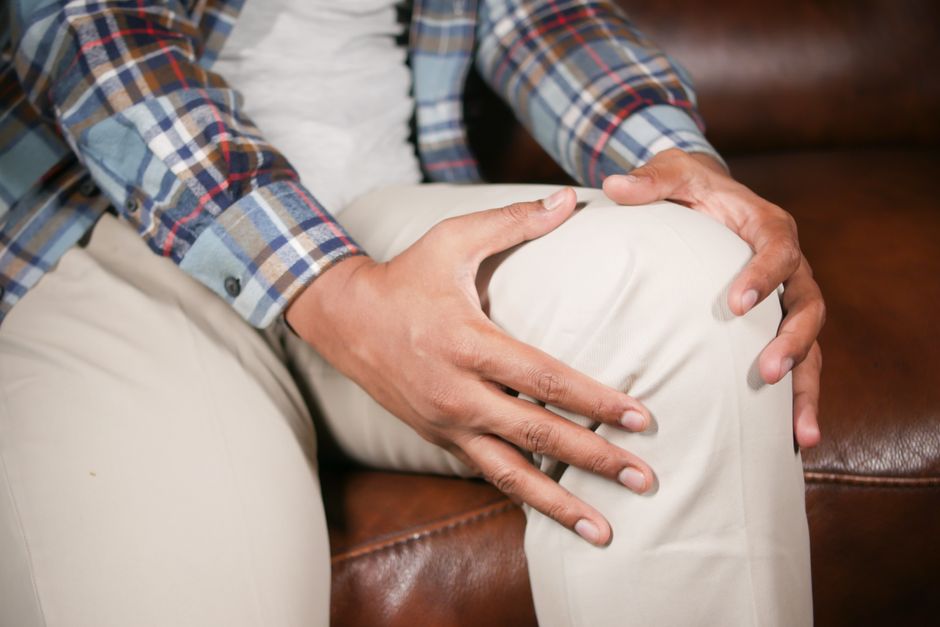
If this type of knee discomfort shows up during daily movement, light support may help reduce strain on the joint while you work on the underlying cause.
See knee support options on AmazonHelpful Next Step
If gentle support helps during recovery, you can check a simple support option that many people use in daily life. There's a close connection between this and how to test footwear comfort without a long painful walk — the same structures are usually involved.
This content is for educational purposes only and does not constitute medical advice. Always consult a qualified healthcare professional for diagnosis and treatment.