🦵 Not sure what's causing it? Take the 5-question knee quiz.
Find My Pattern →Stiff Knee After Rest After Walking Downhill
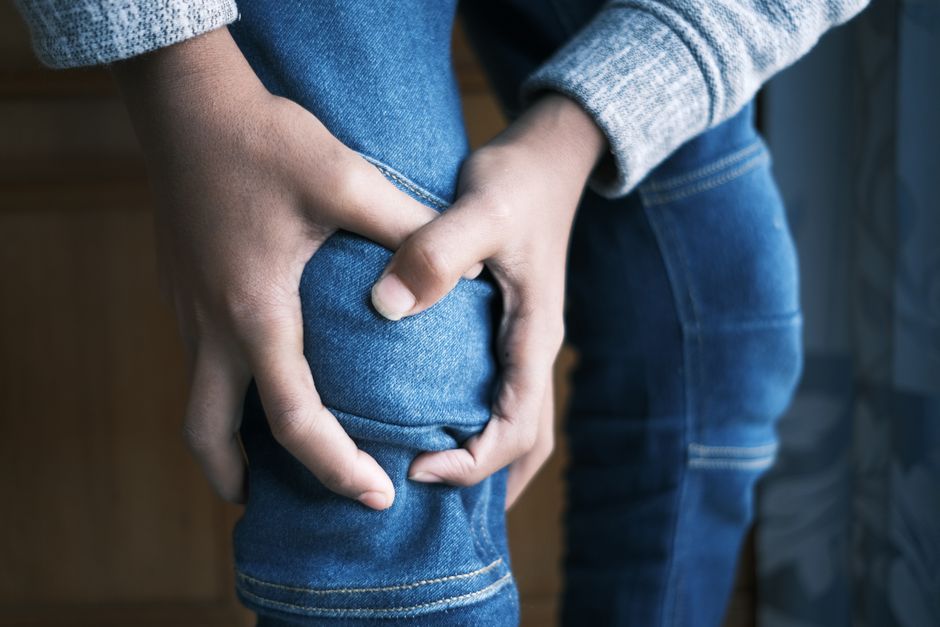
That moment when you stand up after sitting for half an hour and your knee feels locked—like the joint has seized up overnight—is one of the most frustrating sensations after a day of downhill hiking or walking. You can straighten it, but it takes a few careful steps before the tightness releases. The stiffness often feels worse the morning after, when you first wake up, and it can make simple movements like getting out of bed or climbing stairs feel impossible, even though you know nothing is actually broken. The sensation is real, but it's temporary—and understanding why it happens can help you move through it more confidently.

Why your knee stiffens after downhill activity
🦵 Not sure what's causing your knee pain?
Answer 5 quick questions and get a personalised result.
Find My Pattern → 60 seconds · No sign-upWalking downhill places unusual demands on your knee in ways that flat or uphill walking doesn't. Your quadriceps (the large muscle on the front of your thigh) has to work as a brake, lengthening under tension with every step down. This eccentric muscle action—where the muscle is actively contracting while being stretched—can create microscopic damage to muscle fibers, especially if you're not accustomed to downhill movement.
When this happens, your body responds with inflammation and fluid accumulation around the joint. This isn't dangerous; it's a normal healing process. But it creates that stiff, immobilized feeling, particularly after rest. The longer you sit or lie still, the more the fluid settles and the joint feels increasingly locked. Movement actually helps disperse this fluid, which is why the stiffness often improves as you walk around—even though your instinct is to rest and protect the knee. For useful context, stiff knee after rest after walking uphill tends to have the same mechanical roots and overlapping solutions.
The timing of stiffness is distinctive. You may feel fine during the walk itself, or even for a few hours afterward. But then, when you sit down for dinner or settle in to watch television, that's when the tightness creeps in. By the next morning, the stiffness is often at its worst. This delayed onset is your body's inflammatory response peaking, not a sign of serious damage.
Another factor is the angle at which your knee was working during the descent. The quadriceps, hamstring, and calf muscles were all working in coordination to control your descent, and they may have worked at angles or intensities they're not used to. This can create a sensation of stiffness that feels almost structural—like something is physically blocking the joint—when it's actually muscular tightness and swelling.
What you can do to ease the stiffness
Move gently and regularly, even when it feels stuck. This is counterintuitive, but rest actually allows stiffness to worsen. Instead of staying still, try walking slowly around your home every 20 to 30 minutes. Short, easy walks help circulate fluid away from the joint and signal to your muscles that they can relax. The first few steps will feel tight, but you'll often notice a gradual unlocking sensation as you continue. This isn't painful movement you should push through—it's gentle, easy walking that feels better as you do it.
Apply ice for 15 to 20 minutes, then move. Ice can help reduce inflammation, but apply it early and don't leave it on for extended periods. After icing, gentle movement is more important than prolonged rest. Some people find that alternating between ice and gentle activity—ice for 15 minutes, then a short walk, then ice again—works better than either approach alone.
Try gentle range-of-motion exercises. Sit in a chair and slowly straighten and bend your knee without forcing it. Do this several times throughout the day. You're not stretching hard; you're simply moving the joint through its natural range at a comfortable pace. This helps maintain mobility and prevents the stiffness from getting worse.
Consider over-the-counter anti-inflammatory medication if appropriate for you. Ibuprofen or naproxen, taken as directed, may help reduce inflammation and the associated stiffness. This works best when combined with movement, not as a substitute for it. Check with a pharmacist or your doctor if you have any concerns about taking these medications.
Elevate your leg when sitting, but don't stay seated for long. If you do need to rest, prop your knee up on a pillow to reduce swelling. But aim to get up and move every 30 minutes rather than sitting for hours, which will make stiffness worse.
When to speak with a healthcare professional
Most stiffness after downhill walking improves within a few days to a week with gentle movement and time. However, some situations warrant professional evaluation. This pattern is related to outer knee ache after walking downhill, and the same management principles often apply.
If the stiffness is accompanied by significant pain that doesn't improve with movement, if you notice your knee giving way or feeling unstable, or if swelling is severe and doesn't reduce after a few days, these are signs to get checked out. Similarly, if you heard a pop or felt a sharp catching sensation at the moment of injury, or if you can't straighten your knee at all even with gentle effort, a healthcare provider can rule out ligament or cartilage damage.
Safety note: If you have severe pain, significant swelling, a recent injury, fever, numbness, or difficulty bearing weight, speak with a qualified healthcare professional promptly.
Frequently Asked Questions
Q: Why does my knee feel worse after sitting for a long time?
A: This pattern — stiffness or pain after prolonged sitting that eases once you move around — is a hallmark of irritation around the kneecap or the soft tissues surrounding it. The joint stiffens in a flexed position, and the first movement disturbs it. Most people find it settles within a minute or two of walking.
Q: How long does stiff knee after rest after walking downhill usually last?
A: This varies a lot depending on the cause. Minor muscle strain or overuse tends to settle within a few days to two weeks with appropriate rest and gentle movement. If it hasn't improved after three weeks — or symptoms are worsening — that's a clear signal to get a professional opinion.
Q: When should I stop exercising because of stiff knee after rest after walking downhill?
A: Stop if the pain is sharp, climbing steadily during exercise, or causing you to change how you move. Mild, stable discomfort that stays at a 2 to 3 out of 10 is often acceptable to work through gently. Anything above that — or pain that simply feels wrong — is your cue to stop and reassess.
What To Do Tomorrow Morning
Most people who take early, sensible action recover well. Start with what you can manage today and monitor closely. If things are not improving after a few weeks, that is the right time to bring in professional support.
Helpful Next Step
As an Amazon Associate, we may earn from qualifying purchases. This does not affect the price you pay.
Helpful Support Option
If this discomfort shows up during daily walking or standing, a compression sleeve may help reduce load on the joint during movement while the underlying cause is addressed.
See walking knee support optionsHelpful Next Step
If gentle support helps during recovery, you can check a simple support option that many people use in daily life. There's a close connection between this and pain under kneecap after walking downhill — the same structures are usually involved.
This content is for educational purposes only and does not constitute medical advice. Always consult a qualified healthcare professional for diagnosis and treatment.