🦵 Not sure what's causing it? Take the 5-question knee quiz.
Find My Pattern →Knee Pressure Feeling After Climbing Stairs
You make it up the stairs fine. No sharp pain, no limping. But halfway down, or sometimes not until you've finished and sat down ten minutes later, a dull pressure builds behind your kneecap. It's not stabbing. It's more like something is swelling or pressing outward from inside the joint—a sensation that makes you want to straighten your leg fully and hold it there, or walk it off by pacing the room. The pressure can last minutes or hours, and the unpredictability is almost worse than the pain itself. Some days stairs feel completely normal. Other days, the pressure starts on the third step down and doesn't fade until evening.
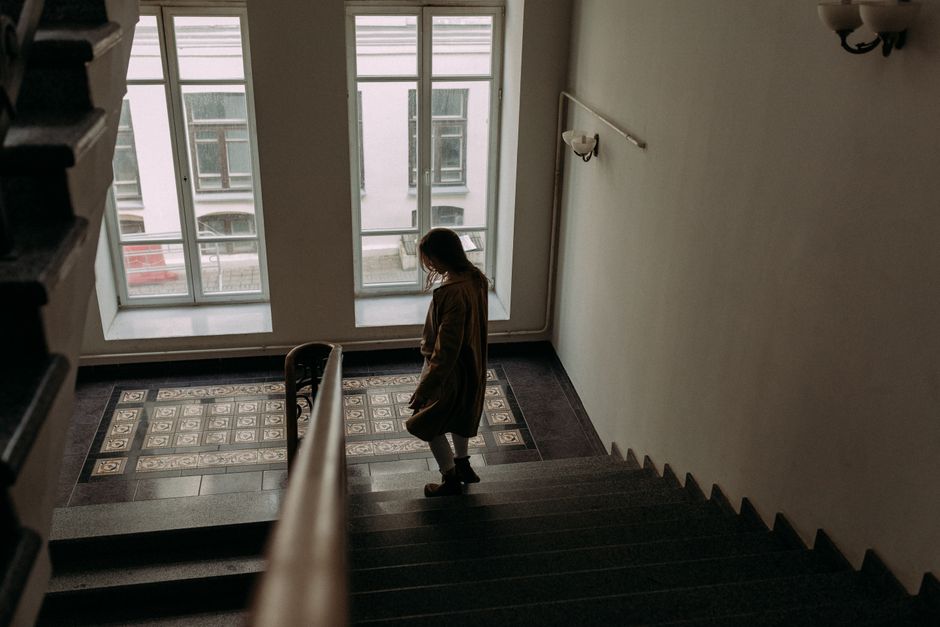
How stair descent loads your knee differently
🦵 Not sure what's causing your knee pain?
Answer 5 quick questions and get a personalised result.
Find My Pattern → 60 seconds · No sign-upClimbing up actually requires less from your knee than coming down. When you ascend, your muscles are actively contracting to lift you—your quadriceps is working hard, but it's a controlled effort. Descending is where the real load happens. Your knee has to brake your body weight as gravity pulls you down each step. This eccentric loading—where your muscle lengthens while resisting force—can create pressure sensations that don't appear during the climb itself. It's worth knowing that knee burning feeling after climbing stairs follows a very similar pattern and responds to the same kind of approach.
The pressure you feel after stairs often builds gradually because the tissues around your kneecap are absorbing repeated small impacts. If the muscles supporting your knee aren't firing evenly, or if they fatigue partway through, the load shifts unevenly across the joint. You might not notice this happening in real time, but 20 or 30 minutes later, when you sit down and the joint settles, that pressure becomes obvious.
Common reasons for post-stair pressure
Uneven muscle activation around the kneecap. Your quadriceps has four separate muscles, and they don't always pull equally. If the inner part (vastus medialis) isn't engaging as strongly as the outer part (vastus lateralis), your kneecap can track slightly off-center as you step down. This creates uneven pressure on the cartilage underneath. You might notice this pressure is worse when you take larger steps or when you're tired—both situations where muscle coordination breaks down.
Fatigue in the muscles that control descent. Stairs demand sustained eccentric muscle work, which tires muscles faster than regular walking. If your quadriceps or hip muscles fatigue during the descent, your body compensates by relying more on your knee joint itself to absorb shock. This often shows up as delayed pressure—you feel fine during the stairs, but 15 minutes later the pressure emerges as inflammation settles in.
How you're stepping down. The way you descend matters more than most people realize. If you're taking small, cautious steps, you're actually asking your knee to work harder on each step because you're not using momentum efficiently. If you're holding the railing tightly and not engaging your leg muscles fully, the joint absorbs more of the load. Some people find the pressure is much worse when stepping down backward or sideways—a sign that directional weakness or control is the real issue, not general strength.
Compensation from the other side. Pressure in one knee sometimes masks what's actually happening elsewhere. If your hip muscles are weak or tight, your opposite leg works harder to stabilize you on stairs. This creates asymmetrical loading, and the pressure you feel in one knee might actually be a sign that the other leg, your hip, or your lower back is pulling the system out of balance.
What you can try carefully
Notice the exact timing of when pressure appears. Does it start during the descent, or only after you've finished and sat down? Does it happen on the way down but not the way up? This timing tells you something important about what's actually struggling. Pressure that appears 20 minutes after stairs suggests tissue irritation and inflammation. Pressure that starts immediately on the third step down suggests a stability or control problem happening in real time.
Experiment with step size and speed. Try descending slowly with deliberate, smaller steps. Then try a normal pace with normal step size. Notice which creates more pressure and when. Some people find that taking stairs slightly faster, using momentum more efficiently, actually reduces pressure because the muscles don't have to work as hard on each individual step. Others find the opposite—that slower, more controlled steps feel better. Your pattern is specific to your body.
Strengthen the inner quadriceps with simple, low-impact work. Straight-leg raises while lying down, or sitting with a small pillow under your knee and tightening your thigh muscle, can help the inner quad engage more evenly. These don't require stairs or high impact. Do them daily if you can, even just 10 reps on each side. The goal isn't dramatic strength gain—it's teaching that muscle to fire consistently.
Walk after stairs instead of sitting immediately. The pressure often feels worse when you sit down because fluid settles in the joint. A 5-minute walk, even just around your house, can help that pressure dissipate faster and feel less trapped.
Pay attention to which leg is actually tired. After climbing stairs, pause and notice: does one leg feel more fatigued than the other? If so, that's the leg compensating for weakness somewhere else. That information is valuable when talking to a professional.
When to see a professional
Pressure that appears only after stairs and fades within a few hours can often be managed with the strategies above. But if the pressure is sharp, if it's accompanied by swelling, if you're noticing that one knee is visibly different from the other, or if the pressure is now appearing during other activities like walking flat ground or standing, that's a sign something needs assessment. This pattern is related to dull ache behind knee after climbing stairs, and the same management principles often apply.
Also pay attention if the pressure is getting worse week to week despite trying these approaches, or if you're starting to avoid stairs in ways that affect your daily life—skipping social events, dreading your commute, or changing how you move around your home. These patterns often mean the underlying issue is progressing and needs professional guidance to prevent compensation injuries elsewhere.
Safety note: If you have severe pain, significant swelling, a recent injury, fever, numbness, or difficulty bearing weight, speak with a qualified healthcare professional promptly.
Frequently Asked Questions
Q: Should I apply heat or ice to a painful knee?
A: Cold — ice wrapped in a cloth — works better for acute flare-ups, particularly in the first 24 to 48 hours when the area feels warm or inflamed. Gentle heat tends to be more helpful for muscle stiffness and chronic, recurring aches. Never apply either directly to bare skin.
Q: Should I use a knee brace or compression sleeve for knee pressure feeling after climbing stairs?
A: A basic compression sleeve can offer comfort and mild support during activity, and many people find it helpful in the short term. Don't rely on it long-term without also addressing the root cause — whether that's strength, flexibility, or movement patterns.
Q: Is it normal to hear clicking sounds alongside knee pressure feeling after climbing stairs?
A: Joint sounds are extremely common and usually harmless — they often come from gas bubbles in the joint fluid or tendons flicking over bony prominences. If the clicking is painless and your knee functions normally, it's generally nothing to worry about. If it's accompanied by pain or swelling, mention it to a healthcare professional.
What To Do Tomorrow Morning
Most people who take early, sensible action recover well. Start with what you can manage today and monitor closely. If things are not improving after a few weeks, that is the right time to bring in professional support.
Helpful Next Step
As an Amazon Associate, we may earn from qualifying purchases. This does not affect the price you pay.
Helpful Support Option
If this type of knee discomfort flares up on stairs, light compression or a supportive brace can help reduce strain on the joint while you work on strengthening the surrounding muscles.
See knee support options on AmazonHelpful Next Step
If gentle support helps during recovery, you can check a simple support option that many people use in daily life. People dealing with this frequently also notice front knee pain after climbing stairs, particularly after extended periods of inactivity.
This content is for educational purposes only and does not constitute medical advice. Always consult a qualified healthcare professional for diagnosis and treatment.