🦵 Not sure what's causing it? Take the 5-question knee quiz.
Find My Pattern →Knee Pain When Walking With a Backpack
The moment it starts
🦵 Not sure what's causing your knee pain?
Answer 5 quick questions and get a personalised result.
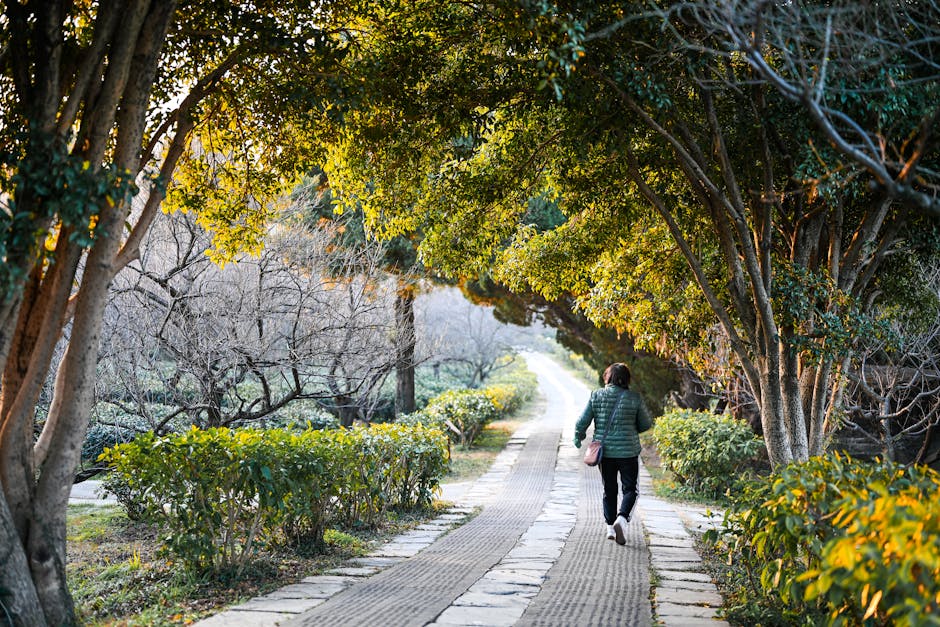
Find My Pattern → 60 seconds · No sign-upBackpack-related knee pain often doesn't announce itself right away. You feel fine for the first 20 or 30 minutes—the weight doesn't bother you, your stride feels normal. Then somewhere between mile two and mile three, a dull ache settles in just below your kneecap or on the inner side of your knee. It's not sharp enough to stop you immediately, but it's noticeable enough that you start thinking about it with every step. By the time you reach your destination, you're limping slightly, and the moment you shrug off your pack, the relief is almost instant. That immediate easing of pressure is your first clue that the backpack itself is part of the problem—not just your knee.
Why backpacks create knee stress
A loaded backpack changes how your body distributes weight and forces as you walk. Here's what often happens: People dealing with this frequently also notice knee gives way when walking, particularly after extended periods of inactivity.
Altered gait and posture. When you carry weight on your back, your center of gravity shifts backward. Your body compensates by leaning slightly forward at the hips or arching your lower back to balance the load. This shifts pressure down through your legs differently than walking unloaded. Your knees absorb impact at a different angle, and over time—or even within a single long walk—this altered angle can irritate the tissues around your knee joint. The effect is often worse on descents or stairs, where your knee bears more load as a brake.
Uneven load distribution. If your backpack sits unevenly—riding higher on one shoulder, pulling to one side, or shifting as you walk—one knee often takes more stress than the other. You might notice pain developing more in your right knee if your pack strap digs into your left shoulder, forcing your body to compensate asymmetrically. This isn't obvious while you're walking, but your knees feel it.
Cumulative daily stress. If you carry a backpack daily—commuting, school runs, work—the repeated stress compounds. A single hike with a heavy pack might cause soreness that fades in a day or two. Daily backpack use, even with lighter loads, can create a pattern where your knee never fully recovers between uses. You might notice the pain gets worse as the week goes on, then slightly better on weekends.
Hip and glute fatigue. Your hips and glutes are meant to stabilize your body and absorb shock as you walk. When you're fatigued—either from the backpack itself or from other activity—these muscles work less efficiently. Your knee then has to compensate, taking on stabilization work it wasn't designed to handle alone. This often creates a dull, heavy sensation rather than sharp pain.
What you can try
Redistribute the load strategically. Before you assume your backpack is too heavy, check what's actually in it. Items that shift during walking (water bottles, loose gear) create micro-adjustments in your gait that add up. Pack heavier items close to your back and centered between your shoulder blades. Keep weight as close to your body as possible. This reduces the lever arm that pulls on your back and knees. If you're carrying 25 pounds, try moving items around before removing items—sometimes the arrangement matters more than the total weight.
Adjust your walking pace and terrain. Pain often worsens on certain surfaces or slopes. If your knee hurts on downhill sections but feels okay climbing, the issue is load-braking—your knee is working overtime to slow your descent. Try shorter, more controlled steps downhill and use trekking poles if you're hiking (they distribute impact load away from your knees). On flat ground, a slower, steadier pace sometimes feels better than trying to maintain your normal speed with added weight.
Take breaks before pain peaks. Most people keep walking until pain becomes uncomfortable, then stop. Instead, try stopping every 20 or 30 minutes—before you expect pain to hit—and remove your backpack for five minutes. This gives your knees a complete pressure break and often prevents pain from building. You might find that you can walk longer total distance if you break up the load exposure, even if the walk takes more time.
Strengthen your hips and glutes. This takes weeks to show results, but stronger hip stabilizers mean your knees don't have to work as hard. Single-leg glute bridges, clamshells, and side-lying leg lifts specifically target the muscles that stabilize your pelvis when you're loaded. These aren't fancy exercises—they're foundational. Even 10 minutes every other day can reduce the compensation pattern that creates knee pain.
Experiment with backpack positioning. Some people find relief by adjusting how high or low the pack sits, or how tight the straps are. A pack that sits too low pulls down on your shoulders and shifts your center of gravity further back. One that's too loose bounces and destabilizes your gait. There's no universal "correct" position—it depends on your body. If you own the backpack, try different strap lengths and positions over a few short walks to find what feels most stable for your knees.
When to talk to a healthcare professional
If your knee pain is sharp, severe, or accompanied by swelling that doesn't go down after removing your pack, don't wait. Pain that worsens over several days despite reducing backpack use, or pain that appears in both knees, also warrants professional evaluation. Some people have underlying knee issues—old injuries, structural differences, or conditions like patellofemoral pain—that a backpack simply exposes. A professional can assess whether your pain is load-related irritation or something that needs specific treatment.
Safety note: If you have severe pain, significant swelling, a recent injury, fever, numbness, or difficulty bearing weight, speak with a qualified healthcare professional promptly.
Frequently Asked Questions
Q: Why does my knee feel worse after sitting for a long time?
A: This pattern — stiffness or pain after prolonged sitting that eases once you move around — is a hallmark of irritation around the kneecap or the soft tissues surrounding it. The joint stiffens in a flexed position, and the first movement disturbs it. Most people find it settles within a minute or two of walking.
Q: Should I apply heat or ice to a painful knee?
A: Cold — ice wrapped in a cloth — works better for acute flare-ups, particularly in the first 24 to 48 hours when the area feels warm or inflamed. Gentle heat tends to be more helpful for muscle stiffness and chronic, recurring aches. Never apply either directly to bare skin.
Q: Is it normal to hear clicking sounds alongside knee pain when walking with a backpack?
A: Joint sounds are extremely common and usually harmless — they often come from gas bubbles in the joint fluid or tendons flicking over bony prominences. If the clicking is painless and your knee functions normally, it's generally nothing to worry about. If it's accompanied by pain or swelling, mention it to a healthcare professional.
A Simple Next Step
Most people who take early, sensible action recover well. Start with what you can manage today and monitor closely. If things are not improving after a few weeks, that is the right time to bring in professional support. People dealing with this frequently also notice knee hurts when walking slowly but not quickly, particularly after extended periods of inactivity.
Helpful Next Step
As an Amazon Associate, we may earn from qualifying purchases. This does not affect the price you pay.
Helpful Support Option
If this discomfort shows up during daily walking or standing, a compression sleeve may help reduce load on the joint during movement while the underlying cause is addressed.
See walking knee support optionsHelpful Next Step
If gentle support helps during recovery, you can check a simple support option that many people use in daily life. For useful context, knee pain after walking barefoot on hard floor tends to have the same mechanical roots and overlapping solutions.
This content is for educational purposes only and does not constitute medical advice. Always consult a qualified healthcare professional for diagnosis and treatment.