🦵 Not sure what's causing it? Take the 5-question knee quiz.
Find My Pattern →Knee Pain When Walking on Uneven Ground
You're halfway through a walk on a gravel path or a slightly rocky trail when your foot catches on something—maybe a root, maybe just a dip you didn't see coming. Your knee feels that micro-moment of instability before your body compensates, and then there's either a sharp pinch or a dull ache that builds over the next few minutes. By the time you're back on flat pavement, the pain settles, but you're already dreading the next uneven section. That hesitation—the way your body tenses up before stepping onto uncertain ground—becomes its own kind of exhaustion.
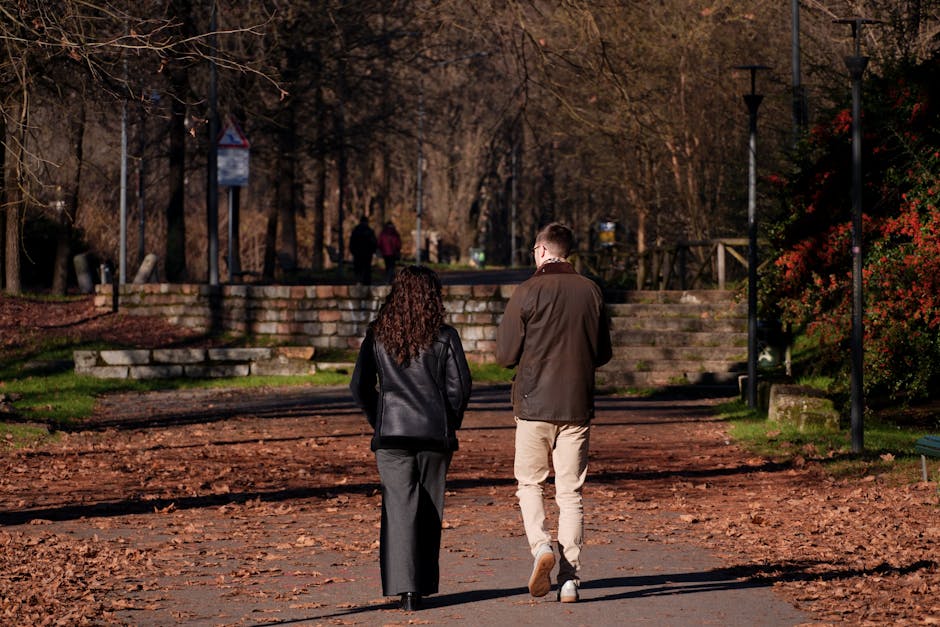
Walking on uneven surfaces demands something different from your knee than a smooth sidewalk does. Your body has to constantly adjust, predict, and brace for small shifts in terrain. When that system isn't working smoothly, your knee pays the price.
Why uneven ground creates problems for your knee
Uneven terrain forces your knee to work in ways it wasn't prepared for, and the reasons vary depending on your body's specific weak points.
Your ankle and foot need to sense the ground beneath them quickly and send that information to your brain so your leg can adjust its angle and tension in real time. This sensory feedback—called proprioception—happens in milliseconds. If your ankle is stiff, weak, or has a history of sprains, it can't communicate those tiny shifts to your knee. Your knee then has to compensate by bracing harder or moving in ways it wasn't designed to, creating strain on the joint itself.
The muscles around your hip and thigh are also responsible for stabilizing your knee during uneven walking. If your glutes are weak or your hip stabilizers aren't firing efficiently, your knee has to work overtime to keep your leg steady. This is especially noticeable on downhill uneven sections, where gravity adds extra force and your muscles need to work harder to control your descent.
Tight muscles in your hip, hamstring, or calf can also limit how freely your knee can move. When muscles are restricted, they pull on the knee joint at odd angles, and uneven ground amplifies that pulling sensation into pain.
Past injuries matter too. If you've rolled your ankle, twisted your knee, or had an old injury that never fully healed, your body may have learned to move differently to protect that area. Uneven ground exposes those old movement patterns and forces your body to work harder than it should.
What you can try
Start by paying attention to the specific moment pain appears. Does it happen mid-stride when your foot lands at an angle? Does it build gradually over 15 or 20 minutes? Does it feel like a sharp catch or a dull, heavy ache? Understanding the timing and sensation helps you figure out what's actually happening. People dealing with this frequently also notice knee pain after walking down stairs, particularly after extended periods of inactivity.
Slow down on uneven terrain. This sounds obvious, but most people try to maintain their normal walking pace on gravel or rocky paths. Slowing down gives your ankle time to sense the ground and your muscles time to adjust. You're not rushing your body to compensate.
Build ankle stability with small, specific movements. Single-leg balance work—standing on one leg for 30 seconds while brushing your teeth, or balancing on one leg while reaching forward—trains your ankle and foot to communicate better with your brain. Uneven ground becomes less of a surprise when your ankle can sense it coming.
Strengthen your hip and glute muscles in ways that feel real. Gym exercises like clamshells or side-lying leg lifts can help, but they happen in a controlled environment. Your knee needs you to practice stability on actual uneven surfaces in small doses. Try walking slowly on a gravel path for just 5 or 10 minutes, focusing on controlled steps rather than distance. This trains your muscles in the exact scenario where they're struggling.
Check your footwear. Shoes with flexible soles that allow your foot to feel the ground are often better than rigid, heavily cushioned shoes for uneven walking. Your foot needs to sense what's beneath it. If your shoe sole is too stiff or too soft, that feedback gets lost.
Avoid pushing through pain on uneven terrain. The urge to "walk it off" or prove you can handle the trail is strong, but pain on uneven ground is your body's way of saying something isn't ready yet. Stopping before pain gets sharp prevents you from reinforcing bad movement patterns.
Not sure what's causing your knee pain? Take our 5-question quiz to find your pattern — Start the quiz →
When to see a professional
If pain on uneven ground is sharp, sudden, or stops you mid-stride, that's worth getting checked. If the pain builds gradually but lingers for days afterward, or if you notice your knee feeling unstable even on flat surfaces, a physical therapist can assess what's actually going on and create a plan specific to your body.
If pain is preventing you from doing activities you enjoy—if you're avoiding trails or outdoor walks altogether—that's also a good time to talk to someone. Sometimes the psychological weight of avoiding terrain you used to handle easily is just as important to address as the physical pain.
Safety note: If you have severe pain, significant swelling, a recent injury, fever, numbness, or difficulty bearing weight, speak with a qualified healthcare professional promptly.
Frequently Asked Questions
Q: When should I stop exercising because of knee pain when walking on uneven ground?
A: Stop if the pain is sharp, climbing steadily during exercise, or causing you to change how you move. Mild, stable discomfort that stays at a 2 to 3 out of 10 is often acceptable to work through gently. Anything above that — or pain that simply feels wrong — is your cue to stop and reassess.
Q: Is it safe to exercise with knee pain when walking on uneven ground?
A: Gentle, low-impact movement is often beneficial — walking, swimming, and cycling tend to be well-tolerated. Avoid anything that sharply increases the discomfort. A physiotherapist can help identify which exercises are right for your specific situation and severity.
Q: Can I still walk normally when I have knee pain when walking on uneven ground?
A: Many people manage normal walking despite this kind of discomfort. If walking causes you to limp or noticeably change your gait, though, that's worth addressing — compensating patterns often create new problems in the hips, lower back, or opposite knee over time.
A Simple Next Step
Most people who take early, sensible action recover well. Start with what you can manage today and monitor closely. If things are not improving after a few weeks, that is the right time to bring in professional support.
Helpful Next Step
As an Amazon Associate, we may earn from qualifying purchases. This does not affect the price you pay.
Helpful Support Option
If this discomfort shows up during daily walking or standing, a compression sleeve may help reduce load on the joint during movement while the underlying cause is addressed.
See walking knee support optionsWant a more personalised recommendation? Take the 5-question quiz →
Helpful Next Step
If gentle support helps during recovery, you can check a simple support option that many people use in daily life.
This content is for educational purposes only and does not constitute medical advice. Always consult a qualified healthcare professional for diagnosis and treatment.