🦵 Not sure what's causing it? Take the 5-question knee quiz.
Find My Pattern →Knee Pain When Playing Golf and Twisting Through Shot
That sharp catch on the inside of your knee arrives right at the moment you're finishing your downswing—when your weight is shifting forward and your torso is rotating through the ball. It's sharp enough to make you wince, but it usually fades within a second or two, so you shake it off and move to the next tee. By hole 9, the pain is still there but duller now, more like a persistent pinch. Then you sit down in the clubhouse after 18, and it becomes a heavy, throbbing ache that doesn't really settle until the next morning—when you discover the first few swings of your next round feel stiff and restricted until you warm up.
This pattern of pain—sharp during the twist, dull after, stiff the next day—is what makes golf-specific knee pain different from other activities. It's not constant. It's triggered by a very specific movement at a very specific moment.
Why your knee reacts this way during the golf swing
🦵 Not sure what's causing your knee pain?
Answer 5 quick questions and get a personalised result.
Find My Pattern → 60 seconds · No sign-upGolf demands something most daily activities don't: a controlled, forceful rotation of your lower body while your feet stay planted. Your knee is caught between two opposing forces—your hips rotating one way and your feet anchored in place—which creates a twisting stress through the joint itself. There's a close connection between this and knee pain after playing football — the same structures are usually involved.
When you twist through the ball, several things may be happening at once. Your knee may be bearing most of your body weight while rotating, which can stress the tissues on the inner side of the joint (where that pinch often happens). If your hip muscles are tight or fatigued, your knee compensates by doing more of the rotational work than it should. The meniscus—the cartilage pad inside your knee—can get pinched between the bones during this rotation, especially if your alignment is slightly off or if you're rotating too aggressively.
Fatigue plays a big role too. On the front nine, your muscles are fresh enough to stabilize the knee properly. By hole 15 or 16, when your legs are tired, the small stabilizing muscles around your knee fatigue faster than the larger ones. That's when you might feel a slight buckling sensation or instability on your backswing, or notice the pain shifts from sharp to dull and heavy.
Course conditions matter more than many golfers realize. Wet grass or uneven terrain forces your knee to work harder to stay stable during your stance. A downhill lie adds extra rotational stress. These small variations can be the difference between a pain-free round and one where discomfort builds with each hole.
What to try before and during your round
Warm up your hips and knees specifically. Generic stretching isn't enough. Before you play, do slow, controlled hip circles and gentle rotations—mimic the golf swing motion at 50% intensity for 10-15 swings. This primes the muscles that stabilize your knee during rotation and increases blood flow to the joint. Many golfers skip this and go straight to the range, which means their first few swings are done with a cold knee.
Pay attention to your stance width and foot position. A wider stance gives your knee more stability during rotation. If you're standing too narrow, your knee has to work harder to prevent unwanted movement. Experiment with your stance on the range before playing—a small adjustment here can reduce the twisting stress significantly.
Reduce your swing speed on the back nine. This sounds simple but it's hard to do when you're frustrated about losing distance. Slower swings require less rotational force and give your stabilizing muscles time to do their job. You'll often hit better shots and finish the round with less pain.
Ice your knee after your round, not the next morning. Many golfers don't feel pain until hours later, so they don't ice. But the damage happens during play. Ice for 15-20 minutes within an hour of finishing to reduce inflammation before it builds overnight.
Walk the course instead of using a cart when possible. This sounds counterintuitive, but walking keeps your muscles engaged and warm throughout the round. Using a cart means sitting still between shots, which allows muscles to cool and stiffen—then you ask them to stabilize your knee again on the next swing.
When to seek help from a professional
Pain that worsens across multiple rounds, sharp pain that doesn't fade quickly, or any sensation of instability or buckling means it's time to talk to someone qualified. The same goes if you notice swelling, if your knee feels hot, or if the pain is limiting your ability to walk normally the day after playing. There's a close connection between this and knee pain after playing tennis — the same structures are usually involved.
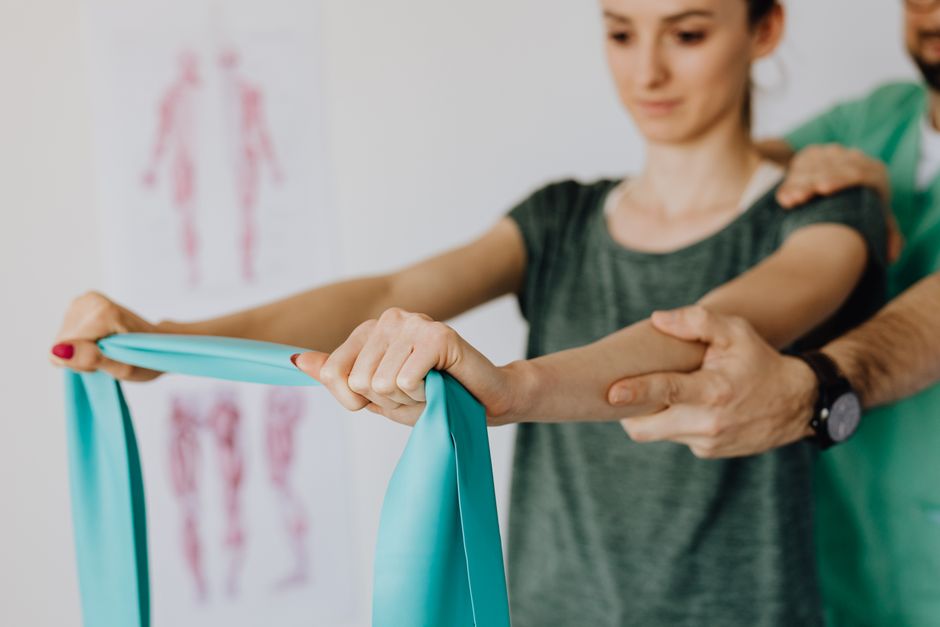
A physical therapist can identify whether your hips, ankles, or core are contributing to the problem—often the knee pain is actually a symptom of weakness or tightness elsewhere. They can also assess your swing mechanics and suggest specific adjustments.
Safety note: If you have severe pain, significant swelling, a recent injury, fever, numbness, or difficulty bearing weight, speak with a qualified healthcare professional promptly.
Frequently Asked Questions
Q: Is it normal to hear clicking sounds alongside knee pain when playing golf and twisting through shot?
A: Joint sounds are extremely common and usually harmless — they often come from gas bubbles in the joint fluid or tendons flicking over bony prominences. If the clicking is painless and your knee functions normally, it's generally nothing to worry about. If it's accompanied by pain or swelling, mention it to a healthcare professional.
Q: How long does knee pain when playing golf and twisting through shot usually last?
A: This varies a lot depending on the cause. Minor muscle strain or overuse tends to settle within a few days to two weeks with appropriate rest and gentle movement. If it hasn't improved after three weeks — or symptoms are worsening — that's a clear signal to get a professional opinion.
Q: What happens if I ignore knee pain when playing golf and twisting through shot?
A: In some cases, minor knee discomfort does resolve on its own. But consistently ignoring pain — especially if it's altering how you move — can allow the underlying cause to worsen. Most people find that early, sensible attention leads to faster recovery than waiting it out indefinitely.
What To Do Tomorrow Morning
Most people who take early, sensible action recover well. Start with what you can manage today and monitor closely. If things are not improving after a few weeks, that is the right time to bring in professional support.
Helpful Next Step
As an Amazon Associate, we may earn from qualifying purchases. This does not affect the price you pay.
Helpful Support Option
Resistance bands are commonly used in knee rehabilitation to build quad and glute strength without placing heavy load on the joint. A useful addition to a home exercise routine.
See resistance band optionsHelpful Next Step
If gentle support helps during recovery, you can check a simple support option that many people use in daily life. It's worth knowing that knee pain after sitting through long work meeting follows a very similar pattern and responds to the same kind of approach.
This content is for educational purposes only and does not constitute medical advice. Always consult a qualified healthcare professional for diagnosis and treatment.