🦵 Not sure what's causing it? Take the 5-question knee quiz.
Find My Pattern →Knee Pain When Doing Kettlebell Swings
You're mid-swing—maybe on rep 15 or 20—and you feel it: a sharp pinch on the inside of your knee, or sometimes a dull ache that builds with each rep. The odd part is that during the explosive drive upward, the pain almost disappears. It's only when you stand still afterward that it starts to throb. Or maybe it's different for you: pain hits the moment the kettlebell reaches the bottom of the swing, forcing you to brace differently or cut the session short. Either way, the movement that felt fine last week has become something you're now hesitant to do.
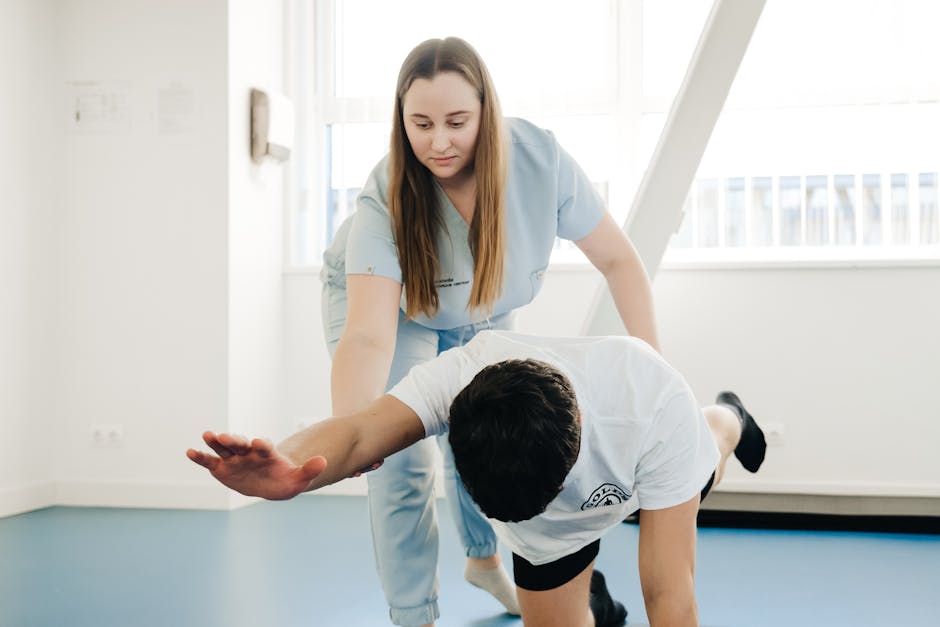
Why your knee is reacting to kettlebell swings
🦵 Not sure what's causing your knee pain?
Answer 5 quick questions and get a personalised result.
Find My Pattern → 60 seconds · No sign-upKettlebell swings are deceptively demanding on the knee, even though they're supposed to be a hip-dominant movement. Several factors can push your knee into a position or load pattern it's not ready for. There's a close connection between this and knee pain doing lunges — the same structures are usually involved.
The weight threshold effect. Many people notice pain doesn't appear gradually—it shows up suddenly at a specific kettlebell weight. You might swing a 16kg pain-free, but the 20kg triggers immediate discomfort. This isn't a sign you're weak; it's often a sign that the load has crossed a threshold where your knee is being asked to stabilize or absorb force in a way your current strength can't manage. The jump in absolute load matters more than the percentage increase.
Asymmetry between your two sides. Single-leg swings (or even bilateral swings where one leg does more work) can reveal that one knee is handling the load differently than the other. If your left hip is tighter or your right glute fires less consistently, your knee compensates by tracking inward or bearing load unevenly. This often feels like instability mid-drive—a micro-catch or wobble that forces a tiny adjustment mid-swing.
Ground feel and footwear. Your foot's connection to the floor directly influences how your knee tracks during the explosive phase. Thick, cushioned shoes or unstable surfaces can reduce your brain's ability to sense where your foot is, which means your knee doesn't get the proprioceptive feedback it needs to stay properly aligned. Switching to minimal footwear or a firmer surface sometimes eliminates pain that seemed mechanical.
Individual anthropometry. Your femur length, hip socket angle, and knee structure are unique to you. Textbook kettlebell form—a perfectly vertical shin at the bottom—may be biomechanically impossible or inefficient for your body. Some people need a slightly more forward knee position; others need a wider stance. When you're forcing your body into a position that doesn't match your structure, your knee absorbs stress that should be distributed through your hips.
What you can try, carefully
Start by reducing the load—not because you're weak, but because it gives your knee a chance to learn the movement without defensive tension. Drop to the kettlebell weight you could swing comfortably 3-4 weeks ago, then build back up more slowly.
Pay attention to foot position and pressure. During the swing, notice where your weight sits across your foot. Ideally, it should feel distributed across your whole foot, with slightly more weight through your heel during the explosive drive. If you're rolling inward (pronating) or your weight is drifting to the outside of your foot, your knee loses its stable base. Try swinging barefoot or in minimal shoes on a firm surface for 2-3 swings to feel the difference. You don't need to swing barefoot every time, but it teaches your foot and knee what proper alignment feels like.
Separate bilateral and single-leg work. If you normally do standard two-handed swings, try alternating single-arm swings at a lighter weight. This reveals which side is compensating and which knee is handling load unevenly. Single-arm swings also force your core to work harder to prevent rotation, which can reduce the compensatory stress on your knee. Once you identify the weaker or more painful side, you can focus extra attention there.
Check the bottom position of your swing. The moment the kettlebell reaches the lowest point is where most people either have good knee alignment or lose it. Film yourself from the side. Your shin should be roughly vertical or slightly forward—not dramatically forward, but not severely upright either. The key is that your knee shouldn't collapse inward (valgus). If it does, that's a sign your glutes aren't firing hard enough to stabilize your hip, and your knee is doing the job instead.
Reduce volume before reducing weight. Sometimes the pain is inflammation-based rather than mechanical. If you're doing 10 sets of 10 reps, drop to 6 sets of 8 reps at the same weight. Lower volume often reduces inflammation faster than lower load, and it lets you keep some intensity in the movement.
Build a pause at the top. Adding a 1-2 second pause at the top of each swing forces you to use your glutes and core to stabilize, rather than relying on momentum. This strengthens the muscles that protect your knee and teaches your body to drive through your hips more deliberately.
When to seek professional help
If the pain is sharp or catching, if your knee feels unstable or gives way, or if pain persists beyond a few days of modified training, stop kettlebell swings and see a physical therapist or doctor. Pain that appears 6-12 hours after training and is accompanied by swelling suggests inflammation that needs assessment. There's a close connection between this and knee pain when doing deadlifts — the same structures are usually involved.
Safety note: If you have severe pain, significant swelling, a recent injury, fever, numbness, or difficulty bearing weight, speak with a qualified healthcare professional promptly.
Frequently Asked Questions
Q: Is it normal to hear clicking sounds alongside knee pain when doing kettlebell swings?
A: Joint sounds are extremely common and usually harmless — they often come from gas bubbles in the joint fluid or tendons flicking over bony prominences. If the clicking is painless and your knee functions normally, it's generally nothing to worry about. If it's accompanied by pain or swelling, mention it to a healthcare professional.
Q: How long does knee pain when doing kettlebell swings usually last?
A: This varies a lot depending on the cause. Minor muscle strain or overuse tends to settle within a few days to two weeks with appropriate rest and gentle movement. If it hasn't improved after three weeks — or symptoms are worsening — that's a clear signal to get a professional opinion.
Q: Should I use a knee brace or compression sleeve for knee pain when doing kettlebell swings?
A: A basic compression sleeve can offer comfort and mild support during activity, and many people find it helpful in the short term. Don't rely on it long-term without also addressing the root cause — whether that's strength, flexibility, or movement patterns.
One Thing to Try First
Most people who take early, sensible action recover well. Start with what you can manage today and monitor closely. If things are not improving after a few weeks, that is the right time to bring in professional support.
Helpful Next Step
As an Amazon Associate, we may earn from qualifying purchases. This does not affect the price you pay.
Helpful Support Option
Resistance bands are commonly used in knee rehabilitation to build quad and glute strength without placing heavy load on the joint. A useful addition to a home exercise routine.
See resistance band optionsHelpful Next Step
If gentle support helps during recovery, you can check a simple support option that many people use in daily life. If you also experience knee pain when doing jump squats, the two issues often share the same underlying cause.
This content is for educational purposes only and does not constitute medical advice. Always consult a qualified healthcare professional for diagnosis and treatment.