🦵 Not sure what's causing it? Take the 5-question knee quiz.
Find My Pattern →Knee Clicking With Pain After Walking Downhill
The moment you finish descending a steep hill or a long flight of stairs, everything feels fine. Your legs are tired, maybe a bit warm, but there's no pain. Then you sit down. Or you stand up from sitting. And that's when it hits—a click, sometimes sharp, sometimes dull, followed by an ache that wasn't there during the walk itself. This delayed-onset clicking is one of the more frustrating knee experiences because it tricks you into thinking the activity was fine, only to punish you hours later.
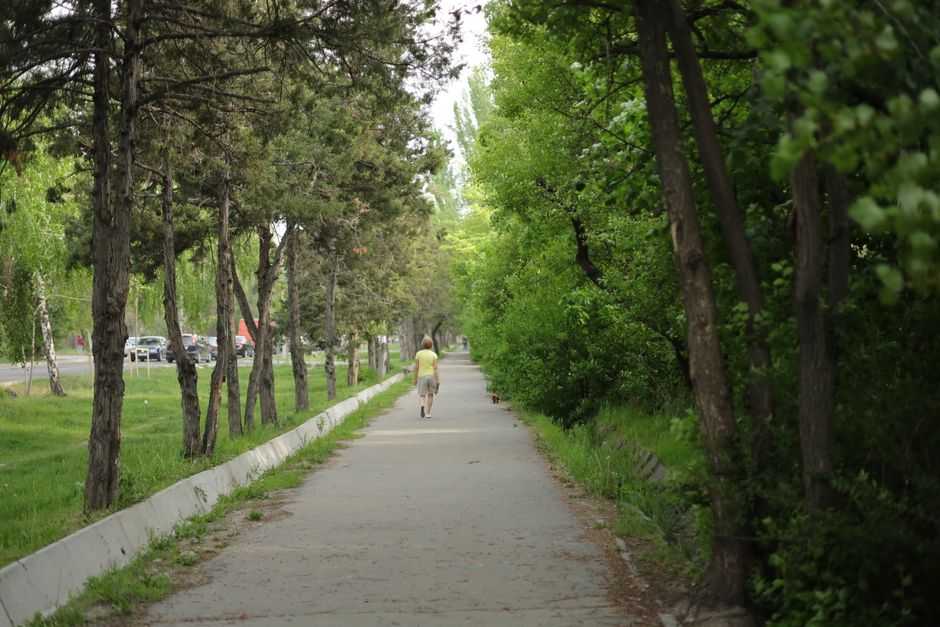
Why downhill walking creates this particular problem
🦵 Not sure what's causing your knee pain?
Answer 5 quick questions and get a personalised result.
Find My Pattern → 60 seconds · No sign-upDownhill movement puts your knee in a mechanically vulnerable position. When you walk down an incline, your quadriceps muscle has to work eccentrically—it's lengthening under tension rather than shortening. This is harder work than concentric contraction (the shortening kind), and it can leave the muscle fatigued and less able to stabilize your kneecap properly.
The kneecap itself tracks along a groove in your thighbone. When your quadriceps is strong and balanced, it pulls the kneecap straight down that groove. When it's tired or weak, the kneecap can shift slightly side to side. That shifting, combined with the repetitive bending and straightening of downhill walking, can create the clicking sensation you feel. The click often happens at a specific point in your range of motion—sometimes when your knee is almost straight, sometimes when it's bent to about 45 degrees—depending on exactly how your kneecap is tracking. This pattern is related to knee clicking with pain after walking uphill, and the same management principles often apply.
Downhill walking also increases compressive force through your knee joint. Your body weight plus the momentum of descent presses down harder on the cartilage surfaces than flat walking does. If that cartilage is already slightly irritated or if there's any minor unevenness in how the surfaces fit together, the clicking can emerge as a symptom of that irritation.
A third factor is the eccentric loading itself. Your muscles absorb impact differently on descent than on flat ground. If your quadriceps, hamstrings, or glutes are imbalanced—stronger on one side, or one muscle group much tighter than its opposing group—downhill walking exposes that imbalance. The clicking can be your knee's way of signaling that stability is compromised.
What you can try at home
Start with how you descend. On your next downhill walk, try taking smaller steps and moving more slowly. This reduces the eccentric load on your quadriceps and gives your muscles more control. You'll feel less momentum pushing you forward, which means less compressive force through the joint. If you can, use handrails or poles. This isn't weakness—it's smart load management.
Ice after the activity, not during. Many people ice while they're still on the hill. Instead, wait until you're home and can ice for 15–20 minutes while your leg is elevated and relaxed. The clicking often worsens as inflammation builds over the next few hours, so icing in that window can help settle it down before it peaks overnight.
Tape or wrap for the descent itself. Before you walk downhill, try a simple knee support wrap or athletic tape around your kneecap. This provides external stability that your muscles might not be offering right now. If the clicking noticeably improves with the wrap on, that's a strong signal that stability is the issue, not structural damage. This information is useful to share with a professional later.
Work your quadriceps gently between activities. Straight-leg raises (lying on your back, tightening your thigh muscle and lifting your leg a few inches) can be done daily and don't require you to bend your knee. This builds strength without the impact. Do 10–15 per leg, holding each for 2 seconds. The goal isn't to become a bodybuilder; it's to give your quadriceps enough endurance to stabilize your kneecap during eccentric loading.
Avoid repeated downhill walking while you're symptomatic. This is the hardest advice to follow, but walking downhill repeatedly while your knee is clicking is like repeatedly irritating a minor cut. Each descent adds inflammation. If you need to descend, do it once and then rest that knee for 48 hours before the next downhill walk.
When to see a professional
If the clicking persists beyond two weeks, worsens despite these changes, or if the pain is sharp enough to make you limp, it's time to see a doctor or physical therapist. They can assess how your kneecap actually tracks and check for meniscus or cartilage involvement. They can also rule out other causes—sometimes clicking with downhill pain points to a different issue entirely. There's a close connection between this and knee feels swollen after walking downhill — the same structures are usually involved.
Also seek professional guidance if the clicking is accompanied by swelling that doesn't go down overnight, if your knee feels unstable or like it might give way, or if you're developing pain in other areas (hip, ankle, lower back) as you try to compensate.
Safety note: If you have severe pain, significant swelling, a recent injury, fever, numbness, or difficulty bearing weight, speak with a qualified healthcare professional promptly.
Frequently Asked Questions
Q: Should I apply heat or ice to a painful knee?
A: Cold — ice wrapped in a cloth — works better for acute flare-ups, particularly in the first 24 to 48 hours when the area feels warm or inflamed. Gentle heat tends to be more helpful for muscle stiffness and chronic, recurring aches. Never apply either directly to bare skin.
Q: What happens if I ignore knee clicking with pain after walking downhill?
A: In some cases, minor knee discomfort does resolve on its own. But consistently ignoring pain — especially if it's altering how you move — can allow the underlying cause to worsen. Most people find that early, sensible attention leads to faster recovery than waiting it out indefinitely.
Q: When should I stop exercising because of knee clicking with pain after walking downhill?
A: Stop if the pain is sharp, climbing steadily during exercise, or causing you to change how you move. Mild, stable discomfort that stays at a 2 to 3 out of 10 is often acceptable to work through gently. Anything above that — or pain that simply feels wrong — is your cue to stop and reassess.
One Thing to Try First
Most people who take early, sensible action recover well. Start with what you can manage today and monitor closely. If things are not improving after a few weeks, that is the right time to bring in professional support.
Helpful Next Step
As an Amazon Associate, we may earn from qualifying purchases. This does not affect the price you pay.
Helpful Support Option
If this discomfort shows up during daily walking or standing, a compression sleeve may help reduce load on the joint during movement while the underlying cause is addressed.
See walking knee support optionsHelpful Next Step
If gentle support helps during recovery, you can check a simple support option that many people use in daily life. This pattern is related to outer knee ache after walking downhill, and the same management principles often apply.
This content is for educational purposes only and does not constitute medical advice. Always consult a qualified healthcare professional for diagnosis and treatment.