🦵 Not sure what's causing it? Take the 5-question knee quiz.
Find My Pattern →How Do I Know If I'm Developing a Limp That Might Cause Other Pain?
The shift happens gradually. At first, your knee bothers you during or after activity—maybe a walk feels heavier than it should, or stairs require more thought. Then one day you notice you're not putting weight on it quite the same way. Your hip feels tighter. Your lower back starts complaining by evening. The limp wasn't something you decided to do; it just became the path of least resistance. Now you're wondering: is this limp a temporary adjustment, or am I creating problems somewhere else?

This is a real concern. When you favor one leg to protect knee pain, your body compensates in ways that can ripple through your hips, ankles, and spine. Catching this pattern early—before it becomes automatic—matters because the longer your body moves asymmetrically, the harder it becomes to undo.
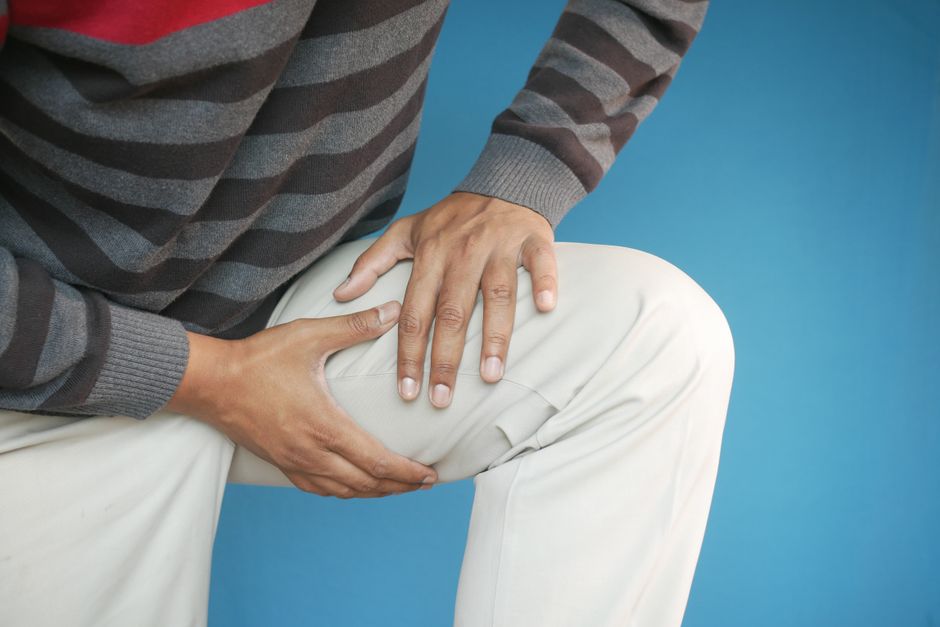
How a limp develops from knee pain
🦵 Not sure what's causing your knee pain?
Answer 5 quick questions and get a personalised result.
Find My Pattern → 60 seconds · No sign-upA limp usually starts as a protective reflex. Your knee hurts, so you shorten your stride on that side or reduce how much weight you transfer through it. This feels safer in the moment. Your nervous system registers the pain and learns: "move differently here, and it hurts less." People dealing with this frequently also notice aching knee at night with no obvious cause, particularly after extended periods of inactivity.
Several things can trigger this pattern. Acute pain from an injury or flare-up is the most obvious—you simply can't walk normally when something sharp is happening. Chronic ache can do it too, though more subtly. You might not feel obvious pain, but a dull discomfort or instability makes you unconsciously shift your weight. Weakness in the knee or muscles around it can also create a limp; your leg may feel unreliable, so you naturally reduce the load it carries. Swelling can do the same thing—even mild swelling can make your knee feel stiff or "off," prompting your body to move around it rather than through it.
The problem isn't the limp itself at first. The problem is what happens when the limp becomes your new normal. Your hip abductors work overtime to stabilize your pelvis on the painful side. Your lower back arches differently to compensate. Your ankle and foot adjust their angle of approach. After weeks or months, these secondary areas develop their own pain—not because they're injured, but because they're doing work they weren't designed to sustain.
Signs your limp is becoming a pattern
The clearest sign is when other areas start to hurt without an obvious reason. You haven't done anything different with your hip or back, yet they ache. This often appears as a dull, heavy sensation that's worse at the end of the day or after you've been moving around.
Watch for asymmetry in how you move. Stand in front of a mirror and notice your posture. Does one shoulder sit higher? Is your pelvis tilted? When you walk, does your trunk lean more to one side? These are visible clues that your body has reorganized itself around the knee pain.
Pay attention to which leg you prefer for certain movements. Do you always lead with your right leg going upstairs? Always step down with your left? Do you stand with more weight on one leg without thinking about it? These patterns suggest your limp has moved from conscious protection into automatic habit.
Another signal is delayed discomfort. You might feel fine while walking, but hours later—or the next morning—your hip, lower back, or ankle complains. This lag happens because those areas fatigued during the day without sending obvious warning signals until they've had time to stiffen up.
What you can do to interrupt the pattern
The goal is to restore more symmetrical movement before compensation patterns solidify. This takes intention.
Start with awareness. For a few days, simply notice how you move without trying to change it. When do you limp most? After certain activities? At particular times of day? Does it get worse as you fatigue? This observation is your baseline. You're not judging; you're gathering information. For useful context, how do i know if im pushing too hard during exercise or not pushing hard enough tends to have the same mechanical roots and overlapping solutions.
Once you're aware, practice walking slowly and deliberately. Slow movement gives your brain time to process and correct. Aim for equal weight transfer on both legs, even if it feels uncomfortable or slightly painful at first. This is different from pushing through sharp pain—you're looking for that point where you can tolerate moving more symmetrically. Even 5-10 minutes of this focused walking can help reset your pattern.
Strengthen the muscles that support the painful knee. Weak quadriceps or glutes often contribute to the limp in the first place. Gentle exercises like straight-leg raises, glute bridges, or short-arc quads can help your knee feel more stable. Stability reduces the need to limp. Start conservatively; you're building capacity, not proving toughness.
Address any swelling. Ice after activity, elevate when you can, and consider compression. A swollen knee feels unstable and prompts a limp. Reducing swelling often makes symmetrical walking feel more possible.
Avoid prolonged sitting or immobility. Paradoxically, resting too much can stiffen your compensating muscles and make the limp more entrenched. Gentle, frequent movement—even just walking around your home—keeps things mobile.
When to involve a professional
If your limp persists beyond a few weeks, or if you notice pain developing in your hip, lower back, or ankle, it's time to see someone. A physical therapist can identify exactly which muscles are overworking and which are underworking. They can teach you how to move more symmetrically and catch compensation patterns you might miss on your own.
You should also see a professional if the original knee pain isn't improving. A limp often signals that whatever caused the initial pain needs attention—not just the limp itself.
Safety note: If you have severe pain, significant swelling, a recent injury, fever, numbness, or difficulty bearing weight, speak with a qualified healthcare professional promptly.
Moving forward
A limp is your body's way of communicating that something needs adjustment. The good news is that catching it early—before secondary pain develops—makes it much easier to address. The realistic timeline is weeks to a couple of months of intentional movement before your gait feels more balanced again, assuming the underlying knee issue is also improving.
For now, the most useful next step is to observe and document. Which movements trigger the limp? When does secondary pain
Helpful Next Step
As an Amazon Associate, we may earn from qualifying purchases. This does not affect the price you pay.
Helpful Support Option
If this type of knee discomfort shows up during daily movement, light support may help reduce strain on the joint while you work on the underlying cause.
See knee support options on AmazonHelpful Next Step
If gentle support helps during recovery, you can check a simple support option that many people use in daily life. For useful context, how do i know if my clicking knee is just noise or a sign of cartilage damage tends to have the same mechanical roots and overlapping solutions.
This content is for educational purposes only and does not constitute medical advice. Always consult a qualified healthcare professional for diagnosis and treatment.