🦵 Not sure what's causing it? Take the 5-question knee quiz.
Find My Pattern →Knee Pain From Sitting at a Low Desk
You're two hours into focused work at your desk when a dull ache starts behind your kneecap. At first you ignore it—you're in the middle of something. But by hour three, when you finally stand up, there's a sharp pinch across the front of your knee that makes you wince. The pain wasn't there when you sat down. It arrived gradually, quietly, only announcing itself when you tried to move. This is the particular frustration of low-desk knee pain: it sneaks up during concentration and disrupts the flow of your day.
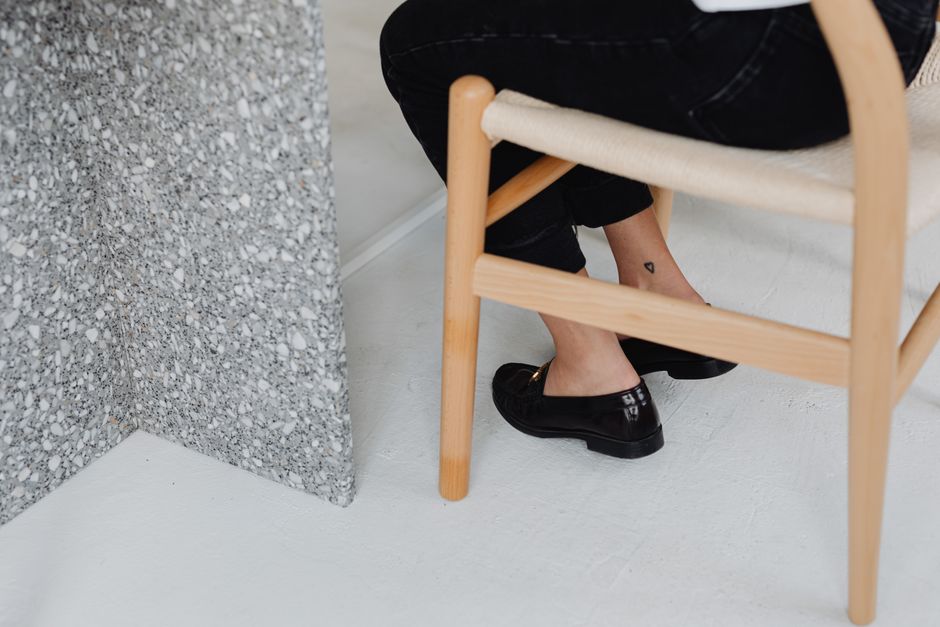
Why a low desk creates this specific problem
🦵 Not sure what's causing your knee pain?
Answer 5 quick questions and get a personalised result.
Find My Pattern → 60 seconds · No sign-upWhen your desk sits too low relative to your body, your knees bend at a sharper angle than they're designed to handle for extended periods. Your thighbone and shinbone form a more acute angle—sometimes closer to 90 degrees or even tighter—rather than the gentler 110–120 degrees that many people tolerate better. This compressed position can place prolonged pressure on the structures inside your knee joint, particularly the cartilage under your kneecap.
The problem often intensifies because of how you naturally settle into a low desk. You may find yourself sliding your hips back in the chair to gain a bit more legroom, which tilts your pelvis backward and rounds your lower spine. This posture change forces your knees to work harder to stabilize your body, and the muscles around your knee—especially your quadriceps—can become fatigued from holding you steady in an awkward position. Fatigue in these muscles means less support for your knee joint itself. It's worth knowing that knee pain when sitting at desk follows a very similar pattern and responds to the same kind of approach.
There's also a timing element that typical desk setups miss: the pain often doesn't hit immediately. You might feel fine for the first 45 minutes because your muscles are fresh and engaged. Then, around the second hour, as you relax deeper into the chair and your muscles tire, the ache emerges. By the time you notice it, you've already spent significant time in that compressed position, and the damage to comfort has been done.
Individual variation plays a larger role here than generic ergonomic advice suggests. Two people of similar height and build can react completely differently to the same desk height. One person's knee anatomy—the angle of their femur, the shape of their kneecap, how their ligaments are naturally taut or loose—may tolerate low-desk sitting without complaint, while another person's knees rebel within an hour. There's no universal "correct" height that works for everyone. It's worth knowing that knee stiffness after sitting at desk follows a very similar pattern and responds to the same kind of approach.
What you can try
Raise your desk or chair strategically. The goal isn't necessarily to reach the textbook elbow-height standard everyone quotes. Instead, experiment with small increments. Raise your desk by 2–3 inches using desk risers or a keyboard tray, then sit for a full work session and notice how your knee feels by hour two. If the ache is less intense, you're moving in the right direction. If it's unchanged, try raising it another inch or two. The sweet spot is often when your knees sit at a slightly more open angle—closer to 110 degrees—rather than the tight compression of a low desk.
Create a standing or movement break every 60–90 minutes. This isn't about stretching in place at your desk. Stand up, walk to another room, climb a few stairs if you can, or simply pace while thinking. The goal is to change the angle at which your knee is held and allow the muscles around it to reset. Many people find that a 3–5 minute break every 90 minutes prevents the dull ache from ever building up in the first place.
Adjust how you sit, not just where you sit. If you notice yourself sliding your hips back and rounding your spine, consciously sit with your hips slightly forward in the chair. This small shift keeps your pelvis more neutral and reduces the demand on your knee stabilizers. You may feel like you're perching rather than lounging—that's actually the position that's easier on your knees. It won't feel as comfortable at first, but the absence of pain often wins out.
Pay attention to what your legs are doing under the desk. Crossing your legs feels like relief because it changes the angle temporarily, but it creates other problems. Resting one foot on the other, tucking your feet under the chair, or wrapping them around the chair legs all shift pressure unevenly. Try keeping both feet flat on the floor or a footrest, with your knees roughly hip-width apart and that 110-degree angle maintained.
Notice the progression before it becomes chronic. Low-desk pain has a sneaky way of worsening over weeks without you fully realizing it. What started as an ache that appeared in hour three might gradually appear in hour two, then hour one. By the time you address it, you've spent weeks training your knee to hurt in a certain position. The earlier you make adjustments—even small ones—the faster the pain typically eases.
When to seek professional guidance
If your knee pain persists for more than two weeks despite adjusting your desk height and sitting position, or if the pain is sharp rather than dull and achy, a physical therapist or doctor can assess whether something beyond desk posture is contributing. They can also rule out other issues that might mimic desk-related knee pain.
Safety note: If you have severe pain, significant swelling, a recent injury, fever, numbness, or difficulty bearing weight, speak with a qualified healthcare professional promptly.

Frequently Asked Questions
Q: What happens if I ignore knee pain from sitting at a low desk?
A: In some cases, minor knee discomfort does resolve on its own. But consistently ignoring pain — especially if it's altering how you move — can allow the underlying cause to worsen. Most people find that early, sensible attention leads to faster recovery than waiting it out indefinitely.
Q: Why does my knee feel worse after sitting for a long time?
A: This pattern — stiffness or pain after prolonged sitting that eases once you move around — is a hallmark of irritation around the kneecap or the soft tissues surrounding it. The joint stiffens in a flexed position, and the first movement disturbs it. Most people find it settles within a minute or two of walking.
Q: Can I still walk normally when I have knee pain from sitting at a low desk?
A: Many people manage normal walking despite this kind of discomfort. If walking causes you to limp or noticeably change your gait, though, that's worth addressing — compensating patterns often create new problems in the hips, lower back, or opposite knee over time.
One Thing to Try First
Most people who take early, sensible action recover well. Start with what you can manage today and monitor closely. If things are not improving after a few weeks, that is the right time to bring in professional support.
Helpful Next Step
As an Amazon Associate, we may earn from qualifying purchases. This does not affect the price you pay.
Helpful Support Option
If this type of knee discomfort shows up during or after prolonged sitting, light compression may help reduce stiffness and support the joint during movement.
See knee compression optionsHelpful Next Step
If gentle support helps during recovery, you can check a simple support option that many people use in daily life. It's worth knowing that knee after sitting for a long time follows a very similar pattern and responds to the same kind of approach.
This content is for educational purposes only and does not constitute medical advice. Always consult a qualified healthcare professional for diagnosis and treatment.