🦵 Not sure what's causing it? Take the 5-question knee quiz.
Find My Pattern →Knee Burning Feeling After Going Downstairs
You make it down the stairs fine—maybe even without thinking about it. But then, somewhere between the third and last step, a burning sensation starts in your knee. It's not sharp enough to make you stop, but it's there. And the strange part? Walking on flat ground afterward feels almost normal, until you sit down. Then, twenty minutes later, when you stand up again, the knee feels stiff and that burning creeps back in. This pattern—where the pain shows up during the descent, fades during regular movement, then returns when you're stationary—is one of the most frustrating experiences with knee pain because it doesn't follow a simple on-and-off pattern.
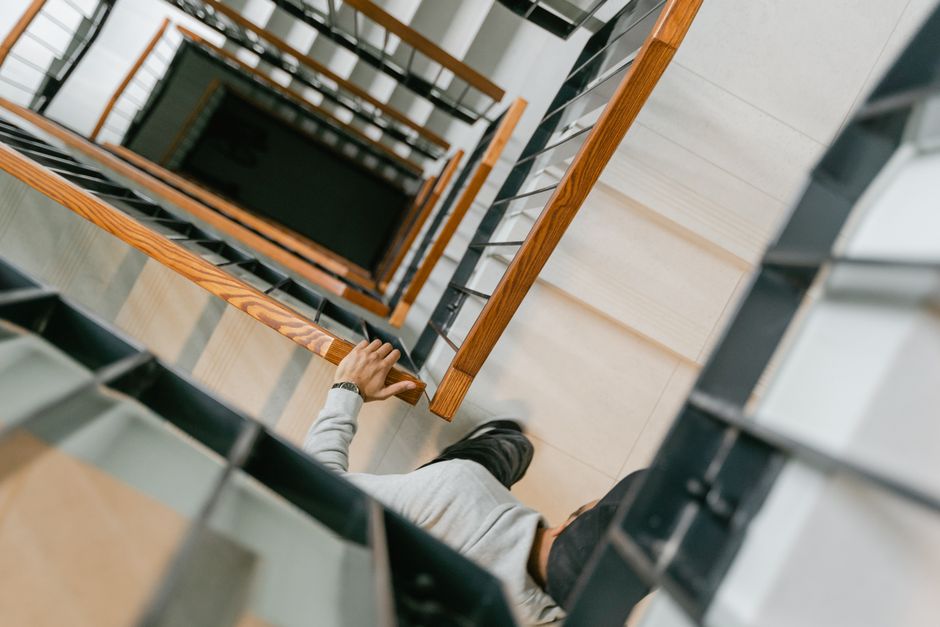
What's happening in your knee during descent
🦵 Not sure what's causing your knee pain?
Answer 5 quick questions and get a personalised result.
Find My Pattern → 60 seconds · No sign-upGoing downstairs puts your knee in a position that's mechanically demanding in a very specific way. Your knee bends deeply while your body weight presses down through it, and your muscles have to control that descent rather than just support your weight. This is eccentric loading—your muscles are lengthening while they're contracting to slow you down. The burning sensation you feel is often your knee's way of signaling that something in this system isn't working smoothly.
Several things can cause this particular pattern. Your quadriceps muscle (the large muscle on the front of your thigh) may not be strong enough or balanced enough to control the descent properly, leaving other structures in the knee joint to compensate. The cartilage under your kneecap can become irritated when tracking isn't aligned—meaning your kneecap isn't gliding smoothly in its groove as you bend and straighten. Tight hip muscles or weak glutes can also pull your knee out of alignment without you realizing it, making descent feel harder than it should. In some cases, the burning comes from inflammation in the tissues around the kneecap, which gets aggravated by the pressure of going downstairs but settles down once you stop that particular movement. If you also experience knee burning feeling after climbing stairs, the two issues often share the same underlying cause.
Small changes that often help
One of the first things to try is changing how you descend. Instead of taking stairs one at a time at normal speed, try leading with your stronger leg and bringing your weaker leg to meet it on each step—essentially going down one step per leg movement rather than alternating. This reduces the load on the painful knee. It feels slower, but it also feels noticeably different. Many people notice the burning either doesn't start or starts much later when they use this method.
Using a handrail isn't cheating—it's a practical way to distribute your weight differently. When you grip the rail, you're using your arms to help control your descent, which takes pressure off your knee. This small change can be the difference between pain-free stairs and a burning sensation.
Ice after stairs can help, but timing matters. If you apply ice for 10-15 minutes within an hour of going downstairs, you may reduce the inflammation that causes delayed burning when you sit down later. Cold doesn't fix the underlying issue, but it can interrupt the cycle of irritation.
Paying attention to your footwear makes a real difference. Shoes with good arch support and cushioning absorb more impact, while thin-soled shoes or worn-out heels transfer more force directly to your knee. If you're wearing flat sandals or old trainers when you go downstairs, switching to supportive shoes for that activity alone can reduce burning noticeably.
Gentle movement after stairs—walking on flat ground for a few minutes rather than sitting immediately—can prevent the stiffness and delayed burning that comes from sitting still. Your knee often feels better when it's moving gently than when it's stationary, so the urge to rest completely can actually make things worse.
Avoiding patterns that make it worse
Avoid rushing down stairs, even if you're late. Speed increases the load on your knee and reduces your muscles' ability to control the descent. Going slowly, even if it feels awkward, protects your knee. There's a close connection between this and knee burning feeling after walking downhill — the same structures are usually involved.
Don't skip stairs by taking two at a time, which is tempting when you're trying to move faster. This increases the load dramatically on each step.
If stairs are burning your knee, avoid other high-impact descents temporarily—like hiking downhill, stepping down from heights, or using step machines at the gym. Your knee is already irritated, and repeating the same movement pattern in different contexts will keep it inflamed.
When to reach out to a professional
If the burning is accompanied by swelling that doesn't go down within a few hours, if you hear clicking or catching sounds along with the pain, or if the burning is spreading to other parts of your knee or leg, a physical therapist or doctor can assess what's actually happening. They can check your alignment, muscle strength, and flexibility in ways you can't do yourself.
Safety note: If you have severe pain, significant swelling, a recent injury, fever, numbness, or difficulty bearing weight, speak with a qualified healthcare professional promptly.

Frequently Asked Questions
Q: When should I stop exercising because of knee burning feeling after going downstairs?
A: Stop if the pain is sharp, climbing steadily during exercise, or causing you to change how you move. Mild, stable discomfort that stays at a 2 to 3 out of 10 is often acceptable to work through gently. Anything above that — or pain that simply feels wrong — is your cue to stop and reassess.
Q: Should I apply heat or ice to a painful knee?
A: Cold — ice wrapped in a cloth — works better for acute flare-ups, particularly in the first 24 to 48 hours when the area feels warm or inflamed. Gentle heat tends to be more helpful for muscle stiffness and chronic, recurring aches. Never apply either directly to bare skin.
Q: Is it safe to exercise with knee burning feeling after going downstairs?
A: Gentle, low-impact movement is often beneficial — walking, swimming, and cycling tend to be well-tolerated. Avoid anything that sharply increases the discomfort. A physiotherapist can help identify which exercises are right for your specific situation and severity.
Where to Go From Here
Most people who take early, sensible action recover well. Start with what you can manage today and monitor closely. If things are not improving after a few weeks, that is the right time to bring in professional support.
Helpful Next Step
As an Amazon Associate, we may earn from qualifying purchases. This does not affect the price you pay.
Helpful Support Option
If this type of knee discomfort flares up on stairs, light compression or a supportive brace can help reduce strain on the joint while you work on strengthening the surrounding muscles.
See knee support options on AmazonHelpful Next Step
If gentle support helps during recovery, you can check a simple support option that many people use in daily life. People dealing with this frequently also notice knee burning feeling after walking uphill, particularly after extended periods of inactivity.
This content is for educational purposes only and does not constitute medical advice. Always consult a qualified healthcare professional for diagnosis and treatment.