🦵 Not sure what's causing it? Take the 5-question knee quiz.
Find My Pattern →How to Modify a Day of Fishing When Knee Mobility is Limited
Casting feels natural when you're focused on the water. Your weight shifts, your arm extends, and for a moment the mechanics of your body feel invisible. But somewhere between arriving at the bank and standing in the shallows for the third hour, your knee starts to remind you it's there—tight, maybe slightly swollen, moving in ways that feel restricted. Fishing demands a lot from your knees: the uneven ground, the prolonged standing, the constant small adjustments to balance. When mobility is already limited, a full day on the water can turn from restorative into genuinely painful.
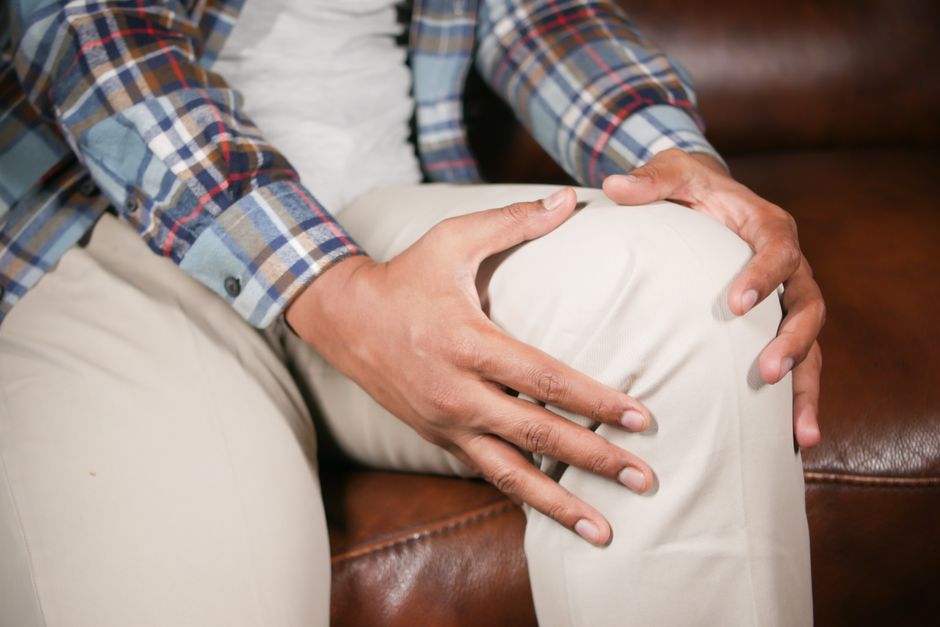
The good news is that fishing doesn't have to stop. It just needs reshaping.
Why limited knee mobility makes fishing harder
🦵 Not sure what's causing your knee pain?
Answer 5 quick questions and get a personalised result.
Find My Pattern → 60 seconds · No sign-upYour knees carry you across uneven terrain, stabilize you when you're standing in current, and absorb the impact of shifting your weight from one foot to the other. When mobility is restricted—whether from stiffness, previous injury, inflammation, or just the way your knee is moving on a particular day—these demands pile up fast.
Prolonged standing on banks or in water can increase pressure on a knee that's already struggling to move freely. The constant micro-adjustments needed to stay balanced on sloped ground or rocky bottoms ask a lot of a joint with limited range. Wading in particular demands ankle and knee flexibility in ways that flat ground doesn't. And the repetitive casting motion, while it looks like it's all shoulders and arms, actually relies on your core and lower body for stability—which means your knees are working harder than you might realize to keep you upright and positioned correctly. There's a close connection between this and how to arrange bedside essentials when knee mobility is limited — the same structures are usually involved.
Even the sitting between casts can become uncomfortable if your knee doesn't bend or straighten easily. A knee that's stiff in one direction may feel worse when you try to position it differently.
Adjusting your location and setup
Start by choosing where you fish. Flat, stable ground is fundamentally different from a sloped bank or rocky wading area. If you have options, prioritize spots where you can stand on level ground without needing to constantly rebalance. A pier, a maintained bank path, or calm water with a sandy bottom all reduce the small stabilizing movements your knee has to make all day.
Bring a sturdy seat—not a folding camp chair that collapses slightly under weight, but something solid that lets you sit with your knee at roughly a 90-degree angle. A fishing stool with a backrest works well. This isn't about taking breaks; it's about positioning yourself so you can fish while seated. You can cast from a sitting position. Your accuracy might shift slightly, but your knee gets genuine relief. Alternate between standing and sitting in shorter blocks rather than committing to hours of one or the other.
Consider whether wading is necessary for your day. Wading demands more from your knees than shore fishing does. If wading is part of your plan, wade in shallow water only, and keep sessions brief—20 to 30 minutes rather than hours. Move slowly and deliberately. Fast movement in water asks your knee to stabilize against resistance it may not be ready for.
Pacing and movement through the day
Arrive early and fish during the cooler parts of the day if possible. Heat can increase swelling and stiffness, which compounds limited mobility. A knee that feels tight at 9 a.m. may feel significantly more restricted by noon.
Plan your day in shorter blocks. Instead of fishing for four hours straight, aim for two hours, then a longer break where you're off your feet entirely. Sit in your vehicle with your leg elevated, or lie on a blanket with your knee supported. This isn't wasted time—swelling often decreases when you're off your feet, and you may find your mobility improves for the second session.
Walk slowly between spots. Rushing puts stress on a knee with limited mobility. If you're moving along a bank or to a different location, take your time. Notice the ground beneath you rather than moving on autopilot. Uneven terrain becomes safer when you're paying attention to each step.
Wear supportive footwear—not just comfortable shoes, but shoes with actual arch support and a firm sole. Cheap flip-flops or unsupportive sneakers force your knee to work harder to stabilize your whole body. Good shoes reduce the compensation your knee has to do. For useful context, how to practice getting up from the floor when knee mobility is limited tends to have the same mechanical roots and overlapping solutions.
Bring ice or cold water in a small cooler. If your knee feels swollen or warm by midday, apply cold for 10 to 15 minutes while you're sitting. This can reduce swelling enough to improve mobility for the rest of your day.
What to avoid
Don't push through sharp pain. Dull discomfort or tightness may improve as you move and warm up. Sharp pain is different—it's your knee telling you something is wrong. Stop and reassess.
Avoid long periods in any single position, whether standing or sitting. Stiffness often increases when you hold one posture too long. Changing position every 30 to 45 minutes helps.
Don't fish in conditions that demand constant rebalancing—fast current, very rocky bottoms, or steep banks—if your mobility is already limited. These situations force your knee to work beyond what it's capable of right now.
Skip the idea of "working through it" to have a normal full day. A modified day where you fish for four hours total, with breaks and positioning changes, often feels better than pushing for six hours and limping for the next week.
Knowing when to talk to a professional
Stop fishing and contact a healthcare professional if you develop severe pain during or after a fishing day, notice significant swelling that doesn't decrease with elevation and cold, experience instability (a feeling that your knee might give way), develop warmth or redness around your knee, or have difficulty bearing weight afterward.
Safety note: If you have severe pain, significant swelling, a recent injury, fever, numbness, or difficulty bearing weight, speak with a qualified healthcare professional promptly.
Moving forward
Pay attention to which modifications actually help. Does sitting more reduce your pain? Does limiting wading make a difference? Does one location feel easier on your knee than another? The patterns you notice over several fishing days will tell you what your knee needs. That information is worth more than any generic advice, and it's what you can discuss with a professional if
Helpful Next Step
As an Amazon Associate, we may earn from qualifying purchases. This does not affect the price you pay.
Helpful Support Option
If this type of knee discomfort shows up during daily movement, light support may help reduce strain on the joint while you work on the underlying cause.
See knee support options on AmazonHelpful Next Step
If gentle support helps during recovery, you can check a simple support option that many people use in daily life. For useful context, how to request airport assistance for limited knee mobility tends to have the same mechanical roots and overlapping solutions.
This content is for educational purposes only and does not constitute medical advice. Always consult a qualified healthcare professional for diagnosis and treatment.