🦵 Not sure what's causing it? Take the 5-question knee quiz.
Find My Pattern →How to Carry Groceries When Knee Pain Affects Balance
The shopping bags are lighter than usual, but the moment you pick them up, your knee feels unstable. Walking from the car to your kitchen, you're hyper-aware of every step—the weight shifts your balance in ways it didn't before, and you're gripping the bags tighter, tensing your shoulders to compensate. Some trips feel manageable; others leave you limping and sore for hours afterward. The unpredictability is frustrating. You need groceries, but you can't predict how your body will respond to carrying them.
This specific challenge—balancing weight distribution while your knee struggles to stabilize your body—sits at the intersection of practical necessity and pain management. It's not just about the physical load; it's about how that load changes the way your knee has to work.
Why carrying groceries becomes harder when your knee feels unstable
🦵 Not sure what's causing your knee pain?
Answer 5 quick questions and get a personalised result.
Find My Pattern → 60 seconds · No sign-upWhen your knee isn't tracking smoothly or feels wobbly, your body compensates in several ways. Your other leg works overtime to stabilize you, your hip muscles tighten to protect the painful knee, and your core engagement shifts. Adding weight to your hands changes your center of gravity, which forces your knee to work differently than it does during normal walking.
Several situations can create this instability. Inflammation inside the knee joint can make the joint feel loose or unreliable, even if the swelling isn't visibly obvious. Weakness in the muscles around your knee—particularly the quadriceps and hip stabilizers—means your knee relies more on the joint itself rather than muscular support, making balance feel precarious. Proprioception issues (your body's sense of where it is in space) can develop after an injury or during a flare, making weight-bearing feel unpredictable. Additionally, pain itself can trigger protective muscle guarding, which actually reduces your stability rather than improving it.
Carrying groceries amplifies all of these factors at once.
Practical ways to manage grocery carrying
Split the load into smaller trips. This is the simplest adjustment, and it works because it removes the variable that's destabilizing you most. Two trips with lighter bags places far less demand on your knee's stabilizing muscles than one trip with heavy bags. Yes, it takes longer. But the reduced pain and lower injury risk often make it worthwhile. Some people find that carrying one bag in each hand (rather than both in one hand) distributes weight more evenly and feels more balanced.
Use a wheeled cart or wagon. A small rolling cart designed for groceries or a utility wagon removes the weight-bearing challenge almost entirely. Your hands are occupied with steering rather than gripping, your core doesn't have to brace against uneven weight, and your knee doesn't have to stabilize a shifting load. If you have one at home, try it for a week and notice whether your pain pattern changes. The investment in a cart can be small compared to the relief it provides.
Wear supportive footwear. Shoes with good arch support and a stable heel (not flip-flops or very soft soles) give your ankle and knee better feedback about the ground. This proprioceptive input helps your knee feel more confident during weight-bearing tasks. Avoid shoes that feel loose or that require your foot to work hard to stay stable; your knee will compensate, and that compensation creates pain.
Practice the walk before you load. Before you pick up bags, walk from your car to your kitchen once without them. Notice which parts of the path feel uneven, where you need to step up or down, and whether your knee feels stable on that route. Then plan your carrying strategy around those observations. If there's a step or uneven ground, you might prefer two lighter trips to one heavier one, or you might choose to use a cart specifically for that route.
Slow your pace intentionally. There's a speed at which your knee feels most stable, and it's rarely the speed you'd naturally walk when you're not in pain. Moving slowly gives your stabilizing muscles more time to engage and your nervous system more time to process balance information. It feels counterintuitive—slower feels like it should feel worse—but many people find that rushing actually destabilizes them more.
When to involve a healthcare professional
If carrying groceries triggers sharp pain (rather than the dull ache you're used to), if your knee gives way or buckles, or if the pain lingers for more than a few hours afterward, these are signs that your current strategy isn't working and your knee may need assessment.
A physical therapist can identify specific strength or stability gaps that are making balance harder. They can also rule out structural issues that might need different management. If you notice that your balance problems are getting worse over time, or if they've started affecting other activities (like climbing stairs or standing in line), that's also worth discussing with a professional. There's a close connection between this and what to discuss with an employer when knee pain affects work — the same structures are usually involved.
Safety note: If you have severe pain, significant swelling, a recent injury, fever, numbness, or difficulty bearing weight, speak with a qualified healthcare professional promptly.
Finding your sustainable rhythm
The goal isn't to carry groceries the way you did before your knee pain started. It's to carry them in a way that doesn't set back your recovery or create a pattern of increased pain. Pay attention over the next few shopping trips to which strategies actually reduce your pain—not which ones feel fastest or most "normal." That feedback will tell you what your knee needs right now. Your approach may change as your knee improves, and that's expected.
Helpful Next Step
As an Amazon Associate, we may earn from qualifying purchases. This does not affect the price you pay.
Helpful Support Option
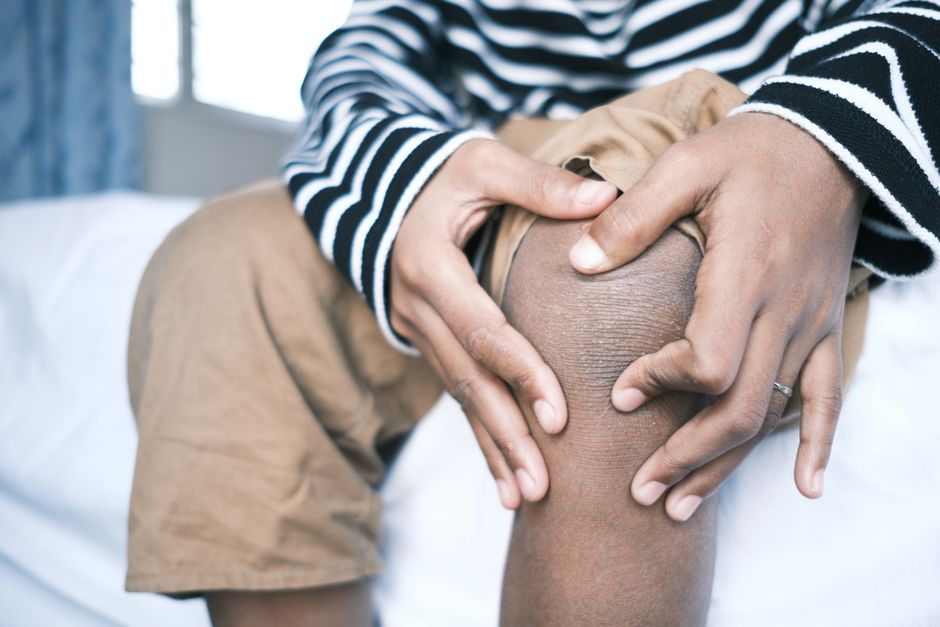
If this type of knee discomfort shows up during or after prolonged sitting, light compression may help reduce stiffness and support the joint during movement.
See knee compression optionsHelpful Next Step
If gentle support helps during recovery, you can check a simple support option that many people use in daily life.
This content is for educational purposes only and does not constitute medical advice. Always consult a qualified healthcare professional for diagnosis and treatment.